Jal Shakti Minister Paatil Reviews NRCD River Conservation Schemes
Synopsis
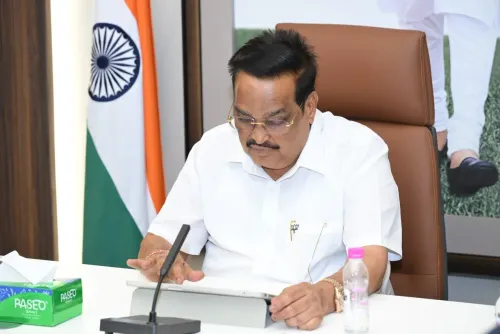
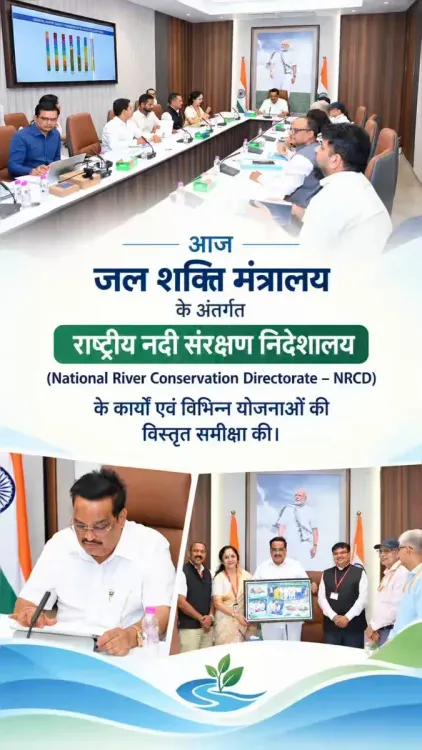
Union Jal Shakti Minister C. R. Paatil on 16 October 2026 conducted a detailed review of the National River Conservation Directorate's schemes and ongoing works, sharing a video of the proceedings and signalling direct ministerial attention to India's river pollution abatement machinery.
Key Takeaways
Union Jal Shakti Minister C.
Paatil reviewed the National River Conservation Directorate (NRCD) on 16 October 2026 .
The NRCD implements the National River Conservation Plan (NRCP) , initiated in 1995 , covering pollution abatement on major rivers outside the Ganga basin.
The directorate coordinates with urban local bodies and state pollution control boards to execute central river conservation projects.
India's river conservation effort traces back to the Ganga Action Plan of 1985 , expanded nationally in 1995 and overhauled via the Namami Gange programme from 2015 .
The Ministry of Jal Shakti , formed in 2019 , merged water resources and river development functions to improve coordination and accountability.
India's rivers got a close look from the top. On Friday, 16 October 2026, Union Jal Shakti Minister C. R. Paatil conducted a detailed review of the National River Conservation Directorate (NRCD) — the nodal body under the Ministry of Jal Shakti responsible for executing river pollution abatement projects across the country — sharing a video glimpse of the proceedings on X.
Posting in Hindi, Minister Paatil said he undertook a 'विस्तृत समीक्षा' (comprehensive review) of the NRCD's ongoing works and various schemes, calling it 'एक झलक' — a glimpse — for the public. The review signals a direct ministerial push to assess how India's central river conservation machinery is performing on the ground.
What the NRCD Actually Does
The National River Conservation Directorate is not a headline-grabbing body, but its mandate is foundational. It implements the National River Conservation Plan (NRCP) — a programme that dates to 1995 — covering pollution abatement works across identified stretches of major rivers beyond the Ganga basin. Think sewage treatment plants, riverfront development, and low-cost sanitation facilities in towns that empty into these waterways.
The directorate works in close coordination with urban local bodies and state pollution control boards, making it a critical link between central funding and on-the-ground execution. Reviews of this kind typically examine fund utilisation, project completion timelines, and the quality of infrastructure already built.
The Longer Story: Four Decades of River Policy
India's battle to clean its rivers has a long paper trail. It began with the Ganga Action Plan in 1985, widened nationally through the NRCP in 1995, and then got a high-profile overhaul when the Namami Gange programme was approved in 2014 and launched in 2015 — a flagship integrated mission for the Ganga basin carrying significant political and cultural weight for the BJP-led government.
The creation of the Ministry of Jal Shakti in 2019 was itself a structural bet — merging water resources, river development, and Ganga rejuvenation into a single ministry to end the fragmentation that had long hobbled results. Minister Paatil, a senior BJP leader and former Gujarat state president, now holds the reins of that integrated ministry.
Why a Ministerial Review Matters
A direct review by a Union Minister of the NRCD's scheme portfolio is a signal worth noting. River conservation projects in India have historically struggled with slow disbursement, incomplete infrastructure, and weak state-level follow-through. Ministerial-level scrutiny of these programmes — rather than leaving them to bureaucratic routine — can accelerate accountability, particularly ahead of parliamentary sessions and annual budget exercises where scheme performance data feeds directly into fund allocation decisions.
Whether this review yields course corrections, fresh project approvals, or sharper targets for states will become clear in the ministry's next round of parliamentary updates and annual reports — the documents that hold the real score.
Point of View
The ministry signals both accountability and political ownership of river-cleaning outcomes. With parliamentary scrutiny of water-sector spending always a live issue, direct ministerial engagement with a directorate as granular as the NRCD suggests a proactive posture ahead of budget and performance cycles. Whether the review translates into measurable acceleration of stalled NRCP projects will be the real test.
NationPress
16 Oct 2026
Frequently Asked Questions
What is the National River Conservation Directorate (NRCD)?
The NRCD is a directorate under India's Ministry of Jal Shakti that implements river pollution abatement projects across major rivers under the National River Conservation Plan, working with urban local bodies and state pollution control boards.
What is the National River Conservation Plan?
The National River Conservation Plan was initiated in 1995 to fund pollution abatement works — such as sewage treatment and riverfront development — on identified stretches of major Indian rivers beyond the Ganga basin.
What is the difference between NRCD and Namami Gange?
The NRCD implements the NRCP covering a wide range of rivers across India, while Namami Gange , launched in 2015 , is a focused flagship mission specifically targeting the Ganga basin. Both operate under the Ministry of Jal Shakti.
When was the Ministry of Jal Shakti formed?
The Ministry of Jal Shakti was formed in 2019 by merging the Ministry of Water Resources, River Development and Ganga Rejuvenation with the Ministry of Drinking Water and Sanitation to integrate water management.
Why did C. R. Paatil review the NRCD?
As Union Jal Shakti Minister, C. R. Paatil conducted a detailed review of the NRCD's ongoing works and schemes on 16 October 2026 to assess programme performance, fund utilisation, and project progress across India's river conservation efforts.