J&K Common Duct Policy 2026: Omar Abdullah govt ends repeat road digging
Synopsis
Jammu and Kashmir has formally notified the Common Duct Policy 2026, requiring all new roads and urban projects to include shared underground corridors for power, water, telecom, and gas. The move ends decades of agencies digging up the same finished roads repeatedly — and sets up a 'Call Before You Dig' digital registry to protect buried assets going forward.
Key Takeaways
The Omar Abdullah government notified the J&K Common Duct Policy 2026 on 5 October 2026 via Government Order No.
199-JK(HUD) of 2026 .
The policy mandates shared underground utility corridors for power, water, telecom, gas, and digital networks in all new urban, industrial, and housing projects.
Existing high-traffic roads will undergo phased retrofitting to integrate shared ducts over time.
Single-window Right of Way clearances and cost-sharing arrangements will govern access and financial responsibility among utility agencies.
A Call Before You Dig digital platform will provide real-time asset mapping to prevent accidental damage during future excavations.
The policy requires ducts be shared on a non-exclusive, non-discriminatory basis , preventing monopolisation by any single provider.
The Omar Abdullah government in Jammu and Kashmir on Monday, 5 October 2026, formally notified the Jammu and Kashmir Common Duct Policy 2026 — a framework that mandates shared underground utility corridors for power, water, telecom, gas, and digital networks across the union territory. The policy, issued as Government Order No. 199-JK(HUD) of 2026, is designed to permanently end the cycle of agencies repeatedly excavating finished roads for separate utility installations.
What the Policy Mandates
The Common Duct Policy requires that shared utility ducts be integrated into the design stage of all new urban, industrial, and housing projects. For existing high-traffic roads, the policy outlines a phased retrofitting approach. The shared corridors will house multiple services — electricity cables, fibre lines, water pipes, gas pipelines, and sewage systems — within a single unified underground structure, eliminating the need for fragmented, agency-specific excavations.
Crucially, the policy mandates that these ducts be made available on a transparent, non-exclusive, and non-discriminatory basis, meaning no single utility provider can monopolise the shared infrastructure.
Key Operational Features
The framework introduces single-window Right of Way (RoW) clearances, reducing bureaucratic friction for utility agencies seeking access to the corridors. Cost-sharing arrangements among participating providers will distribute the financial burden of civil works, while digital asset mapping will be enabled through the Call Before You Dig platform — a real-time registry designed to prevent accidental damage during future excavations.
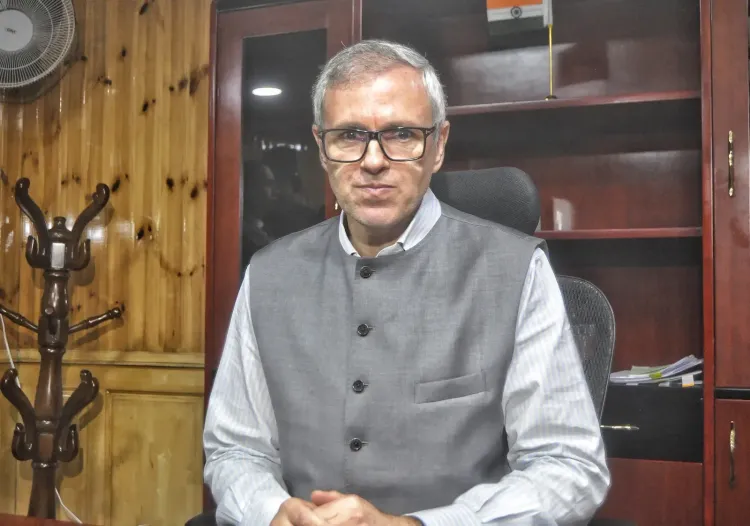
The Office of Chief Minister Omar Abdullah, in a post on X, described the notification as 'a major step towards modern urban infrastructure, efficient utility management and cleaner cityscapes in Jammu and Kashmir,' adding that the policy followed approval by the Council of Ministers.
Why This Matters for J&K's Urban Landscape
Repeated road digging by different agencies — each laying or repairing a separate utility line — has long been a source of traffic disruption, dust, noise, and road-surface degradation across Srinagar and other urban centres in J&K. The new policy directly addresses this by making shared duct usage the default for all new linear infrastructure. Overhead wire clutter, a persistent aesthetic and safety concern, is also expected to diminish as utilities shift underground over time.
This move aligns with central directives under the Right of Way Rules, which encourage or mandate common utility corridors in highway, railway, and smart city projects. Notably, several Indian states and smart-city missions have piloted similar frameworks, but formal policy notification at the UT level represents a structured, enforceable commitment rather than an ad hoc arrangement.
Impact on Costs and Connectivity
By sharing civil infrastructure, the policy is expected to reduce both capital and operational expenditure for utility agencies. Fewer road cuts mean lower maintenance spending for the public works department, while better-protected underground assets are projected to lower utility operation and maintenance costs over time. The integration of digital connectivity infrastructure into the same corridors is also seen as a direct enabler of broadband expansion and digital connectivity in underserved parts of the union territory.
With the policy now notified, implementation guidelines and agency coordination protocols will be the next critical step in determining how quickly the framework translates from order to outcome on J&K's roads.
Point of View
With freshly laid tarmac routinely excavated within months by a different agency. What matters now is enforcement: the history of such policies elsewhere in India shows that the framework is rarely the bottleneck; inter-agency coordination and compliance are. The 'Call Before You Dig' digital registry is a promising accountability mechanism, but its utility depends entirely on whether all agencies actually log assets in it. The phased retrofitting clause is also worth watching — without a hard deadline and a funded roadmap, 'phased' can quietly mean 'indefinite.'
NationPress
5 Oct 2026
Frequently Asked Questions
What is the J&K Common Duct Policy 2026?
The Jammu and Kashmir Common Duct Policy 2026 is a government framework, notified on 5 October 2026, that mandates shared underground utility corridors for power, water, telecom, gas, and digital networks in all new urban, industrial, and housing projects. It also outlines phased retrofitting of existing high-traffic roads and introduces single-window Right of Way clearances and digital asset mapping.
Why was the Common Duct Policy introduced in J&K?
The policy was introduced to end the longstanding practice of different utility agencies repeatedly excavating the same finished roads for separate installations or repairs. This caused traffic disruption, road degradation, noise, dust, and increased maintenance costs, all of which the shared-corridor model is designed to eliminate.
What is the 'Call Before You Dig' platform mentioned in the policy?
'Call Before You Dig' is a digital asset mapping platform that will register the location of all underground utility assets in J&K. It allows agencies and contractors to check for buried infrastructure before excavating, preventing accidental damage to cables, pipes, or conduits during future construction work.
Who is responsible for implementing the Common Duct Policy in J&K?
The policy was approved by the J&K Council of Ministers and formally notified by the Housing and Urban Development (HUD) department under Government Order No. 199-JK(HUD) of 2026. Utility agencies — including power, telecom, water, and gas providers — are required to comply with the shared-duct mandate for all new projects.
How does this policy reduce costs for utility agencies?
By sharing the civil infrastructure — trenching, conduits, and pathways — among multiple providers, the policy distributes capital expenditure across agencies rather than each bearing the full cost of independent excavations. Fewer road cuts also reduce operational and maintenance spending for both utility bodies and road-owning authorities.