Japanese lawmakers visit IISc, ISRO, BEL in Bengaluru under India-Japan programme
Synopsis
Former Japanese Foreign and Defence Minister Taro Kono led a four-member LDP parliamentary delegation to IISc, ISRO, and BEL in Bengaluru — the opening leg of a structured India-Japan Visit Programme. Coming weeks after a landmark maritime security pact between the two countries' defence ministers, the visit signals a shift from diplomatic statements to institutional, ground-level engagement on AI, space, and defence.
Key Takeaways
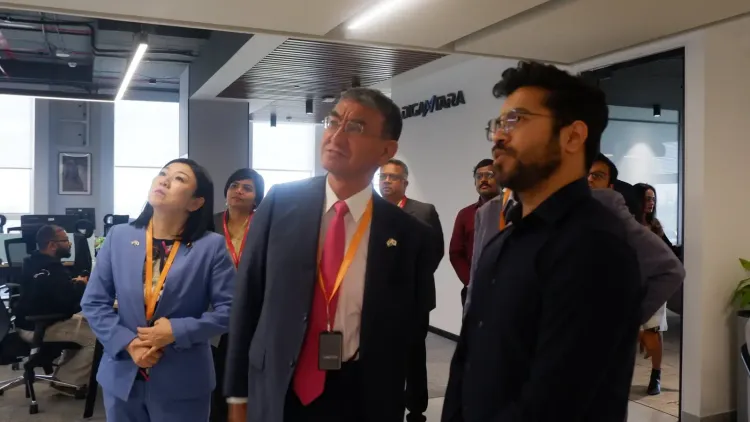
A Japanese parliamentary delegation led by former FM and Defence Minister Taro Kono visited IISc, ISRO, and BEL in Bengaluru on 19 September 2026 .
The visit was coordinated by India's MEA under the Distinguished Visitors Programme (DVP) as part of the broader India-Japan Visit Programme .
Delegation also included LDP lawmakers Karen Makishima , Kenji Nakanishi , and Sako Yamamoto .
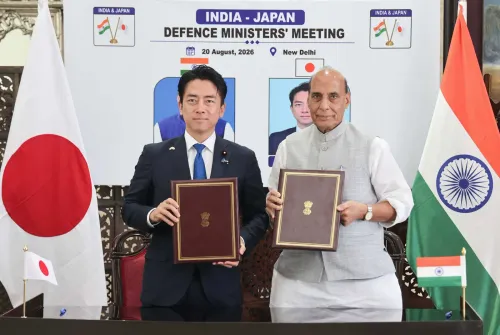
In August 2026 , Japanese Defence Minister Shinjiro Koizumi and Rajnath Singh signed a Memorandum of Arrangement on Maritime Security Cooperation .
Both countries reaffirmed their Special Strategic Global Partnership , with cooperation spanning AI, technology, space, defence, and startups .
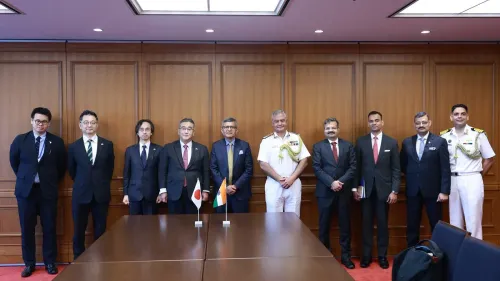
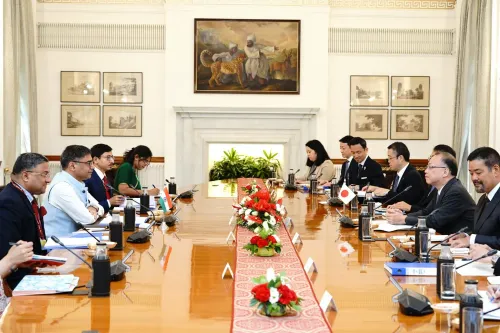
A delegation of Japanese lawmakers visited the Indian Institute of Science (IISc), the Indian Space Research Organisation (ISRO), and Bharat Electronics Limited (BEL) in Bengaluru on 19 September 2026, as part of the structured India-Japan Visit Programme coordinated by India's Ministry of External Affairs. The visit underscores the deepening bilateral relationship between the two nations across technology, space, defence, and emerging sectors.
The Delegation and What They Saw
The four-member parliamentary delegation comprised Representative Taro Kono — Japan's former Foreign Minister and former Defence Minister — Representative Karen Makishima, Representative Kenji Nakanishi, and Representative Sako Yamamoto, all members of Japan's Liberal Democratic Party (LDP). The itinerary covered three of India's most strategically significant research and defence institutions in a single city, signalling the programme's focus on hard-technology cooperation.
BEL confirmed the visit in a post on X, noting that the delegation toured the BEL Bengaluru Complex on 19 September 2026 under the Distinguished Visitors Programme (DVP), a formal MEA-coordinated channel for high-profile international guests. BEL is a key public-sector defence electronics manufacturer supplying radar, avionics, and communication systems to India's armed forces.
What the Indian Embassy Said
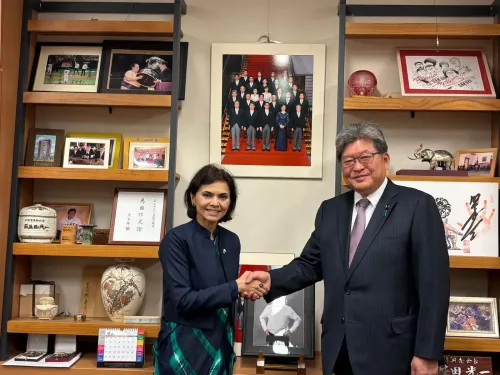
The Indian Embassy in Japan described the exchange as a reflection of 'the depth of ongoing cooperation and the possibilities for the future' between the two countries. In posts on X, the Embassy noted that India-Japan cooperation in AI, technology, space, defence, and startups forms an important pillar of the Special Strategic Global Partnership the two nations share.
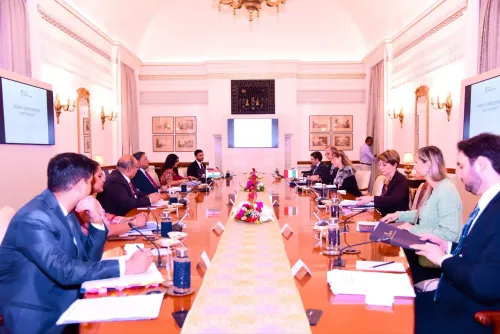
The Visit Programme, the Embassy explained, is designed to brief members of parliament on the latest developments in India, allow them to assess ground realities firsthand, and facilitate direct engagement with key stakeholders in Indian industry and research.
Context: A Broader Defence and Technology Push
This visit follows a series of high-level bilateral engagements in recent months. In August 2026, Japanese Defence Minister Shinjiro Koizumi made an official visit to India and held talks with Defence Minister Rajnath Singh. The two ministers signed a Memorandum of Arrangement on Maritime Security Cooperation and agreed to deepen operational cooperation in maritime security in a 'practical and effective manner.'
Koizumi, in remarks following the meeting, said Singh had expressed that it was 'a very fruitful meeting' and that both sides had made 'a new start in accelerating Japan-India defence cooperation.' He pledged to devote 'all efforts to turning today's discussions into concrete outcomes.'
The joint statement after that meeting recalled the Japan-India Joint Statement of July 2026, with both ministers affirming their commitment — under their personal leadership — to further deepen defence cooperation and realise a free and open Indo-Pacific. Both sides also stressed the importance of sharing assessments of the regional and international security environment amid heightened global tensions.
Why Bengaluru, and Why Now
The choice of Bengaluru as the starting point of the India-Japan Visit Programme is deliberate. The city hosts India's premier science university in IISc, the operational headquarters of ISRO, and a major BEL manufacturing complex — making it a natural showcase for India's science-to-defence innovation pipeline. Notably, Japan and India have been exploring cooperation in space situational awareness and co-development of defence electronics, areas where all three institutions visited are relevant.
The lawmakers' visit, coming weeks after a ministerial-level defence breakthrough and against the backdrop of a shared strategic vision for the Indo-Pacific, suggests the bilateral relationship is moving from statement-level commitments toward operational and institutional engagement.
Point of View
ISRO, BEL in a single day — is not incidental. It maps almost exactly onto the sectors where India and Japan are exploring co-development: space situational awareness, defence electronics, and deep-tech startups. What is notable is the seniority of the delegation: Taro Kono is not a junior parliamentarian but a former Foreign Minister and Defence Minister who ran for LDP leadership. His presence signals that this visit carries strategic weight beyond the ceremonial. The back-to-back sequencing — Koizumi's defence pact in August, the Kono delegation in September — suggests a deliberate tempo-setting by both sides, converting the July 2026 joint statement into institution-level groundwork faster than previous bilateral cycles managed.
NationPress
20 Sept 2026
Frequently Asked Questions
Who were the Japanese lawmakers that visited Bengaluru in September 2026?
The delegation comprised four Liberal Democratic Party representatives: Taro Kono (former Foreign Minister and Defence Minister), Karen Makishima , Kenji Nakanishi , and Sako Yamamoto . They visited Bengaluru on 19 September 2026 as part of the India-Japan Visit Programme.
What is the India-Japan Visit Programme?
It is a structured programme coordinated by India's Ministry of External Affairs to familiarise foreign parliamentarians with India's latest developments. The programme includes site visits, stakeholder interactions, and firsthand engagement with key Indian institutions.
What institutions did the Japanese delegation visit in Bengaluru?
The delegation visited the Indian Institute of Science (IISc), the Indian Space Research Organisation (ISRO), and Bharat Electronics Limited (BEL) at its Bengaluru Complex. The BEL visit was conducted under the MEA's Distinguished Visitors Programme.
What is the India-Japan Special Strategic Global Partnership?
It is the framework governing the bilateral relationship between India and Japan, covering cooperation in AI, technology, space, defence, and startups. Both countries reaffirmed this partnership in a joint statement in July 2026 and again during Defence Minister Koizumi's visit to India in August 2026.
What did India and Japan agree on defence cooperation in August 2026?
Defence Ministers Rajnath Singh and Shinjiro Koizumi signed a Memorandum of Arrangement on Maritime Security Cooperation and agreed to deepen operational cooperation in maritime security. Both ministers also affirmed their commitment to a free and open Indo-Pacific, recalling the Japan-India Joint Statement of July 2026.