Jharkhand CMO: 5,000 Anganwadis, Schools, 1-Lakh Youth Jobs Drive
Synopsis
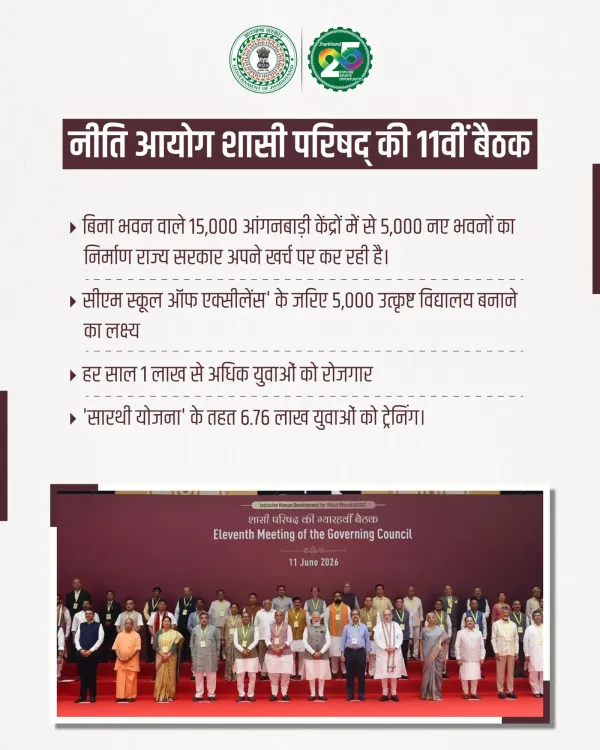
The Jharkhand Chief Minister's Office announced the construction of 5,000 new Anganwadi buildings and 5,000 new schools from state resources, alongside annual skill training and employment for over one lakh youth, marking a significant state-funded human-development push.
Key Takeaways
The Jharkhand government is building 5,000 new Anganwadi centres entirely from state resources, not central funds.
80 Utkrisht Vidyalayas (model schools) are already showing improved academic results across the state.
The government is advancing plans to construct 5,000 new schools to expand public education infrastructure.
Over one lakh youth are being trained and placed in employment by Jharkhand every year through state skill programmes.
The announcements signal a shift toward state-funded human-development spending independent of centrally sponsored schemes.
The Chief Minister's Office of Jharkhand announced on Thursday, June 11, 2026, that the state government is constructing 5,000 new Anganwadi buildings from its own resources, scaling up 5,000 new schools, and training over one lakh youth annually for employment — signalling a broad push on human development funded through state revenues.
Context
The post, shared by the official Jharkhand Chief Minister's Office account, states in Hindi: 'राज्य सरकार अपने संसाधनों से 5,000 नए आंगनबाड़ी भवनों का निर्माण कर रही है' ('The state government is constructing 5,000 new Anganwadi buildings from its own resources'). It further notes that 80 model schools — referred to as Utkrisht Vidyalayas — are already delivering improved results, and that the government is moving towards building 5,000 new schools. On skill development, the post asserts that Jharkhand is training and employing more than one lakh youth every year.
Policy Backdrop
Anganwadi centres are the grassroots backbone of India's Integrated Child Development Services (ICDS), providing nutrition, immunisation and pre-school education to children under six, particularly in rural and tribal areas. Jharkhand, a mineral-rich eastern state with a large tribal population, has expanded its ICDS network and school infrastructure through successive state budgets, supplementing centrally sponsored schemes such as Samagra Shiksha Abhiyan and earlier frameworks. The Utkrisht Vidyalayas initiative represents the state's effort to create model government schools with improved facilities and teaching quality to raise learning outcomes across the public education system.
Across India, states have increasingly deployed their own revenues to build Anganwadi and school infrastructure rather than waiting solely on central transfers — a trend that reflects both fiscal capacity and political prioritisation of human-development metrics. Jharkhand's announcement fits squarely within this broader pattern.
Stakeholders and Impact
The primary beneficiaries of the Anganwadi expansion are children under six and their mothers in rural and tribal communities, for whom access to a dedicated centre can make a measurable difference in early nutrition and school-readiness. The school-construction drive, if completed, would significantly expand the physical infrastructure available to students in a state where government schools serve the majority of the population. The skill-training pipeline targeting over one lakh youth per year addresses the employment challenge facing Jharkhand's young workforce, which is disproportionately dependent on agriculture and the informal sector.
What's Next
State budget documents and education and welfare department reports will be the key sources for tracking completion timelines on the 5,000 Anganwadi buildings and 5,000 new schools. Annual placement data from the state's skill-development programmes will test whether the one-lakh-per-year employment target is being met and sustained. As Jharkhand approaches future electoral and budgetary cycles, delivery on these infrastructure commitments is likely to become a central measure of the government's performance on human development.
Point of View
A distinction that carries political weight in cooperative-federalism debates. The simultaneous emphasis on education infrastructure and youth employment reflects a human-development narrative that state governments increasingly deploy ahead of electoral cycles. Jharkhand's tribal demography makes Anganwadi and school access particularly salient metrics, and the one-lakh employment claim positions the government on the politically sensitive issue of youth joblessness. Whether the numbers hold up to independent scrutiny will determine how durable this narrative proves.
NationPress
25 Oct 2026
Frequently Asked Questions
How many Anganwadi buildings is Jharkhand constructing?
The Jharkhand government has announced the construction of 5,000 new Anganwadi buildings funded entirely from state resources, according to a post by the Chief Minister's Office on June 11, 2026.
What are Utkrisht Vidyalayas in Jharkhand?
Utkrisht Vidyalayas are state-run model schools in Jharkhand designed to raise learning outcomes through better facilities and teaching. The CMO stated that 80 such schools are already delivering improved results.
How many youth does Jharkhand train and employ every year?
According to the Jharkhand Chief Minister's Office, the state trains and provides employment to more than one lakh (100,000) youth annually through its skill-development programmes.
Is Jharkhand building new schools with state funds or central funds?
The CMO's post specifically states the Anganwadi buildings are being built from the state government's own resources . The broader school-construction drive also appears to be state-led, supplementing centrally sponsored education schemes.
What is the significance of Jharkhand's Anganwadi expansion?
Anganwadis are critical for early childhood nutrition and education, especially in tribal and rural communities. Jharkhand's large tribal population makes this expansion particularly significant for improving child health and school-readiness outcomes.