Jharkhand CM Hemant Soren's Birsa Harit Gram mangoes reach Dubai
Synopsis
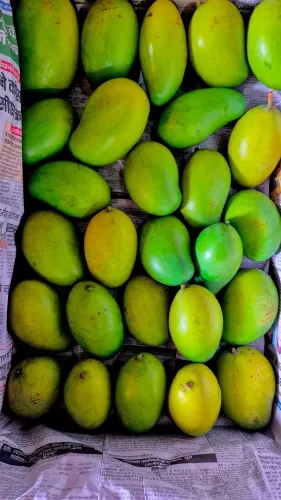
Amrapali mangoes from Deoghar, cultivated under Jharkhand CM Hemant Soren's Birsa Harit Gram Yojana, have reached Lulu Mall in Dubai — the scheme's first confirmed international retail milestone, with JSLPS-linked farmer-producer groups driving the supply chain.
Key Takeaways
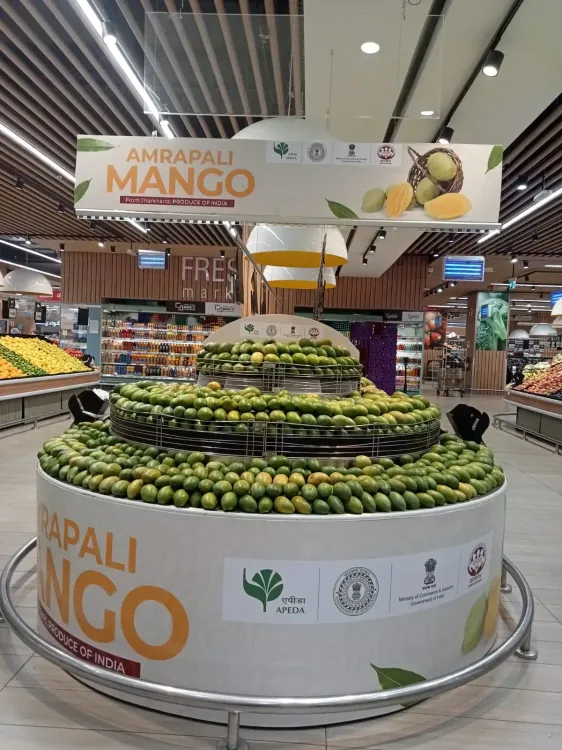
The Chief Minister's Office of Jharkhand confirmed on 7 July 2026 that Amrapali mangoes from Deoghar are being sold at Lulu Mall, Dubai .
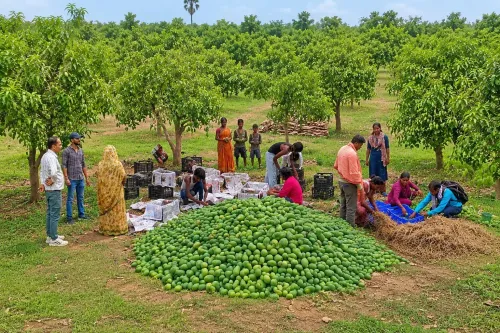
The mangoes were grown under CM Hemant Soren's Birsa Harit Gram Yojana , a scheme promoting fruit-tree plantations on community land for rural income.
JSLPS (Jharkhand State Livelihood Promotion Society) is the nodal agency coordinating the farmer-producer groups behind the export.
The Lulu Group , a UAE-based retail chain, has been expanding sourcing of Indian fresh produce, making it a key international partner for this initiative.
The development marks a step in Jharkhand's strategy to diversify its mineral-dependent rural economy through export-oriented horticulture.
Future milestones to watch include a formal MoU between JSLPS and Lulu Group and expansion to other farmer-producer organisations in the state.
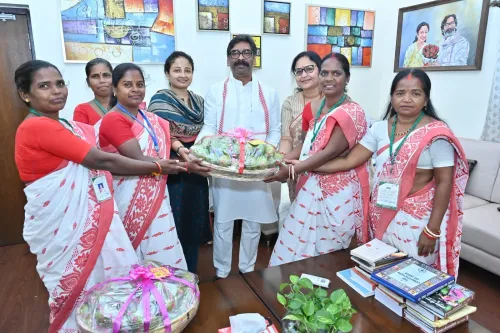
The Chief Minister's Office of Jharkhand announced on Tuesday, 7 July 2026 that Amrapali mangoes grown in Deoghar under Chief Minister Hemant Soren's Birsa Harit Gram Yojana are now being sold at the Lulu Mall in Dubai, marking the scheme's first confirmed international retail presence.
The CMO's post stated: 'बाबा नगरी देवघर में उपजाए गए आम्रपाली आम अब दुबई के लुलु मॉल में धूम मचा रहे हैं' — ('Amrapali mangoes grown in the holy town of Deoghar are now creating a buzz at Lulu Mall, Dubai'). The office credited the achievement to the hard work of the state's farmers and to CM Soren's long-term vision for rural transformation.
Context
Deoghar, known as Baba Dham, is a district in eastern Jharkhand where Amrapali mango cultivation has been scaled up under the Birsa Harit Gram Yojana. The scheme promotes fruit-tree plantations on village and community land with the twin goals of expanding green cover and providing supplementary income to rural households. The Jharkhand State Livelihood Promotion Society (JSLPS), the nodal agency coordinating farmer-producer groups and horticulture value chains, is tagged in the official post alongside the District Collectorate, Deoghar.Policy Backdrop
The Birsa Harit Gram Yojana builds on the foundation laid by the National Horticulture Mission (2005), which first introduced Amrapali mango clusters across Jharkhand's districts. Jharkhand has long sought to diversify its mineral-dependent rural economy by scaling horticulture on non-arable and community lands. State schemes have increasingly targeted export-oriented varieties and tie-ups with international retailers in order to raise farmer realisations — a strategy that this Dubai placement now validates in practice. The Lulu Group, a UAE-based retail chain operating Lulu Mall in Dubai, has in recent years expanded its sourcing of Indian fresh produce, including mangoes, as part of a broader India-Gulf agricultural trade corridor that eastern Indian states have been keen to tap.Stakeholders and Impact
The primary beneficiaries are mango growers in Deoghar and the broader community of rural households enrolled under the Birsa Harit Gram Yojana. An international retail listing at a high-footfall venue such as Lulu Mall, Dubai signals premium market access, which typically translates into higher farm-gate prices. JSLPS-coordinated farmer-producer groups are positioned as the supply-chain backbone linking smallholders in Jharkhand to the Gulf market. The development also carries symbolic weight for the state government, demonstrating that tribal and rural welfare schemes can generate commercially viable, globally competitive output.What's Next
Attention will now turn to the volume and regularity of subsequent shipments and whether a formal agreement between JSLPS and the Lulu Group is formalised. Observers will also watch whether other Jharkhand farmer-producer organisations are brought into the state's export-promotion framework on the back of this success. If sustained, the model could serve as a template for other eastern Indian states seeking to connect smallholder horticulture with Gulf and Southeast Asian retail chains.Point of View
The state is attempting to capture more value for smallholders directly. The Lulu Group tie-up also fits into a wider Gulf-India agricultural corridor that has gained momentum as Gulf retailers seek to diversify fresh-produce sourcing. Whether this remains a one-season showcase or becomes a recurring commercial relationship will determine its real policy significance.
NationPress
7 Jul 2026
Frequently Asked Questions
What is Birsa Harit Gram Yojana in Jharkhand?
Birsa Harit Gram Yojana is a Jharkhand state scheme that promotes fruit-tree plantations on village and community land to increase green cover and provide supplementary income to rural and tribal households. It is named after tribal icon Birsa Munda.
Which mangoes from Jharkhand are being sold in Dubai?
Amrapali mangoes grown in Deoghar district under the Birsa Harit Gram Yojana are being sold at Lulu Mall in Dubai , as confirmed by the Jharkhand Chief Minister's Office on 7 July 2026.
What is JSLPS and what role does it play in mango exports?
JSLPS stands for Jharkhand State Livelihood Promotion Society. It is the nodal state agency that coordinates farmer-producer groups and horticulture value chains, and is the key institutional link connecting Deoghar's mango growers to international markets like Dubai.
Where is Lulu Mall in Dubai and why is it significant for Indian farmers?
Lulu Mall is a high-footfall retail destination in Dubai operated by the UAE-based Lulu Group. Its significance for Indian farmers lies in its large Indian diaspora customer base and its expanding sourcing of Indian fresh produce, offering premium market access and better farm-gate prices.
How does Jharkhand's mango export fit into India's agricultural trade with the Gulf?
Jharkhand's Amrapali mango export to Dubai is part of a broader trend of eastern Indian states using livelihood missions to link smallholder farmers with Gulf and Southeast Asian retail markets, aiming to diversify income sources beyond the region's traditional mineral economy.