Will the Jharkhand Government Consider Increasing the Retirement Age?
Synopsis
In a recent assembly session, the Jharkhand government firmly ruled out any proposals to raise the retirement age for state employees. The focus remains on addressing backlog vacancies through transparent recruitment processes, amidst calls for policy changes from various lawmakers. This development raises significant questions about employment opportunities in the state.
Key Takeaways
The Jharkhand government has no plans to increase the retirement age for employees.
Backlog vacancies will be filled through a transparent recruitment process.
Concerns were raised regarding unfilled reserved posts for marginalized communities.
The government emphasizes the need for new job opportunities for the educated unemployed youth.
Decisions on retirement age are influenced by financial and administrative factors specific to each state.
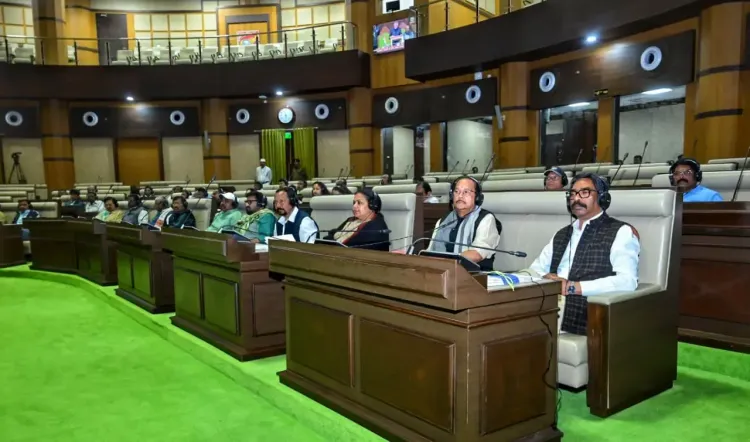
Ranchi, Feb 21 (NationPress) The debate surrounding the retirement age of government personnel and the urgent need to address longstanding backlog vacancies took center stage in the Jharkhand Assembly on Saturday.
In response to these discussions, Finance Minister Radha Krishna Kishore clarified that there are no current proposals to raise the retirement age for state employees. He assured the Assembly that the government is committed to prioritizing the filling of backlog vacancies through a transparent recruitment process.
Janardan Paswan, LJP MLA from Chatra, raised the issue, advocating for an increase in the retirement age for state government employees. He highlighted that the current retirement age in Jharkhand is 60, while central service doctors and teachers retire at 65.
Furthermore, he pointed out that both doctors and university educators in Jharkhand also retire at 65, and noted that neighboring Chhattisgarh has raised its retirement age to 62.
Paswan emphasized the state's personnel shortage and urged the government to contemplate extending the retirement age.
In response, the Finance Minister explained that retirement age decisions are determined by state governments based on their fiscal capacity, administrative needs, and local conditions.
He reiterated that while Chhattisgarh's decision may be context-specific, there are no proposals on the table in Jharkhand.
The Minister also mentioned that the state has a vast pool of educated unemployed youth, and under the leadership of Chief Minister Hemant Soren, the focus is on systematic recruitment.
He cautioned that raising the retirement age could hinder new employment opportunities, thus emphasizing the priority to fill vacant positions with qualified youth.
Meanwhile, Rajesh Kachhap, Congress MLA from Khijri, raised alarms about backlog vacancies designated for Scheduled Tribes, Scheduled Castes, and Other Backward Classes. He claimed that thousands of reserved posts have remained unfilled for years and are not adequately represented in new recruitment efforts.
He called for a clear and timely policy to address backlog appointments.
In response, the Finance Minister dismissed claims of over 50,000 backlog vacancies across various departments, labeling the figures inaccurate. He assured that each department is conducting separate recruitment processes and that backlog posts would be prioritized in strict compliance with reservation policies.
He added that necessary guidelines have been communicated to all relevant departments to ensure a transparent and swift recruitment process.
Point of View
It is crucial to highlight the nuanced dynamics of employment policies in Jharkhand. Balancing the needs of current employees with the demand for new job opportunities is essential. This ongoing debate reflects broader social and economic trends that warrant close attention.
NationPress
7 Sept 2026
Frequently Asked Questions
What is the current retirement age for government employees in Jharkhand?
The current retirement age for government employees in Jharkhand is 60 years.
Is the Jharkhand government planning to increase the retirement age?
No, the Jharkhand government has ruled out any proposals to raise the retirement age at this time.
What are backlog vacancies?
Backlog vacancies refer to job positions that have remained unfilled for an extended period, often due to various administrative or recruitment challenges.
How does the government plan to fill backlog vacancies?
The government plans to fill backlog vacancies on a priority basis through a transparent recruitment process.
What concerns did lawmakers raise during the assembly session?
Lawmakers raised concerns about the backlog vacancies for Scheduled Tribes, Scheduled Castes, and Other Backward Classes, urging for a clear policy to fill these positions.