Jitendra Singh hails Indo-UK biomedical career fellowship model
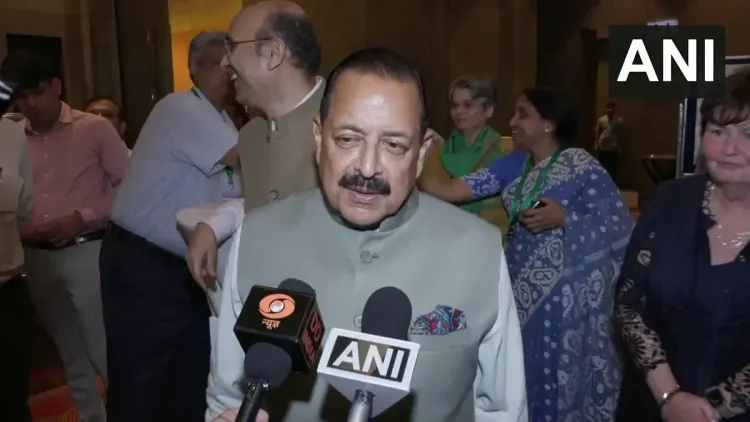
Synopsis
Science Minister Dr. Jitendra Singh spotlighted the DBT-Wellcome Trust India Alliance as a unique, enduring model of biomedical career promotion, calling it a reflection of the traditional warmth in the Indo-UK relationship. The joint fellowship programme has operated since 2008, funding early- and mid-career Indian biomedical researchers.
Key Takeaways
Jitendra Singh , Union Minister for Science and Technology, publicly praised the DBT-Wellcome Trust India Alliance on 15 July 2026 .
The Alliance was established in 2008 as a joint initiative between the Government of India's Department of Biotechnology and the UK's Wellcome Trust .
The programme funds early-, intermediate-, and senior-career biomedical fellowships for scientists based in India.
The model is regarded as a rare example of sustained, non-diplomatic bilateral science engagement that has continued across multiple governments in both countries.
Renewal of the next phase and new joint calls for proposals are anticipated in forthcoming DBT annual plans .
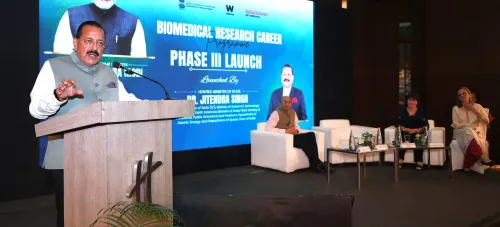
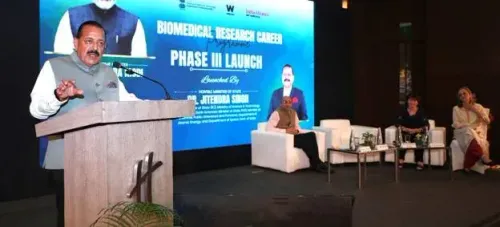
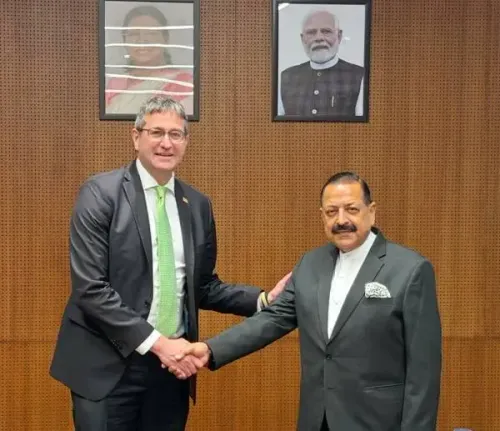
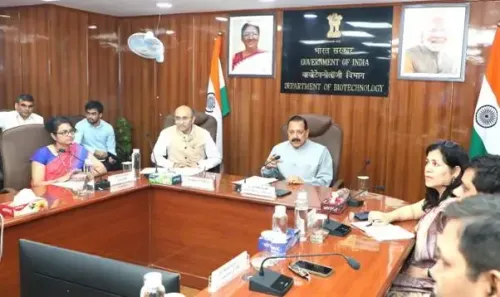
Union Science and Technology Minister Dr. Jitendra Singh on Wednesday, 15 July 2026 highlighted the enduring strength of the India-UK scientific partnership, pointing specifically to the collaboration between the Government of India's Department of Biotechnology (DBT) and the United Kingdom's Wellcome Trust as a standout model of biomedical career promotion.
Context
In his post, Dr. Singh described the Indo-UK relationship as carrying 'traditional warmth' that is most visibly expressed through the DBT-Wellcome Trust India Alliance — a joint fellowship initiative he called 'a unique and an enduring model of Biomedical Career promotion.' The remark underscores New Delhi's continued emphasis on bilateral science diplomacy as a vehicle for building domestic research capacity.
The DBT-Wellcome Trust India Alliance was formally established in 2008, designed to fund early- and mid-career biomedical fellowships for Indian scientists working in India. The programme is widely regarded as one of the most sustained, institutionally robust science-funding partnerships India has entered into with a foreign entity.
Policy Backdrop
The Department of Biotechnology, which functions under the Ministry of Science and Technology, has long used international co-funding models to supplement domestic research grants and import rigorous peer-review standards. The Wellcome Trust, a London-based global charitable foundation with a decades-long footprint in low- and middle-income country health research, provides a significant share of the India Alliance's corpus.
India-UK science cooperation has operated through multiple bilateral mechanisms since the early 2000s. The DBT-Wellcome model is distinctive because it functions outside purely diplomatic channels — it is driven by scientific merit and managed jointly by both institutions — making it a frequently cited example of non-diplomatic bilateral engagement that has outlasted changes of government on both sides.
Successive Indian administrations have used such alliances to retain national oversight of research priorities while accessing international funding and mentorship networks. The India Alliance's fellowship structure covers intermediate and senior fellowships in addition to early-career grants, enabling scientists to build full research careers within India rather than seeking opportunities abroad.
Stakeholders and Impact
The primary beneficiaries of the India Alliance are Indian biomedical researchers — particularly those at early and mid-career stages who require sustained, independent funding to establish laboratories and research programmes. The model addresses a long-standing structural gap in India's research ecosystem: the absence of sufficient bridge funding between doctoral training and senior faculty positions.
For the Wellcome Trust, the India Alliance represents one of its largest country-specific science-building investments outside the United Kingdom. The partnership also benefits Indian institutions — including universities and research hospitals — by attracting fellowship holders who bring international peer-review exposure and collaborative networks back into the domestic system.
What's Next
Renewal negotiations for the next phase of the India Alliance and new joint calls for proposals are expected to feature in forthcoming DBT annual plans. Dr. Singh's public endorsement of the model at this juncture signals continued political backing for the partnership from the Ministry of Science and Technology, which could be significant as both sides plan the programme's next funding cycle.
The broader India-UK science relationship is also expected to gain momentum following recent bilateral trade and technology discussions between the two governments, making the DBT-Wellcome Alliance a potential template for expanding cooperation into adjacent areas such as genomics, infectious disease, and climate-health research.
Point of View
' the Minister situates science cooperation within the broader India-UK relationship narrative, potentially giving it diplomatic insulation from bilateral friction in other domains. The emphasis on 'career promotion' rather than just research output also reflects a policy shift toward ecosystem-building — producing scientists who stay in India — rather than simply generating publications. If the endorsement is followed by a formal renewal announcement, it would mark a significant milestone in India's strategy of using co-funded fellowships to reduce its dependence on brain-drain-driven talent pipelines.
NationPress
15 Jul 2026
Frequently Asked Questions
What is the DBT-Wellcome Trust India Alliance?
The DBT-Wellcome Trust India Alliance is a joint fellowship programme established in 2008 between the Government of India's Department of Biotechnology and the UK's Wellcome Trust, designed to fund early- and mid-career biomedical researchers based in India.
What did Jitendra Singh say about the India-UK science partnership?
Dr. Jitendra Singh described the collaboration between the Department of Biotechnology and the Wellcome Trust as reflecting 'traditional warmth' in the Indo-UK relationship, calling it 'a unique and an enduring model of Biomedical Career promotion initiative.'
When was the DBT-Wellcome Trust India Alliance started?
The DBT-Wellcome Trust India Alliance was formally established in 2008 to build biomedical research capacity in India through career-stage fellowships for Indian scientists.
Who benefits from the DBT-Wellcome Trust India Alliance?
Indian biomedical researchers at early, intermediate, and senior career stages are the primary beneficiaries, receiving independent fellowship funding to establish and sustain research programmes within India.
What is next for the India-UK biomedical research partnership?
Renewal negotiations for the next phase of the India Alliance and new joint calls for proposals are expected to be outlined in forthcoming Department of Biotechnology annual plans, with ministerial backing signalled by Dr. Singh's statement.