Jordan's Ambassador Applauds US-Iran Ceasefire While Criticizing Iran's Aggression Against Gulf States

Synopsis
In a recent interview, Jordan's Ambassador to India, Yousef Abdelghani, praised the US-Iran ceasefire and condemned Iran's aggression towards Gulf nations. He emphasized Jordan's commitment to peace and its strong diplomatic ties with India.
Key Takeaways
Jordan supports US-Iran ceasefire and advocates for peace.
Strong diplomatic relations exist between Jordan and India.
Iran's aggression towards Gulf nations is condemned by Jordan.
Jordan plays a vital role in Middle Eastern stability.
Future trade relations between Jordan and India are expected to grow.
New Delhi, April 8 (NationPress) Yousef Abdelghani, the Ambassador of Jordan to India, expressed support for the recent ceasefire agreement between the United States and Iran. He emphasized that Jordan has consistently advocated for a peaceful resolution to the ongoing conflict.
In a conversation with IANS, Abdelghani criticized Iran for its attacks on Gulf nations, targeting their infrastructure, oil facilities, and for obstructing the Strait of Hormuz. He highlighted the strong and enduring ties between India and Iran, built on shared values and mutual interests.
Excerpts:
IANS: How do you perceive the current diplomatic relationship between Jordan and India?
Yousef Abdelghani: Our relationship is robust and solid, founded on mutual interests and shared values. Last year marked the 75th anniversary of our diplomatic ties with India.
IANS: Are there any new initiatives aimed at enhancing trade relations between India and Jordan?
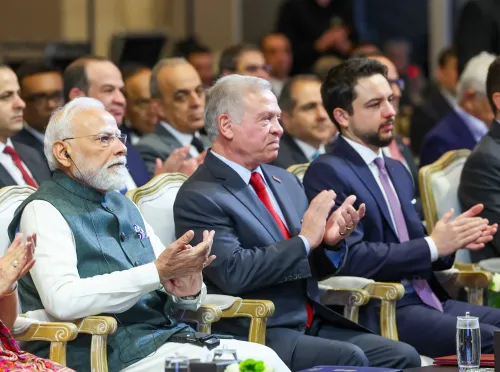
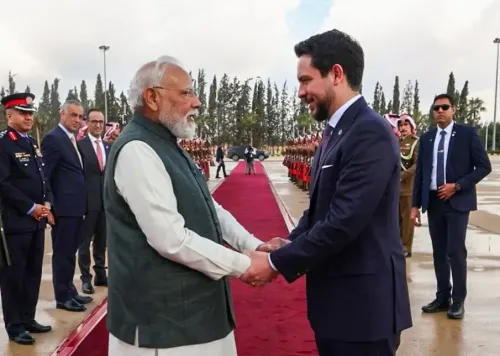
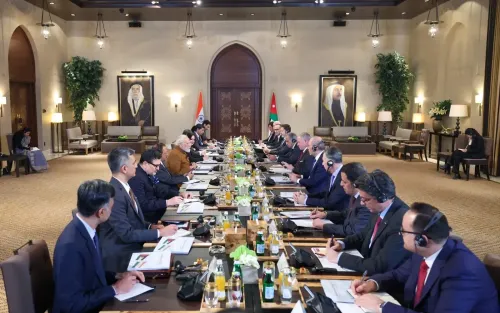
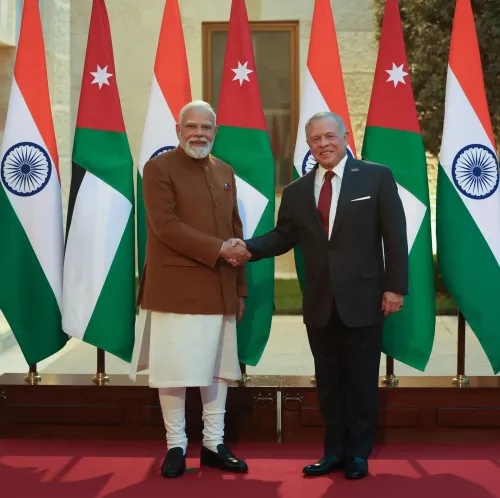
Yousef Abdelghani: Following Prime Minister Modi's recent visit to Jordan, we agreed to boost bilateral trade from approximately $3 billion to nearly $5 billion. We are also exploring new cooperation opportunities across various sectors.
IANS: How critical is the cooperation between India and Jordan in light of the current geopolitical climate in the Middle East?
Yousef Abdelghani: It is crucial, especially since Jordan plays a pivotal role in the IMEC trade route connecting India and Europe. We are committed to regional stability, which will lead to prosperity for both Jordan and India.
IANS: How do you perceive the ongoing tensions between the US and Iran, including the temporary ceasefire and forthcoming peace negotiations?
Yousef Abdelghani: Jordan has always advocated for peace and a diplomatic resolution to conflicts. We are not involved in these hostilities and are pleased to see a ceasefire. We hope it lasts.
IANS: What has been the effect of the Strait of Hormuz's disruption on global stability and trade?
Yousef Abdelghani: The impact is significant. Previous incidents in Bab al-Mandeb and the Red Sea illustrate that all nations should support the free navigation of these straits, as any hindrance affects global trade.
IANS: Do you believe the West Asian conflict is primarily about energy resources or geopolitical dominance?
Yousef Abdelghani: We have observed various narratives regarding these tensions. However, Jordan is committed to promoting peace. We oppose any attempts by countries to exert dominance or alter the Middle East's geopolitical map. History has shown us that conflict leads to chaos, as seen in Iraq.
IANS: How do you assess the current situation in West Asia and its long-term consequences?
Yousef Abdelghani: We strongly condemn Iran's actions against Gulf nations, including targeting their infrastructure and oil resources. Jordan has consistently declared its neutrality in these hostilities and will not permit its territory to be used in such conflicts.
IANS: Do you believe Iran's claim of not pursuing nuclear weapons?
Yousef Abdelghani: In the Middle East, we advocate for a nuclear-free zone, calling for all nations, including Israel, to refrain from acquiring nuclear arms.
IANS: Is peace feasible between Iran, the US, and Israel, or will this conflict persist?
Yousef Abdelghani: Wisdom must prevail, as war only begets more war. The cycle of violence will continue unless the core issue, the Palestinian conflict, is resolved. Without addressing this, factions will continue to use it as a pretext for violence.
IANS: What is Jordan's stance on Iran targeting Gulf nations?
Yousef Abdelghani: While some Gulf nations deny allowing the US to use their bases against Iran, Iran continues to target them, which is unacceptable. Jordan seeks strong ties with Iran and has no hostile intentions.
IANS: Are Jordan's senior leaders planning to visit India soon?
Yousef Abdelghani: Certainly! Her Majesty Queen Rania visited India recently, and we are keen to maintain strong relations with India, which also includes looking after the welfare of the 20,000 Indians residing in Jordan.
Point of View
The interview with Jordan's Ambassador underlines the importance of diplomatic relations and regional stability. Jordan's consistent advocacy for peace amidst escalating tensions highlights its role as a stabilizing force in the Middle East, emphasizing the need for collaborative efforts to resolve underlying conflicts.
NationPress
10 Oct 2026
Frequently Asked Questions
What is Jordan's stance on the US-Iran ceasefire?
Jordan supports the US-Iran ceasefire and has long advocated for peaceful conflict resolution.
How does Jordan view its relationship with India?
Jordan considers its relationship with India to be solid and based on mutual interests and values.
What has been the impact of Iran's actions on Gulf nations?
Iran's actions have been condemned by Jordan, as they target Gulf countries' infrastructure and stability.
How does Jordan contribute to regional stability?
Jordan plays a crucial role in promoting peace and stability in the Middle East, advocating for diplomatic solutions.
What are the future prospects for Jordan-India relations?
Jordan and India aim to enhance bilateral trade and cooperation across various sectors in the coming years.