Minister Joshi chairs 2026 education panel on knowledge hub
Synopsis
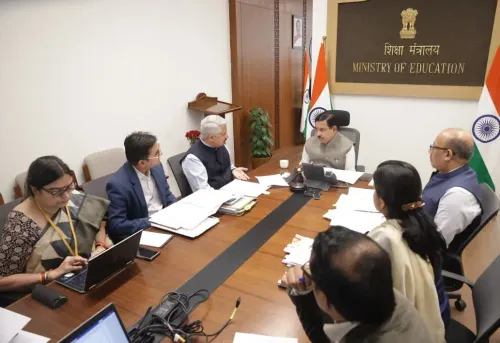
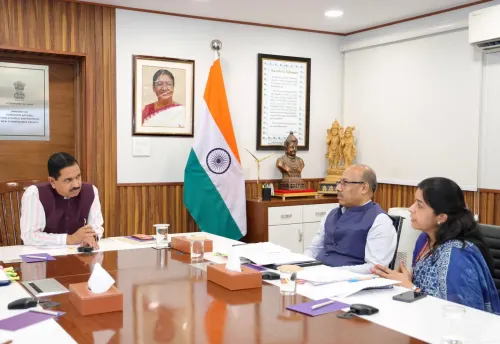
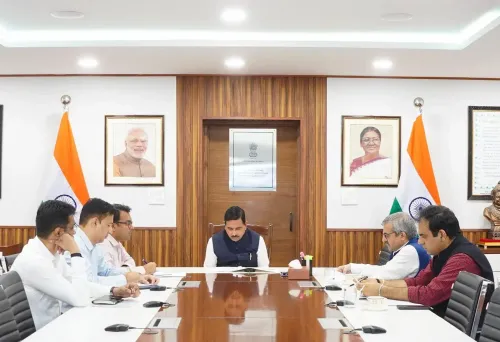
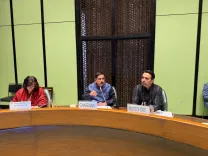
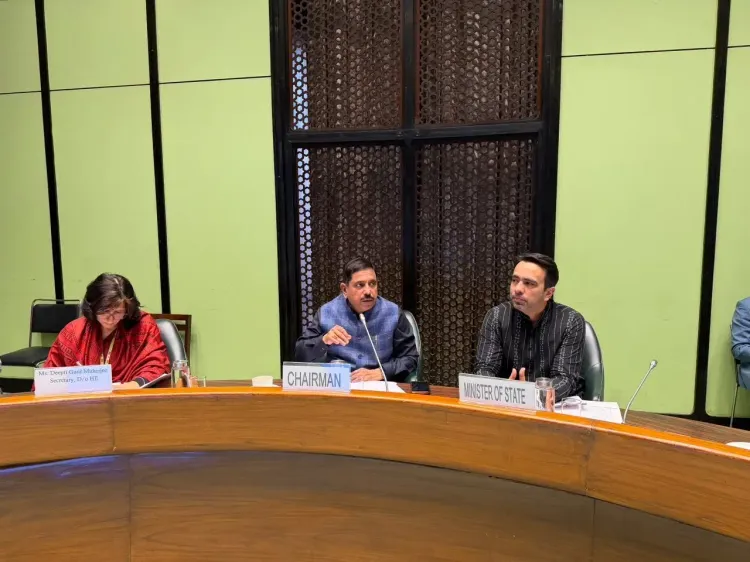
Union Consumer Affairs Minister Pralhad Joshi on 25 November 2026 chaired Parliament's first Consultative Committee meeting on Education for 2026. The theme was internationalisation of Indian education, covering foreign campuses, overseas Indian universities, CBSE Global, NIOS, and a vision tied to NEP 2020 and Viksit Bharat 2047.
Key Takeaways
Union Consumer Affairs Minister Pralhad Joshi chaired the first Consultative Committee of Parliament on Education meeting for 2026 on 25 November 2026.
The theme was Internationalisation of Indian Education and positioning India as a global knowledge hub.
Talks covered Indian universities expanding globally, foreign university campuses in India, research partnerships, and student-faculty exchanges.
School-level steps briefed included CBSE Global, NIOS expansion, multilingual learning, teacher mobility and curriculum reforms.
Joshi linked the agenda to NEP 2020 and Prime Minister Narendra Modi's Viksit Bharat 2047 vision of a globally connected system rooted in Indian values.
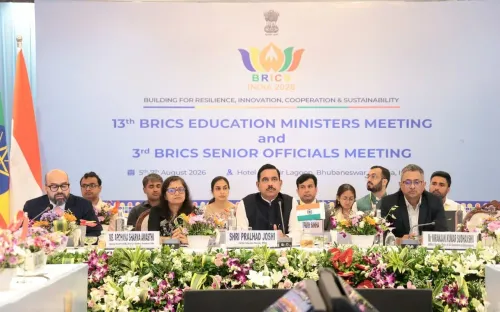
India's bid to become a global knowledge hub landed in Parliament on 25 November 2026, when Union Consumer Affairs Minister Pralhad Joshi chaired the first meeting of the Consultative Committee of Parliament on Education for 2026. The theme was blunt: internationalisation of Indian education — Indian universities going abroad, foreign campuses coming in, and schools being wired into a wider world.
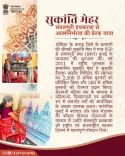
Joshi said he had chaired the sitting with the theme ‘Internationalisation of Indian Education’ and positioning India as a global knowledge hub. Deliberations, he wrote, covered expanding Indian universities globally, facilitating foreign university campuses in India, strengthening international research partnerships, student and faculty exchange programmes, and attracting international students. He posted a matching Hindi account, tying the work to NEP 2020 and Prime Minister Narendra Modi's Viksit Bharat 2047 pledge.
Indian universities out, foreign campuses in
The higher-education track is not a new slogan. The National Education Policy, approved in July 2020, set explicit goals for internationalising higher education and for enabling foreign institutions in India. What Joshi put before MPs is the operational checklist that followed: Indian universities expanding overseas, foreign campuses being facilitated at home, research partnerships being deepened, and a push to draw international students onto Indian campuses.
That two-way traffic is the point. India wants to export education — and import faculty, partnerships and students — in the same policy breath. Exchange programmes sit in the middle, as the human bridge between those two moves. The minister's account did not list fresh campus licences or enrolment targets; it set the political frame for universities, faculty and students who will have to live with the rules.
CBSE Global and NIOS take schooling overseas
Internationalisation is no longer being treated as a university-only file. Joshi said members were sensitised about steps to internationalise school education through CBSE Global and the expansion of the National Institute of Open Schooling (NIOS). The briefing also covered multilingual learning, global teacher mobility, curriculum reforms and cross-cultural exposure.
CBSE runs the national school curriculum and has used the CBSE Global banner for overseas outreach. NIOS offers flexible, open schooling and has been widening its international footprint. For school students and teachers, that is more than a branding exercise: multilingual classrooms, teacher mobility across borders, and a curriculum asked to carry both Indian roots and global literacy.
NEP 2020 and the Viksit Bharat 2047 test
Joshi framed the committee's work as guided by NEP 2020 and the Prime Minister's vision of Viksit Bharat 2047 — India as a developed nation by the hundredth year of Independence. His stated resolve was to build a globally connected, future-ready education ecosystem rooted in Indian values.
Since 2020, governments have stacked regulatory and institutional changes to make India both an education exporter and importer. Curriculum internationalisation, student mobility programmes and permissions for foreign campuses all sit inside a larger attempt to hitch education policy to economic and diplomatic goals. A parliamentary consultative committee cannot legislate that. It can keep ministers and MPs on the same list of unfinished work.
The next test is implementation: whether foreign university campuses actually open, whether CBSE Global and NIOS overseas centres multiply, and whether international students vote with their applications — not another theme for another meeting.
Point of View
The first 2026 consultative meeting shows the Centre treating internationalisation as unfinished political business, not a closed reform. The agenda now spans both ends of the system — universities as exporters and importers of campuses, and school boards such as CBSE Global and NIOS as overseas brands. Tying that to Viksit Bharat 2047 folds education diplomacy into the developed-India timeline. The policy risk is familiar: communiques outrunning campus approvals, student inflows and overseas centre counts.
NationPress
25 Nov 2026
Frequently Asked Questions
What was the theme of the 2026 education consultative committee meeting?
The theme was Internationalisation of Indian Education, with a focus on positioning India as a global knowledge hub. Union Consumer Affairs Minister Pralhad Joshi chaired the first Consultative Committee of Parliament on Education meeting for 2026 on 25 November 2026. Discussions ranged from foreign campuses and overseas Indian universities to school-level outreach.
What does NEP 2020 say about internationalising Indian education?
The National Education Policy, approved in July 2020, set explicit goals for internationalisation of higher education and for enabling foreign institutions in India. Joshi said the 2026 consultative meeting was guided by NEP 2020. The policy lineage also includes student mobility and stronger international research partnerships.
What is CBSE Global and how does it relate to this meeting?
CBSE Global is the Central Board of Secondary Education's international outreach track for school education. Joshi said members were briefed on steps to internationalise schooling through CBSE Global and NIOS expansion, along with multilingual learning, teacher mobility, curriculum reforms and cross-cultural exposure.
Can foreign universities open campuses in India?
NEP 2020 included the goal of enabling foreign institutions in India, and Joshi said the committee discussed facilitating foreign university campuses in India. The minister's post did not list specific campus approvals. Implementation of those permissions remains the practical test of the policy.
How is Viksit Bharat 2047 linked to education internationalisation?
Viksit Bharat 2047 is Prime Minister Narendra Modi's long-term vision of a developed India by 2047, the centenary of Independence. Joshi said the committee's work was guided by that vision and by NEP 2020. He described the aim as a globally connected, future-ready education ecosystem rooted in Indian values.