Joshi flags India's first geothermal wells commissioned in Ladakh
Synopsis
India has commissioned its first geothermal wells at Puga Valley, Ladakh, drilled 1,000 metres deep at over 14,000 feet altitude. Union Minister Pralhad Joshi called it a landmark milestone, with the wells paving the way for a 1 MW geothermal plant that offers round-the-clock clean baseload power.
Key Takeaways
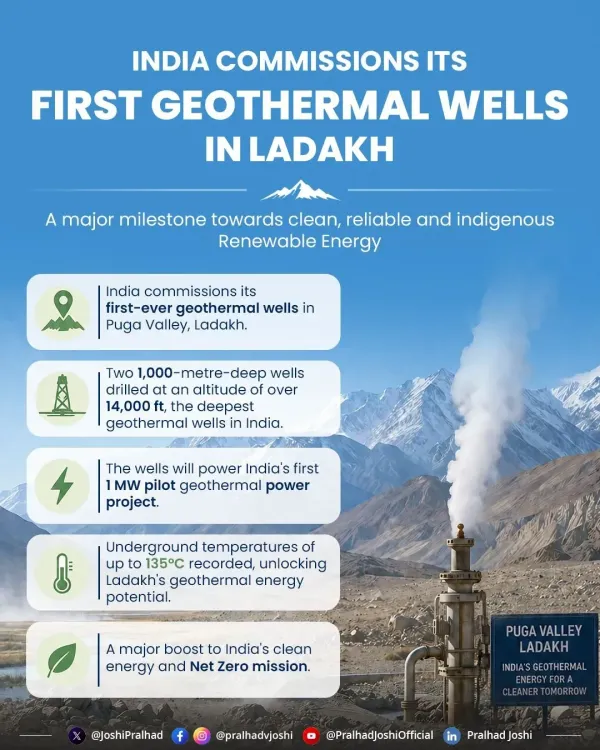
India commissioned its first-ever geothermal wells at Puga Valley, Ladakh , announced on 19 July 2026 .
The wells were drilled 1,000 metres deep at an altitude of over 14,000 feet .
The project aims to establish India's first 1 MW geothermal power plant , providing round-the-clock baseload power.
Geothermal energy complements variable solar and wind by supplying weather-independent electricity, crucial for Ladakh's extreme winters.
The initiative supports India's COP26 pledge to reach net-zero emissions by 2070 .
Puga Valley has been surveyed for geothermal potential since the 1970s ; this marks the first commercial-scale drilling milestone.
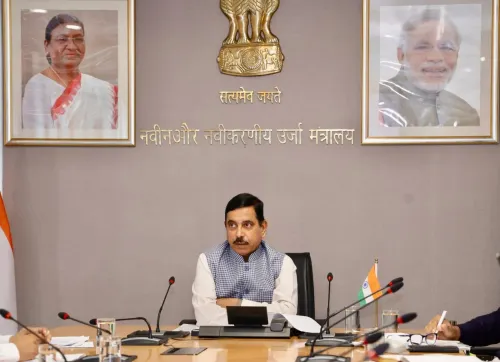
Union Consumer Affairs and New and Renewable Energy Minister Pralhad Joshi on Sunday, 19 July 2026 announced that India has commissioned its first-ever geothermal wells at Puga Valley, Ladakh, marking what he called 'a landmark milestone in India's clean energy journey.' The wells, drilled 1,000 metres deep at an altitude of over 14,000 feet, are intended to power the country's first 1 MW geothermal power project.
Context
Puga Valley, located in eastern Ladakh, has been recognised as one of India's most promising geothermal sites since surveys began in the 1970s. The valley's natural hot springs and subsurface heat resources drew early attention from the Geological Survey of India and ONGC, though commercial exploitation remained elusive for decades due to technical and logistical challenges posed by the region's extreme terrain and altitude.
Ladakh, a Union Territory carved out in 2019, faces persistent energy access difficulties owing to its remoteness and harsh winters. Diesel generators have historically served as the primary backup power source, making the shift to indigenous geothermal energy particularly significant for local communities.
Policy Backdrop
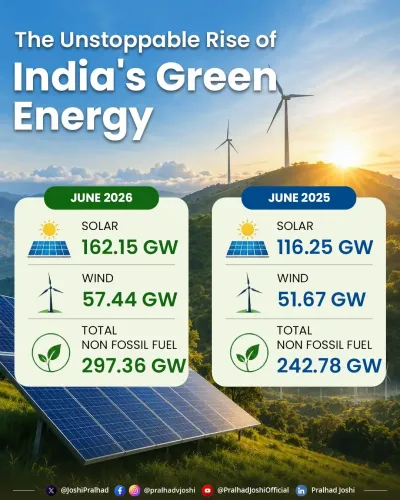
India's geothermal push is part of a broader diversification of its renewable energy portfolio following the country's pledge at COP26 in 2021 to achieve net-zero emissions by 2070. While solar and wind have dominated India's clean energy expansion, both are intermittent sources. Geothermal energy, by contrast, offers round-the-clock baseload power unaffected by weather or daylight cycles, making it a valuable complement to variable renewables.
The Ministry of New and Renewable Energy, which Joshi heads, has been tasked with broadening India's clean energy mix to include less conventional sources. The Puga Valley project represents the ministry's first concrete step toward establishing geothermal as a viable component of that mix. Joshi stated the breakthrough 'strengthens India's renewable energy ambitions and supports the vision of a Net Zero and carbon-neutral future.'
Stakeholders and Impact
For Ladakh's residents, a functional geothermal plant would mean more reliable, cleaner electricity — reducing dependence on costly diesel imports that must traverse difficult mountain roads. The extreme cold of Ladakhi winters makes uninterrupted power supply a necessity rather than a convenience, and geothermal heat can also be harnessed directly for space heating.
Renewable energy developers and the broader clean-tech sector are watching the project closely. A successful 1 MW demonstration could open the door to larger geothermal capacity bids under future policy rounds, while also providing a replicable model for other high-altitude geothermal sites identified across the Himalayan arc. The project also carries strategic significance, as energy self-sufficiency in Ladakh supports India's broader infrastructure development goals in a sensitive border region.
What's Next
The commissioning of the wells is a preparatory step; the 1 MW plant itself must still be built, tested, and connected to the local grid. Observers will track the project's construction timeline and whether the Ministry of New and Renewable Energy announces dedicated geothermal policy guidelines or competitive bidding rounds to scale capacity beyond this pilot. India's experience at Puga Valley could inform geothermal exploration at other identified sites, potentially adding a new, weather-independent pillar to the country's renewable energy architecture ahead of its 2070 net-zero target.
Point of View
A gap that has long been the Achilles heel of India's clean energy ambitions. For Minister Joshi, the announcement reinforces his ministry's credentials on energy diversification ahead of any review of India's nationally determined contributions. The choice of Ladakh as the pilot site is also politically layered: energy self-sufficiency in a strategically sensitive border Union Territory carries weight beyond kilowatts. If the 1 MW demonstration scales successfully, geothermal could emerge as a niche but strategically important plank in India's 2070 net-zero roadmap.
NationPress
20 Jul 2026
Frequently Asked Questions
What is India's first geothermal power project and where is it located?
India's first geothermal power project is a planned 1 MW plant at Puga Valley in eastern Ladakh . The project follows the commissioning of the country's first geothermal wells, drilled 1,000 metres deep at an altitude of over 14,000 feet.
What is geothermal energy and how is it different from solar or wind?
Geothermal energy harnesses heat from within the Earth to generate electricity or provide direct heating. Unlike solar or wind power, it is not dependent on weather or daylight, making it a reliable baseload energy source available round the clock.
Why was Puga Valley in Ladakh chosen for India's geothermal project?
Puga Valley has been identified since the 1970s as one of India's most promising geothermal sites due to its natural hot springs and high subsurface heat. The Geological Survey of India and ONGC conducted resource mapping there over several decades before this first commercial drilling.
How does the Ladakh geothermal project support India's net-zero goal?
The project provides clean, carbon-free baseload electricity that reduces reliance on diesel generators in Ladakh . It supports India's COP26 commitment to reach net-zero emissions by 2070 by diversifying the renewable energy mix beyond variable solar and wind.
Who announced India's first geothermal wells and what ministry oversees the project?
Union Minister Pralhad Joshi , who heads the Ministry of New and Renewable Energy among other portfolios, announced the commissioning of the wells on 19 July 2026 via a post on X.