Joshi: India Adding 1 Lakh Rooftop Solar Units Weekly
Synopsis
Union Minister Pralhad Joshi announced on June 11, 2026, that India is adding nearly one lakh rooftop solar installations every week — a milestone he framed as a decisive break from the country's historically sluggish solar adoption, underpinned by the PM Surya Ghar Muft Bijli Yojana launched in 2024.
Key Takeaways
Union Minister Pralhad Joshi stated on June 11, 2026 , that India is adding nearly 1 lakh rooftop solar installations per week .
The milestone is linked to the PM Surya Ghar Muft Bijli Yojana , launched in February 2024 , which offers subsidies and up to 300 units of free electricity monthly to beneficiaries.
India's installed solar capacity grew from under 3 GW in 2014 to over 70 GW by 2024 .
India has committed to 500 GW of non-fossil fuel capacity by 2030 , announced at COP26 in Glasgow .
A sustained weekly rate of one lakh installations would add over 50 lakh rooftop systems per year to India's distributed generation base.
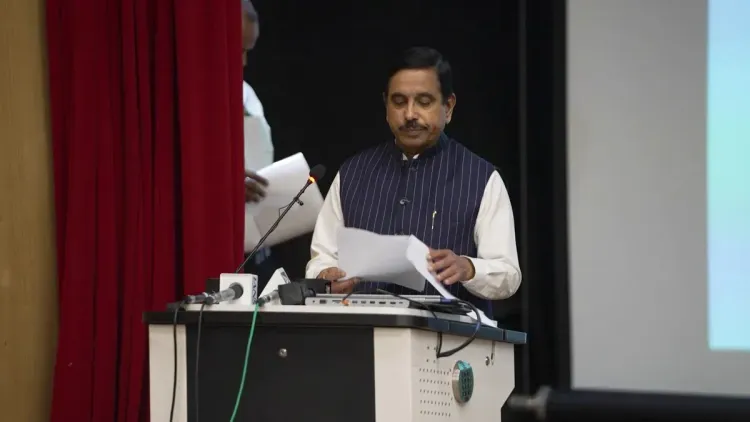
Union Consumer Affairs and New and Renewable Energy Minister Pralhad Joshi on Thursday, June 11, 2026, highlighted a landmark pace in India's rooftop solar rollout, stating the country is now adding nearly one lakh rooftop solar installations every week — a figure he contrasted sharply with India's historically slow early adoption of the technology.
Context
In his post on X, Joshi wrote: 'From a country that once struggled to scale up solar adoption, today we are adding nearly 1 lakh #RooftopSolar installations every week.' The statement positions the current pace as a structural shift rather than an incremental improvement, drawing a direct line between past constraints and present momentum.
The minister's remarks come as the Ministry of New and Renewable Energy — which he heads — oversees implementation of the PM Surya Ghar Muft Bijli Yojana, the flagship household rooftop solar scheme launched in February 2024. The scheme offers central subsidies to residential consumers and promises up to 300 units of free electricity per month to beneficiaries.
Policy Backdrop
India's solar journey began formally with the Jawaharlal Nehru National Solar Mission in 2010, which initially targeted 20 GW of solar capacity by 2022, a figure later revised upward to 100 GW. The country's total installed solar capacity grew from under 3 GW in 2014 to over 70 GW by 2024, driven by a combination of central subsidies, state-level procurement and a gradual shift from large utility-scale plants to distributed rooftop systems.
At COP26 in Glasgow in 2021, India announced a target of 500 GW of non-fossil fuel capacity by 2030. Rooftop solar has since been identified as a critical lever to meet that commitment, while simultaneously reducing distribution losses and lowering household electricity bills in urban and peri-urban areas.
Stakeholders and Impact
The primary beneficiaries of the accelerated rollout are urban and semi-urban households who gain reduced electricity costs and partial energy independence. The solar installation industry — comprising manufacturers, distributors and certified installers — stands to benefit from sustained demand at this scale.
The PM Surya Ghar Muft Bijli Yojana was designed specifically to address demand-side barriers: upfront cost, financing access and consumer awareness. A weekly installation rate of nearly one lakh units, if sustained, would translate to over 50 lakh new rooftop systems annually, a significant addition to India's distributed generation base.
What's Next
Analysts and policymakers will watch quarterly progress reports on PM Surya Ghar installations closely to assess whether the pace cited by Joshi is sustained through the remainder of the 2025-26 budget cycle. Any revision to state-level subsidies or central allocation in upcoming budget discussions could materially affect the rollout trajectory.
India's ability to maintain this momentum will be a key indicator of whether the country remains on track for its 2030 renewable energy commitments — and whether rooftop solar can meaningfully shift the household energy mix beyond early adopters to the broader population.
Point of View
Framing a supply-side metric — weekly installation rate — as proof that the PM Surya Ghar Muft Bijli Yojana has crossed the threshold from scheme launch to mass adoption. The contrast drawn with India's earlier struggles is a standard BJP communication device: anchoring present achievement against a baseline of past underperformance, whether under previous governments or early policy iterations. The rooftop solar push also serves a dual political purpose — it advances India's international climate commitments while delivering a tangible household benefit (lower electricity bills) that resonates in urban constituencies ahead of state election cycles. Whether the one-lakh-per-week figure holds under independent audit will determine whether this narrative ages well or invites scrutiny.
NationPress
26 Oct 2026
Frequently Asked Questions
What is PM Surya Ghar Muft Bijli Yojana?
The PM Surya Ghar Muft Bijli Yojana is a central government scheme launched in February 2024 that provides subsidies to residential consumers for installing rooftop solar panels and offers up to 300 units of free electricity per month to beneficiaries.
How many rooftop solar installations is India adding per week in 2026?
Union Minister Pralhad Joshi stated on June 11, 2026 , that India is adding nearly one lakh (100,000) rooftop solar installations every week , though this figure is based on the minister's post and has not been independently verified.
What is India's solar energy target for 2030?
India has committed to achieving 500 GW of non-fossil fuel energy capacity by 2030 , a target announced at the COP26 climate summit in Glasgow in 2021 . Rooftop solar is a key component of this plan.
Who is Pralhad Joshi and what ministry does he head?
Pralhad Joshi is a senior BJP leader from Karnataka and currently serves as Union Minister of Consumer Affairs, Food and Public Distribution, and Minister of New and Renewable Energy.
How has India's solar capacity grown over the past decade?
India's installed solar capacity grew from under 3 GW in 2014 to over 70 GW by 2024 , driven by central subsidies, state procurement policies and a gradual shift toward distributed rooftop systems alongside large utility-scale plants.