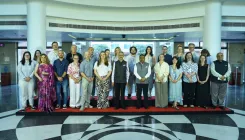
Joshi inspects waste-to-charcoal plant in Hubballi-Dharwad
Synopsis
Union Minister Pralhad Joshi inspected South India's first large-scale waste-to-charcoal plant near Hubballi, built for ₹157 crore by HDMC and NTPC's NVVN subsidiary. The plant will process 200 tonnes of dry waste daily into green charcoal, slashing coal use at the Kudagi thermal station.
Key Takeaways
The ₹157 crore Waste-to-Charcoal Plant near Gabbur, Hubballi is a partnership between HDMC and NVVN , an NTPC subsidiary.
The plant spans 8 acres and will process 200 tonnes of dry waste per day , producing approximately 120 tonnes of torrefied charcoal daily.
A 72-hour continuous trial run has already produced 250 tonnes of charcoal , with conversion efficiency of 30%–35% .
Green charcoal from the plant will be supplied to the Kudagi Thermal Power Station , potentially reducing coal consumption by 60%–70% .
The facility is described as the first of its kind in Karnataka and South India's first large-scale torrefaction plant .
Officials have been directed to commission the plant for full public service within the stipulated deadline .
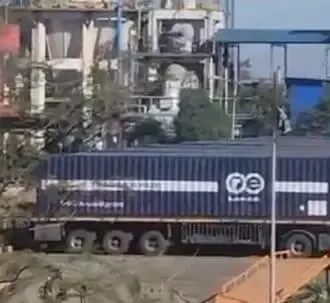
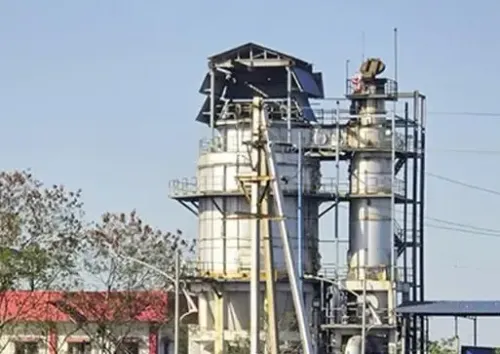
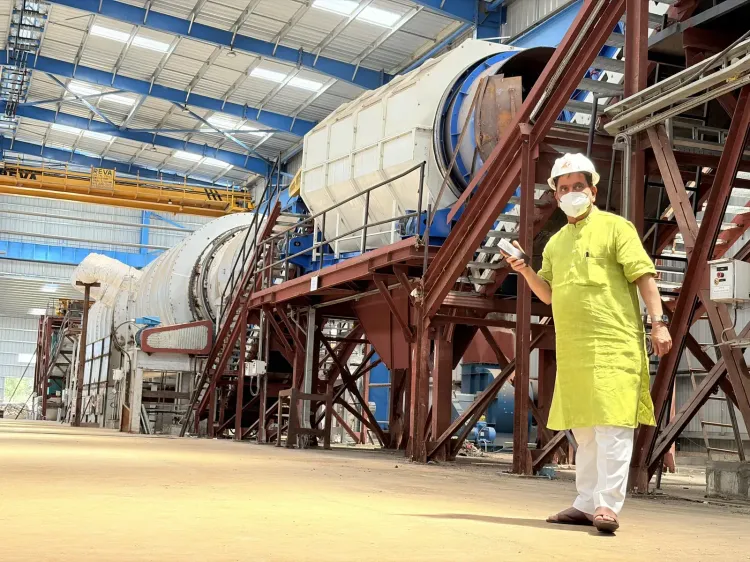
Union Minister Pralhad Joshi on Friday, 27 June 2026, inspected the under-construction Waste-to-Charcoal Plant near Gabbur, Hubballi, announcing that the facility — a joint venture between the Hubballi-Dharwad Municipal Corporation (HDMC) and NTPC's subsidiary NVVN — has successfully completed its trial run and is set to become South India's first large-scale torrefaction plant.
Context
Posting in Kannada on X, Joshi described the development as 'ಪರಿಸರ ಸಂರಕ್ಷಣೆ ಮತ್ತು ಹಸಿರು ಇಂಧನ ಉತ್ಪಾದನೆಯ ಸುವರ್ಣ ಅಧ್ಯಾಯ' — 'a golden chapter in environmental protection and green energy production.' He said the plant's trial run has been completed and officials have been directed to commission it for full public service within the stipulated deadline. The minister also noted that during a 72-hour continuous trial run, the plant produced 250 tonnes of charcoal.
The ₹157 crore facility is being built across 8 acres near Gabbur on the outskirts of Hubballi. It is designed to process 200 tonnes of dry waste per day and convert it into 'torrefied charcoal' — a green coal substitute — at a conversion rate of 30% to 35%. Daily output is expected to touch approximately 120 tonnes of green charcoal.
Policy Backdrop
The project sits squarely within the framework of Prime Minister Narendra Modi's Swachh Bharat Mission and Atmanirbhar Bharat vision, both of which Joshi explicitly cited in his post. The Swachh Bharat Mission (Urban), launched in 2014, mandates scientific processing of municipal solid waste and the elimination of open dumping — a chronic challenge for rapidly growing cities like Hubballi-Dharwad.
Central public sector undertakings such as NTPC, through its trading arm NVVN (NTPC Vidyut Vyapar Nigam), have been increasingly partnering with urban local bodies to develop waste-to-energy and waste-to-charcoal infrastructure. This model aligns with India's commitments under the Paris Agreement to reduce coal intensity and advance circular economy principles. The Hubballi plant is being positioned as the first facility of its kind in Karnataka and the first large-scale torrefaction unit in South India.
Stakeholders and Impact
The twin cities of Hubballi and Dharwad together generate 500 to 600 tonnes of solid waste daily, of which approximately 200 tonnes is dry waste — the fraction this plant will process. The project is expected to significantly reduce the volume of waste accumulating at dumping sites, cutting land pollution, foul odour, and associated public health risks for the city's residents.
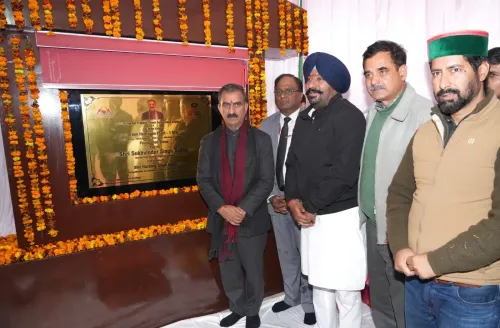
The green charcoal produced at the facility is earmarked as a fuel supplement for the Kudagi Thermal Power Station, where it could displace 60% to 70% of conventional coal use, according to Joshi's post. Present at the site inspection were HDMC Mayor Jyoti Patil, Deputy Mayor Santosh Chavhan, HDMC Commissioner Rudresh Gali, and several corporators including Shanthavva Hiremath, Shivu Menasinkaya, Manjunath Katkar, Anupa Beejawada, and Shivayya Hiremath.
What's Next
Joshi stated that officials have been instructed to open the plant for full public service within the scheduled timeline. If the Hubballi-Dharwad model proves scalable and emission-compliant, it could serve as a replication blueprint for other municipal corporations across Karnataka and South India. The minister framed the initiative as a potential national model for converting waste into wealth, consistent with the broader circular economy push under current central policy.
Point of View
Who holds both the New and Renewable Energy and Consumer Affairs portfolios, the site visit is a politically visible demonstration that his twin mandates can reinforce each other at the constituency level in Dharwad. The project's framing as a national replication model signals ambition beyond Karnataka, though actual scalability will depend on commissioning timelines, emission compliance, and whether the charcoal offtake agreement with the Kudagi plant holds commercially. If it delivers, it hands the BJP a tangible, photogenic urban-governance win in a state where it is in opposition.
NationPress
26 Jun 2026
Frequently Asked Questions
What is the Hubballi-Dharwad Waste-to-Charcoal Plant?
It is a ₹157 crore facility being built across 8 acres near Gabbur, Hubballi, by HDMC in partnership with NVVN (an NTPC subsidiary). It will convert 200 tonnes of dry municipal solid waste per day into torrefied green charcoal.
What is torrefied charcoal and how is it used?
Torrefied charcoal, or 'green charcoal,' is produced by heating dry waste at controlled temperatures in a low-oxygen environment. The charcoal from this plant will be supplied to the Kudagi Thermal Power Station as a substitute for conventional coal, potentially reducing coal consumption there by 60%–70%.
What is NVVN and what role does it play in this project?
NVVN, or NTPC Vidyut Vyapar Nigam, is a wholly-owned subsidiary of NTPC, India's largest power utility. It is partnering with HDMC to build and operate the Hubballi waste-to-charcoal plant as part of NTPC's expanding waste-to-energy portfolio.
Has the Hubballi waste-to-charcoal plant been tested yet?
Yes. According to Minister Pralhad Joshi's post, the plant has completed a successful 72-hour continuous trial run that produced 250 tonnes of charcoal. Officials have been directed to commission it for full public service within the scheduled timeline.
Why is this plant significant for South India?
It is described as South India's first large-scale torrefaction plant and the first facility of its kind in Karnataka. The model — converting urban dry waste into a coal substitute for thermal power stations — is being presented as a blueprint for other Indian cities.