Joshi: ONORC crosses 196 cr transactions, covers 81 cr
Synopsis
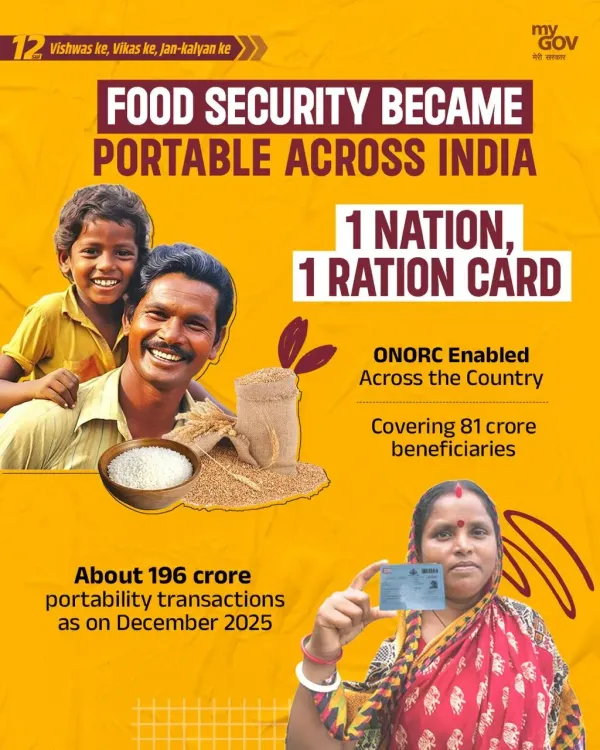
Union Consumer Affairs Minister Pralhad Joshi says the One Nation, One Ration Card scheme has crossed nearly 196 crore portability transactions as of December 2025, providing portable food access to over 81 crore beneficiaries under PM Modi's leadership.
Key Takeaways
Union Minister Pralhad Joshi cited nearly 196 crore ONORC portability transactions as of December 2025 .
The scheme covers over 81 crore beneficiaries under the National Food Security Act, 2013 .
ONORC allows beneficiaries to collect subsidised grain from any Fair Price Shop in India using biometric or QR authentication.
The scheme was piloted in 2019 and gained critical importance during the COVID-19 pandemic for inter-state migrant workers.
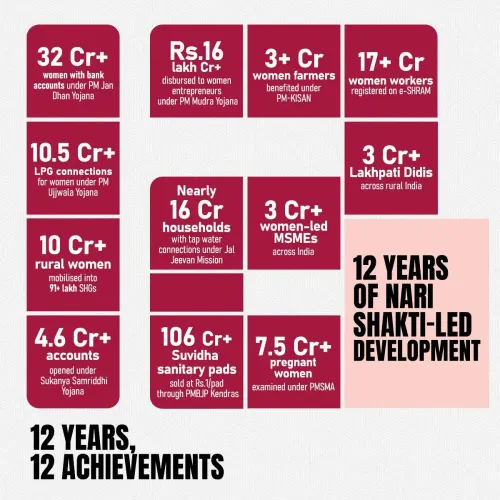
The announcement was made under the #12YearsofGaribKalyan campaign marking a decade-plus of BJP welfare initiatives.
Full integration across remaining states and CAG review of transaction data remain key watchpoints for 2026-27 .
Union Consumer Affairs Minister Pralhad Joshi on Monday, June 8, 2026, highlighted that the One Nation, One Ration Card (ONORC) scheme has recorded nearly 196 crore portability transactions as of December 2025, extending portable food security to over 81 crore beneficiaries across India under the leadership of Prime Minister Narendra Modi.
Context
Joshi's post, tagged under #12YearsofGaribKalyan, marks a milestone anniversary of the central government's welfare delivery initiatives. The minister stated that ONORC has made food security 'portable across India, ensuring seamless access to ration benefits' for the country's largest beneficiary base under the National Food Security Act (NFSA), 2013.
The hashtag references twelve years of what the ruling Bharatiya Janata Party (BJP) frames as its pro-poor governance record, anchoring the ONORC data point within a broader political commemoration of welfare outreach since 2014.
Policy Backdrop
The National Food Security Act, 2013 created statutory entitlements for subsidised wheat and rice through the Public Distribution System (PDS), covering roughly 81 crore people. ONORC, piloted from 2019 in Andhra Pradesh, Telangana, and select other states, was subsequently expanded nationwide to allow any NFSA beneficiary to collect their entitled grain from any Fair Price Shop (FPS) in the country using biometric or QR-code authentication.
The scheme gained particular urgency during the COVID-19 pandemic in 2020, when large numbers of inter-state migrant workers lost access to subsidised rations after crossing state lines. The parallel PM Garib Kalyan Anna Yojana, launched that year to provide additional free food grains, was later integrated with portability features, deepening ONORC's reach.
ONORC is part of the central government's sustained effort to link welfare delivery to Aadhaar-based real-time authentication, an architecture designed to reduce leakages and enable citizen mobility. It mirrors other 'One Nation' structural reforms — most notably the Goods and Services Tax (GST) — that sought to dissolve state-level barriers for citizens and businesses alike.
Stakeholders and Impact
The primary beneficiaries are NFSA cardholders, particularly the estimated tens of millions of inter-state migrant workers who move between states for seasonal or permanent employment. Before ONORC, a migrant from Bihar working in Maharashtra, for instance, could not claim their home-state ration entitlement at a local FPS — a gap the scheme directly addresses.
With nearly 196 crore transactions logged through December 2025, the scale signals high utilisation, though independent assessments of exclusion errors and authentication failures at FPS terminals remain an active area of scrutiny by parliamentary committees and audit bodies.
What's Next
Attention in 2026-27 is expected to focus on full integration across all remaining states and union territories, the quality of transaction data, and any findings from Comptroller and Auditor General (CAG) reviews on coverage gaps. Joshi's ministry is also responsible for ongoing PDS modernisation, including upgrades to FPS infrastructure and grievance redressal under the consumer affairs mandate. The government's ability to sustain and deepen ONORC's reach will be a key metric as it approaches the next general cycle of welfare programme evaluations.
Point of View
Using ONORC's transaction volume as proof-of-delivery for the BJP's welfare governance narrative ahead of what is likely a sustained political outreach cycle. The 196-crore figure, if verified by official sources, would represent one of the largest welfare portability operations globally, reinforcing the government's 'technology as inclusion' framing. However, transaction volume alone does not capture exclusion rates or authentication failures — metrics that opposition parties and audit bodies are likely to scrutinise. The broader arc here is the government's consistent effort to convert Aadhaar-linked delivery infrastructure into a political asset, positioning digital welfare as both a governance achievement and an electoral differentiator.
NationPress
29 Jul 2026
Frequently Asked Questions
What is One Nation One Ration Card (ONORC)?
One Nation One Ration Card is a central government scheme that allows any beneficiary under the National Food Security Act to collect their entitled subsidised food grains from any Fair Price Shop anywhere in India, using biometric or QR-code authentication, regardless of which state issued their ration card.
How many transactions has ONORC recorded?
According to Union Minister Pralhad Joshi, ONORC had recorded nearly 196 crore portability transactions as of December 2025.
How many people benefit from ONORC?
Over 81 crore beneficiaries covered under the National Food Security Act, 2013 are eligible for ONORC, making it one of the largest food security programmes in the world.
When did ONORC start?
ONORC was piloted in 2019 in Andhra Pradesh, Telangana, and a few other states before being expanded nationwide. It gained particular importance during the COVID-19 pandemic in 2020 when migrant workers lost access to home-state rations.
What is the #12YearsofGaribKalyan hashtag about?
#12YearsofGaribKalyan is a BJP-led campaign marking twelve years of the party's welfare and pro-poor governance initiatives since coming to power in 2014, under which schemes like ONORC, PM Garib Kalyan Anna Yojana, and PDS modernisation were rolled out.