JP Nadda chairs 16th CCHFW Conference, launches SSBSK child health programme
Synopsis
India's child healthcare architecture just got a structural overhaul. The SSBSK, launched at the 16th CCHFW Conference, merges two flagship home-care programmes into one risk-stratified framework — with at-risk newborns getting up to nine home visits in their first 42 days. It is the first time India has formally embedded post-partum maternal mental health screening into community child care.
Key Takeaways
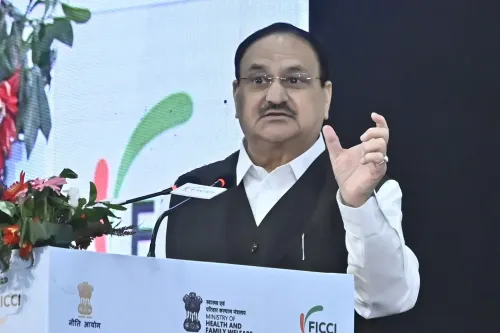
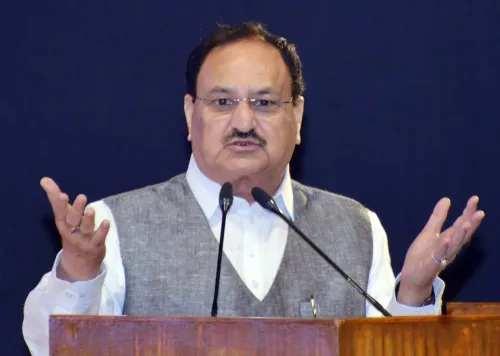
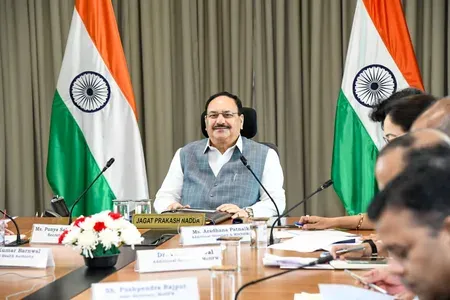
J P Nadda chaired the 16th CCHFW Conference at Vigyan Bhawan, New Delhi on 29 June .
The Samagra Shishu Bal Swasthya Karyakram (SSBSK) was formally launched, covering children from birth to 36 months .
SSBSK consolidates HBNC and HBYC into a single national framework for the first time. 'At-risk' newborns will receive up to nine home visits in the first 42 days ; at-risk children up to eight visits through 36 months .
Post-partum maternal mental health screening introduced as a structured community-care component.
Digital tools including Decision-Support Systems and child-tracking apps will underpin monitoring and referral.
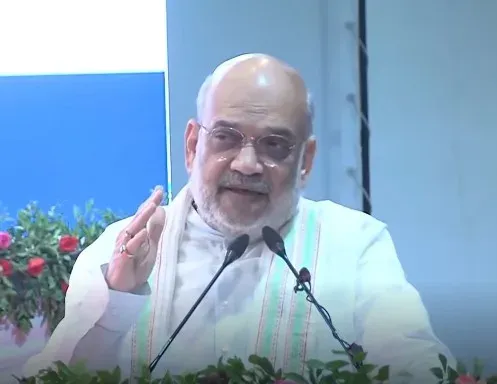
Union Health and Family Welfare Minister J P Nadda on Monday, 29 June chaired the 16th Conference of the Central Council of Health and Family Welfare (CCHFW) at Vigyan Bhawan, New Delhi, marking a significant push to strengthen child healthcare delivery across India. The conference also saw the formal launch of the Samagra Shishu Bal Swasthya Karyakram (SSBSK), a unified national programme designed to provide seamless healthcare to children from birth through 36 months of age.
What the SSBSK Programme Covers
The SSBSK consolidates two existing community-based flagship initiatives — Home-Based Newborn Care (HBNC) and Home-Based Care for Young Child (HBYC) — into a single, comprehensive framework. According to an official statement, the integration is designed to ensure continuity of care across the first three years of life, a period recognised as critical for child survival, growth, nutrition, and early brain development.
Notably, the programme introduces a risk-stratified approach for the first time. Newborns and children classified as 'At-risk' will receive intensified follow-up through additional home visits: up to nine home visits within the first 42 days after birth for at-risk newborns, and up to eight home visits up to 36 months of age for at-risk children.
Community Health Workers at the Centre
Delivery of the programme will rely on joint home visits conducted by Accredited Social Health Activists (ASHAs), Auxiliary Nurse Midwives (ANMs), Community Health Officers (CHOs), and Anganwadi Workers (AWWs). The programme will also introduce Well-Baby Sessions at every Village Health, Sanitation and Nutrition Day (VHSND), and a monthly Shishu Shivir at Ayushman Arogya Mandirs for early identification and management of at-risk children.
In a notable addition, post-partum maternal mental health screening has been incorporated as a structured component of community-based care — reflecting a broader understanding that maternal wellbeing directly shapes early childhood outcomes.
Digital Tools to Strengthen Monitoring
The SSBSK will leverage digital technologies including Decision-Support Systems (DSS), child-tracking applications, referral loops, and alert mechanisms to improve follow-up and ensure continuity of care. The integration of nurturing care for Early Childhood Development (ECD) — covering responsive caregiving, early learning, age-appropriate play, child safety, and family engagement — will be embedded across all home visits and community interactions.
Conference Agenda and Attendees
The 16th CCHFW Conference brought together Health Ministers from states and Union Territories, Members of Parliament, and senior officials from both the Centre and state governments. Discussions covered key priorities including the National Health Mission, Sustainable Development Goals (SDGs), food and drug reforms, and allied health services. This comes amid ongoing efforts by the Centre to align India's public health infrastructure with global development benchmarks ahead of the 2030 SDG deadline.
With the SSBSK now formally launched, the next phase will focus on state-level rollout and the operationalisation of digital tracking systems across districts.
Point of View
Not merely a rebrand — merging two parallel home-care tracks eliminates duplication that has long fragmented frontline worker effort. The risk-stratification model is the most consequential innovation: India has historically treated all newborns under a uniform visit schedule, and targeting intensified follow-up at high-risk cases could move the needle on neonatal mortality in ways aggregate coverage numbers have not. The inclusion of maternal mental health screening is overdue but its real-world uptake will depend entirely on whether ASHAs and ANMs receive adequate training and incentives — a gap that has undermined previous expansions of community health mandates. The digital tracking layer is promising, but connectivity gaps in high-burden rural districts remain an unresolved challenge that no official statement has yet addressed.
NationPress
29 Jun 2026
Frequently Asked Questions
What is the Samagra Shishu Bal Swasthya Karyakram (SSBSK)?
The SSBSK is a unified national child health programme launched on 29 June 2025, designed to provide seamless healthcare to children from birth through 36 months. It consolidates two earlier flagship schemes — Home-Based Newborn Care (HBNC) and Home-Based Care for Young Child (HBYC) — into a single, risk-stratified framework.
What is the risk-stratified approach introduced under SSBSK?
For the first time, the programme classifies newborns and young children as 'At-risk' and provides them with intensified home visits. At-risk newborns receive up to nine home visits in the first 42 days after birth, while at-risk children receive up to eight home visits up to 36 months of age.
Who will deliver the SSBSK on the ground?
The programme will be implemented through joint home visits by ASHAs, ANMs, Community Health Officers, and Anganwadi Workers. Well-Baby Sessions at Village Health, Sanitation and Nutrition Days and monthly Shishu Shivirs at Ayushman Arogya Mandirs will support early identification of at-risk children.
What was discussed at the 16th CCHFW Conference beyond the SSBSK launch?
The conference, attended by state and UT Health Ministers, Members of Parliament, and senior government officials, covered the National Health Mission, Sustainable Development Goals, food and drug reforms, and allied health services.
Why does the first 36 months of a child's life matter for the SSBSK design?
The programme is built on the understanding that the first three years of life are critical for child survival, growth, nutrition, and early brain development. By ensuring a continuum of care from birth through this period, SSBSK aims to address gaps that occur when newborn and young-child care programmes operate in silos.