Pune-Nashik rail line impact on GMRT: Maharashtra forms Kakodkar panel
Synopsis
Maharashtra has appointed nuclear scientist Anil Kakodkar to lead a panel that must resolve a rare collision between cutting-edge science and infrastructure ambition — whether the Pune–Nashik high-speed rail corridor can be routed without crippling one of the world's top radio telescopes. The committee has 60 days to find an answer.
Key Takeaways
Maharashtra Transport Department constituted an Expert Committee on 5 August chaired by Anil Kakodkar , former Chairman of the Atomic Energy Commission of India .
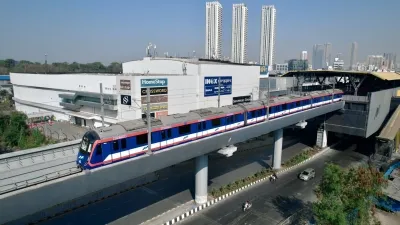
The panel will assess electromagnetic and structural impact of the Pune–Nashik Semi-High-Speed Railway on the GMRT at Khodad, Pune district .
The committee includes Railway Board member Vivek Gupta and Divisional Commissioners of Pune and Nashik .
The Ministry of Railways had already revised the alignment via Ahilyanagar and Shirdi , but stakeholders sought a fresh technical review.
A comprehensive report with definitive recommendations is due within 60 days .
MahaRail will supply DPR drawings, survey data, and a dedicated technical officer to support the review.
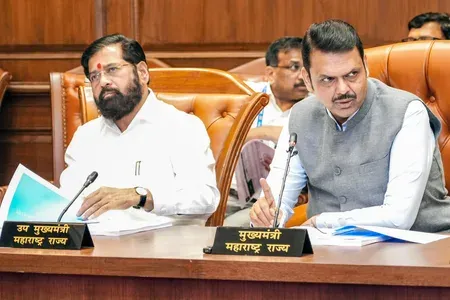
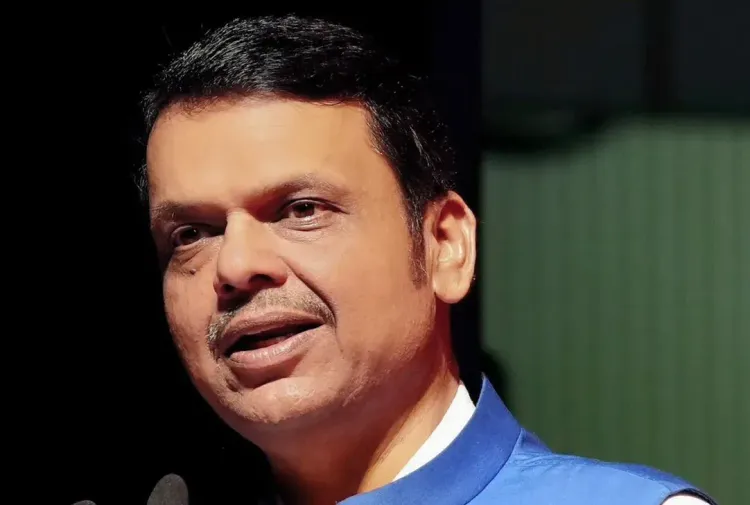
The Maharashtra Transport Department on Wednesday, 5 August constituted a high-level Expert Committee — chaired by Anil Kakodkar, former Chairman of the Atomic Energy Commission of India — to assess the potential impact of the proposed Pune–Nashik Semi-High-Speed Railway line on the Giant Metrewave Radio Telescope (GMRT) located at Khodad in Pune district. The move follows a directive from Chief Minister Devendra Fadnavis to reconcile scientific preservation with the state's infrastructure ambitions.
Committee Composition and Mandate
A formal Government Resolution (GR) has been issued formalising the panel's constitution. Alongside Kakodkar as Chairman, the committee includes Vivek Gupta, Member (Infrastructure) of the Railway Board, and the Divisional Commissioners of Pune and Nashik divisions. The panel is also authorised to co-opt additional specialists in radio astronomy, railway engineering, electromagnetics, and environmental science as the review demands.
Why GMRT Is at Risk
The original alignment detailed in the project's Detailed Project Report (DPR) passed in close proximity to the GMRT facility near Narayangaon. The GMRT is among the world's foremost low-frequency radio astronomy observatories, and scientific bodies — including the Department of Atomic Energy (DAE) and the Department of Science and Technology (DST) — raised concerns that electromagnetic interference generated by high-speed electric trains could disrupt its ultra-sensitive astronomical observations, according to the GR.
Notably, the Ministry of Railways had previously finalised a revised alignment routing via Ahilyanagar and Shirdi to sidestep the interference zone. However, stakeholders continued to press for a closer review, seeking to determine whether a more direct route — or targeted technical modifications such as tunnelling, elevated tracks, or localised realignments — could be implemented without compromising the radio-quiet environment the GMRT requires.
Key Objectives of the Review
The state government has assigned the committee five core objectives. It must conduct a detailed examination of the electromagnetic, operational, and structural impacts of both the original and revised alignments on the GMRT. It will also assess engineering options — tunnelling, elevated structures, or limited realignments — that could preserve a more direct route while fully protecting the telescope's radio-silence zone.
Beyond the scientific dimension, the panel will evaluate travel time, overall project costs, land acquisition requirements, and the broader socio-economic benefits — including industrial and agricultural connectivity — across competing alignment options. The committee is mandated to engage with key institutions: the National Centre for Radio Astrophysics (NCRA), DAE, the Ministry of Railways, Central Railway, and the Maharashtra Rail Infrastructure Development Corporation Ltd (MahaRail).
Timeline and Support Mechanism
The committee is required to submit a comprehensive report with definitive recommendations to the Maharashtra State Government within 60 days. The Divisional Commissioner of Pune will provide all secretariat, logistical, and financial support throughout the review period. MahaRail has been directed to furnish original DPR drawings, survey data, and cost estimates, and to depute a dedicated technical officer to assist the panel.
The Kakodkar committee's findings are expected to shape the final alignment decision for one of Maharashtra's most consequential rail projects — and set a precedent for how India balances scientific infrastructure with connectivity expansion.
Point of View
Not a railway engineer — signals that Maharashtra is treating the GMRT threat as a scientific problem first and a logistics problem second, which is the right instinct. The real tension, however, is that the Ministry of Railways has already locked in a revised alignment via Ahilyanagar and Shirdi; a state-level panel recommending yet another reroute risks a Centre-state standoff that delays the project indefinitely. The 60-day deadline is tight for a study involving electromagnetic modelling, land acquisition analysis, and multi-agency coordination. India has no established regulatory framework for protecting radio-quiet zones around scientific installations from infrastructure encroachment — this case could either create one or expose the gap.
NationPress
20 Sept 2026
Frequently Asked Questions
Why has Maharashtra formed a committee on the Pune-Nashik rail project?
The Maharashtra Transport Department formed the committee because the original alignment of the Pune–Nashik Semi-High-Speed Railway passed close to the GMRT at Khodad, raising concerns about electromagnetic interference that could disrupt the telescope's sensitive astronomical observations. Chief Minister Devendra Fadnavis directed the review to balance scientific preservation with infrastructure development.
Who is heading the Expert Committee and who else is on it?
The committee is chaired by Anil Kakodkar, former Chairman of the Atomic Energy Commission of India. It also includes Vivek Gupta, Member (Infrastructure) of the Railway Board, and the Divisional Commissioners of Pune and Nashik. The panel can co-opt additional specialists in radio astronomy, railway engineering, electromagnetics, and environmental science.
What is the GMRT and why does it need protection?
The Giant Metrewave Radio Telescope (GMRT), located at Khodad near Narayangaon in Pune district, is one of the world's premier low-frequency radio astronomy observatories. It requires a radio-quiet environment to conduct ultra-sensitive astronomical observations, which high-speed electric trains could disrupt through electromagnetic interference.
Has the rail alignment already been changed once?
Yes. The Ministry of Railways previously finalised a revised alignment routing the Pune–Nashik line via Ahilyanagar and Shirdi to avoid the GMRT's interference zone. However, stakeholders continued to request a closer review to determine if a more direct route or technical modifications — such as tunnelling or elevated tracks — could still protect the telescope.
When will the committee submit its findings?
The Expert Committee is mandated to submit a comprehensive report with definitive recommendations to the Maharashtra State Government within 60 days of its constitution. MahaRail will provide DPR drawings, survey data, and a dedicated technical officer to support the review.