Karnataka CM announces CSR-funded school push for rural areas

Synopsis
Karnataka CM Siddaramaiah has announced a plan to launch CSR-funded schools modelled on the KPS network across all assembly constituencies, targeting 10-20 schools per constituency to bring quality education to rural Karnataka, backed by ongoing talks with industrialists.
Key Takeaways
The Chief Minister's Office of Karnataka announced a new CSR school initiative on 9 July 2026 , calling it a 'revolutionary decision' in education.
New schools will be modelled on the KPS (Karnataka Public Schools) network, a benchmark for quality government schooling in the state.
The government's target is 10 to 20 CSR schools per assembly constituency across all of Karnataka.
Funding will come from corporate CSR contributions under the Companies Act, 2013; talks with industrialists are already under way.
A pilot in the Chief Minister's own constituency reportedly has 20 schools operating successfully at the primary level.
The initiative is specifically designed to bring quality schools to rural areas , reducing the rural-urban education gap.
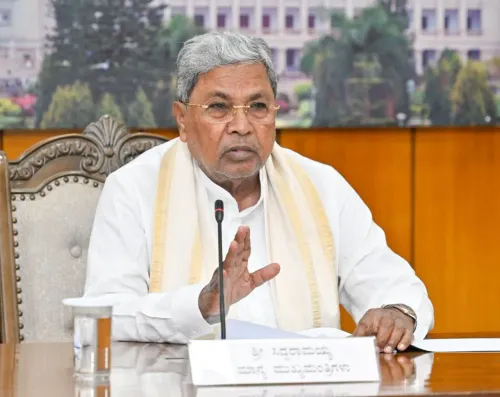
The Chief Minister's Office of Karnataka shared remarks by Chief Minister Siddaramaiah on Thursday, 9 July 2026, announcing a plan to establish CSR-funded schools across all assembly constituencies in the state, modelled on the existing KPS school network, with a focus on bringing quality education to rural areas.
Context
Speaking in Kannada, the Chief Minister described the initiative as a 'revolutionary decision' in the education department — ಕ್ರಾಂತಿಕಾರಿ ತೀರ್ಮಾನ ('krantikari teeramanа', meaning a revolutionary decision). He stated that the government's goal is to ensure high-quality schools are available within every constituency, particularly in rural belts: 'It is our government's thinking that good quality schools must exist in rural areas too, in their own locality.'
The Chief Minister cited a pilot he personally conducted in his own constituency, where he said 20 schools are now running successfully. He noted that the government is in active dialogue with industrialists to mobilise corporate funding for the scheme.
Policy Backdrop
The initiative draws on the Companies Act, 2013, which mandates qualifying companies to spend a portion of their net profits on corporate social responsibility activities, including education. Karnataka's plan channels this legally required spending into building and upgrading school infrastructure in underserved areas.
The KPS (Karnataka Public Schools) network serves as the benchmark template — a set of standardised, high-quality government schools that the new CSR schools are intended to replicate. This approach mirrors public-private education models adopted in states such as Maharashtra and Andhra Pradesh to narrow the rural-urban education divide.
Stakeholders and Impact
The primary beneficiaries are rural students currently without access to quality schooling in their immediate localities. The government's stated target is the establishment of 10 to 20 CSR schools per constituency across all assembly constituencies in Karnataka, which would represent a significant expansion of the scheme beyond the pilot phase.
The corporate sector is a key partner in this plan. The Chief Minister indicated that meetings with industrialists are already under way, positioning businesses as co-investors in the state's public education infrastructure rather than passive donors.
What's Next
The government is expected to formalise partnership guidelines and funding mechanisms for the CSR school programme through the Education Department. Formal orders detailing rollout timelines, eligibility criteria for corporate partners, and accountability frameworks across the remaining assembly constituencies are anticipated in subsequent budget or policy announcements.
If the constituency-level pilot model scales as intended, Karnataka could position itself as a national reference point for CSR-driven rural school infrastructure — a model that other states may look to replicate.
Point of View
The Chief Minister is simultaneously signalling policy ambition and electoral accountability. The constituency-by-constituency rollout model is a well-tested approach in Indian state politics that allows for phased credit-claiming. Whether the scheme delivers at scale will depend heavily on how rigorously the Education Department structures corporate accountability and school quality standards.
NationPress
9 Jul 2026
Frequently Asked Questions
What are CSR schools in Karnataka?
CSR schools in Karnataka are a proposed network of quality schools funded through corporate social responsibility contributions from private companies, modelled on the existing KPS school framework, aimed at improving rural education access.
What is the Karnataka government's target for CSR schools?
The Karnataka government aims to establish between 10 and 20 CSR schools in every assembly constituency across the state.
What are KPS schools in Karnataka?
KPS (Karnataka Public Schools) are a benchmark network of standardised, high-quality government schools that the new CSR schools are intended to replicate in design and quality.
Who will fund the new CSR schools in Karnataka?
The schools will be funded by the corporate sector through mandatory CSR spending under the Companies Act, 2013. The Karnataka government is holding talks with industrialists to mobilise this funding.
Has the CSR school model been tested in Karnataka before?
The Chief Minister stated that he piloted the model in his own constituency, where 20 schools are reportedly running successfully, before proposing a statewide rollout.