CM Siddaramaiah Marks 3 Years With Mining Revenue Gains
Synopsis
The Chief Minister's Office of Karnataka marked three years of the Siddaramaiah-led Congress government on 23 May 2026, highlighting mining revenue growth to ₹8,667.30 crore in 2025-26, an e-way bill mandate for minor mineral transport, and completion of 654 DMF-funded works worth ₹376.49 crore.
Key Takeaways
The Siddaramaiah-led Congress government completed three years in office on 23 May 2026 , marking the occasion under the #NavaKarnataka banner.
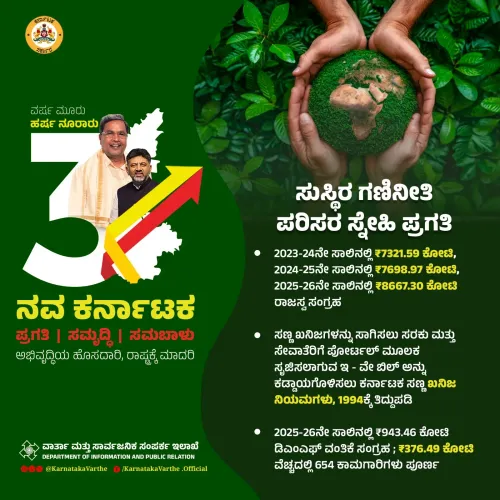
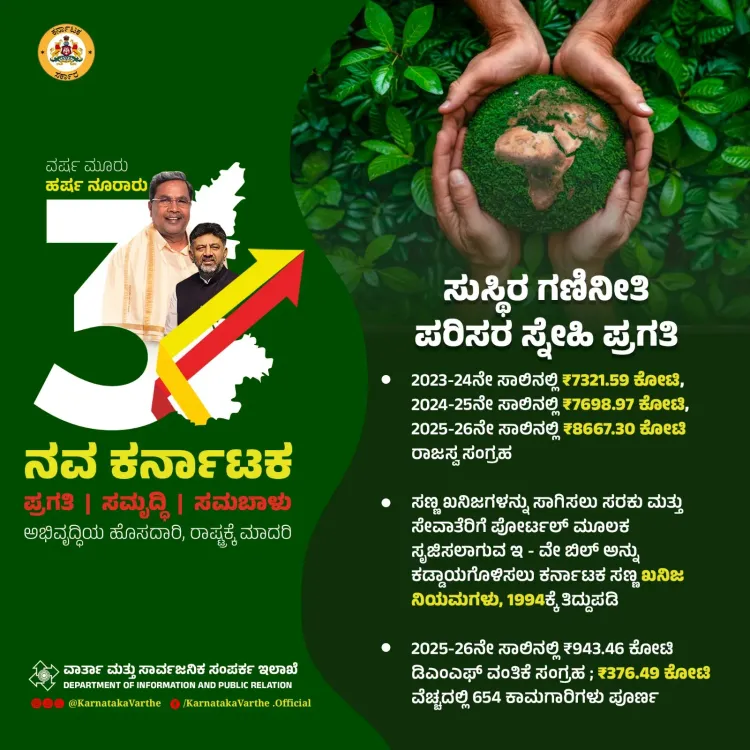
Mining-sector revenue rose from ₹7,321.59 crore in 2023-24 to ₹8,667.30 crore in 2025-26 .
The Karnataka Minor Mineral Concession Rules, 1994 were amended to make e-way bills via the GST portal mandatory for transporting minor minerals.
The District Mineral Foundation collected ₹943.46 crore in 2025-26 and completed 654 works costing ₹376.49 crore .
The government pledged that its reform efforts in revenue mobilisation and mineral governance will accelerate in the coming period.
The Chief Minister's Office of Karnataka on Saturday, 23 May 2026 marked three years of the Siddaramaiah-led Congress government in office, crediting every Kannadiga for the administration's achievements and reaffirming its commitment to the promises made before the 2023 assembly elections.
Posting in Kannada under the hashtag #3YearsOfNavaKarnataka, the CMO wrote: 'With the blessings of the people of the state, as we complete three years in power, we dedicate the credit for all our government's achievements to every Kannadiga.' The post added that the government has 'travelled a long distance in rebuilding a strong, prosperous and self-respecting Karnataka' and that this effort 'will be even faster and more effective going forward.'
Revenue Growth Across Three Fiscal Years
The CMO highlighted a steady rise in state revenue collection from the mining sector. Revenue stood at ₹7,321.59 crore in 2023-24, climbed to ₹7,698.97 crore in 2024-25, and reached ₹8,667.30 crore in 2025-26 — an increase of roughly 18 per cent over three years. The government presented these figures as evidence of improved fiscal management and tighter regulatory oversight in the natural-resources sector.Regulatory Reform: E-Way Bills for Minor Minerals
A key policy step highlighted was an amendment to the Karnataka Minor Mineral Concession Rules, 1994, making it mandatory to generate e-way bills through the GST portal for the transport of minor minerals. The reform is aimed at curbing illegal transportation and improving traceability in the mining supply chain. Karnataka's minor minerals sector — covering sand, gravel, and similar materials — has historically been vulnerable to revenue leakage, and the e-way bill mandate mirrors enforcement mechanisms already in use in other Indian states.District Mineral Foundation: Collections and Works
The post also drew attention to the District Mineral Foundation (DMF), a statutory fund that collects contributions from mining leaseholders and channels them into local development in mineral-bearing districts. In 2025-26, DMF contributions reached ₹943.46 crore. Of this, ₹376.49 crore has been spent on completing 654 works across affected districts — covering infrastructure such as roads, water supply, and community facilities in mining regions. The DMF framework, established under the Mines and Minerals (Development and Regulation) Act, is a central instrument through which state governments are expected to return a share of mineral wealth to host communities.What's Next for Karnataka's Mining Governance
The government signalled that its reform momentum in the mining and revenue sector will accelerate. Observers will watch the 2026-27 state budget for further allocations to DMF and any expansion of the e-way bill framework to additional mineral categories. Audit scrutiny of DMF expenditure patterns — a recurring concern in mineral-rich states nationally — will also be a benchmark for how effectively these collections translate into ground-level impact. The Nava Karnataka branding adopted by the Siddaramaiah administration positions these three-year milestones as a foundation for a broader governance narrative ahead of the next electoral cycle.Point of View
The CMO is building an accountability narrative that doubles as electoral groundwork. The e-way bill mandate for minor minerals signals an attempt to institutionalise transparency in a sector long associated with regulatory gaps. Whether CAG audits and civil-society scrutiny of DMF spending validate these claims will determine how durable this governance story proves to be.
NationPress
7 Oct 2026
Frequently Asked Questions
How many years has the Siddaramaiah government completed in Karnataka?
The Siddaramaiah-led Congress government completed three years in office in Karnataka as of 23 May 2026 , having come to power after the May 2023 assembly elections.
What is Karnataka's mining revenue for 2025-26?
Karnataka's mining-sector revenue collection for 2025-26 stood at ₹8,667.30 crore , up from ₹7,698.97 crore in 2024-25 and ₹7,321.59 crore in 2023-24.
What is the District Mineral Foundation (DMF) and how is Karnataka using it?
The District Mineral Foundation (DMF) is a statutory fund that collects contributions from mining leaseholders to fund development in mineral-affected districts. In 2025-26, Karnataka collected ₹943.46 crore in DMF contributions and completed 654 works at a cost of ₹376.49 crore .
What is the e-way bill rule for minor minerals in Karnataka?
Karnataka amended the Karnataka Minor Mineral Concession Rules, 1994 to make it compulsory to generate an e-way bill through the GST portal for transporting minor minerals, aimed at reducing illegal movement and revenue leakage.
What is Nava Karnataka?
Nava Karnataka ('New Karnataka') is the governance and branding theme adopted by the Siddaramaiah-led Congress government to communicate its development agenda and policy achievements to citizens.