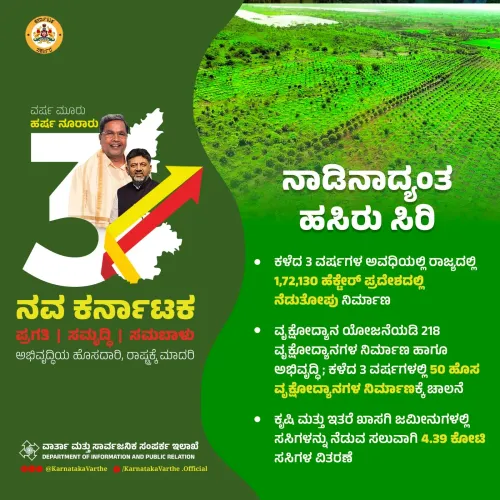
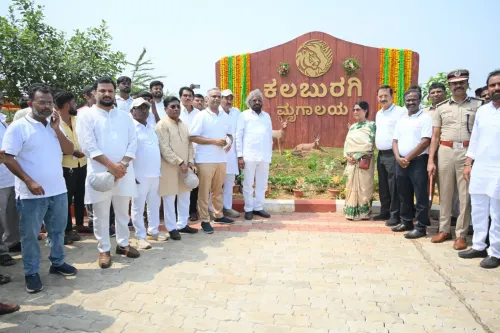
CM Karnataka's Office Invokes Sandalwood and Biodiversity in Green Pledge

Synopsis
The Chief Minister's Office of Karnataka posted a Kannada-language environmental message on 2 November 2026, calling the state's sandalwood forests and rare biodiversity a 'gift of nature' and urging citizens to pledge green cover protection for future generations.
Key Takeaways
The Chief Minister's Office of Karnataka posted an environmental pledge in Kannada on 2 November 2026 .
The message highlights Karnataka's identity as a land of sandalwood and rare biodiversity .
It calls on citizens to adopt a resolve to protect green cover for future generations .
Karnataka contains a major stretch of the Western Ghats , a UNESCO-recognised global biodiversity hotspot.
No specific scheme or policy announcement was attached — the post is a values and conservation-intent statement.
Forest policy watchers will monitor upcoming state budget sessions for concrete follow-through.
Karnataka's forests — fragrant with sandalwood, alive with rare species found nowhere else on earth — are 'an extraordinary gift of nature,' the Chief Minister's Office of Karnataka declared on Monday, calling on every resident to make protecting that green cover a personal vow for generations yet to come.
Posted on 2 November 2026, the Kannada-language message reads: 'Shrigandada kampu hagu aparoomada jeevavaividhyateinda kangolisuvuva namma Karunaadu, nisarga namage needida apoorva varaagide. Hasiranu mundina peeligeyu rakshisuvuva sankalpa nammadaagali.' — 'Our Karnataka, radiant with the fragrance of sandalwood and rare biodiversity, is an extraordinary blessing gifted to us by nature. Let the resolve to protect this greenery for future generations be ours.'
Why Sandalwood Is Karnataka's Defining Natural Symbol
Karnataka is home to some of the world's most prized sandalwood — Santalum album — concentrated in the dry deciduous forests of the southern districts. The state has long enforced dedicated forest legislation and anti-smuggling measures to protect a resource that was, for decades, the most poached timber in India. The CMO's invocation of sandalwood's fragrance is not merely poetic: it signals that the identity of the land is inseparable from the health of its forests.Western Ghats Biodiversity at Stake
Karnataka holds a substantial stretch of the Western Ghats — a UNESCO World Heritage biodiversity hotspot and one of the eight 'hottest hotspots' on the planet. The region shelters endemic flora and fauna, tiger reserves, and watersheds that feed peninsular India's major rivers. State-level messaging on intergenerational responsibility echoes the principles of the National Forest Policy, which sets a goal of bringing one-third of India's land area under tree cover and emphasises community stewardship as the foundation of long-term conservation.A Pledge Without a Programme — And Why That Still Matters
The post makes no reference to a specific scheme, budget line, or legislative notification — it is, deliberately, a values statement. Yet such statements carry political signal: they frame the government's conservation posture ahead of budget cycles and can prefigure new forest-regeneration or biodiversity-protection notifications in upcoming legislative sessions. Watchers of Karnataka's forest policy will look to the next state budget and any notifications from the Forest Department for concrete follow-through on this declared resolve. The fragrance of sandalwood travels far — but only if the tree is still standing. That, in four words, is the challenge Karnataka's government has just publicly accepted.Point of View
Karunaadu) rather than policy jargon to build public ownership of environmental stewardship. This approach aligns with a broader national pattern of framing ecology as heritage, not just regulation. Without a linked scheme or budget commitment, however, the pledge remains aspirational; its real significance will be measured when forest-department allocations and biodiversity-project notifications surface in Karnataka's next legislative cycle. The choice of Kannada, and the word 'sankalpa' (solemn resolve), suggests the messaging is aimed at domestic emotional resonance rather than a policy audience.
NationPress
2 Nov 2026
Frequently Asked Questions
What did the Karnataka Chief Minister's Office post about the environment?
The CMO posted a Kannada-language message on 2 November 2026 describing Karnataka as a land blessed with sandalwood fragrance and rare biodiversity, calling it a gift of nature and urging citizens to resolve to protect green cover for future generations.
Why is Karnataka associated with sandalwood?
Karnataka, particularly its southern districts, is home to some of the world's finest Santalum album (white sandalwood). The state has long maintained dedicated forest legislation and anti-smuggling measures to protect this resource.
What is the biodiversity significance of Karnataka's forests?
Karnataka contains a major portion of the Western Ghats, a UNESCO World Heritage site and one of the world's eight foremost biodiversity hotspots, sheltering endemic species, tiger reserves, and river watersheds critical to peninsular India.
Is there a specific scheme behind Karnataka CMO's green pledge?
No specific scheme or policy announcement accompanied the post. It is a values statement; policy watchers will look to forthcoming state budget allocations and Forest Department notifications for concrete measures.
What is 'sankalpa' in the context of this post?
'Sankalpa' is a Sanskrit-rooted Kannada word meaning a solemn personal resolve or vow. The CMO's use of the term frames environmental protection as a moral and cultural commitment, not merely a government policy directive.