Karnataka Leaders Slam Centre Over Fuel Tax Policies and Demand Relief
Synopsis
Karnataka's top political figures have launched a fierce critique of the Union government, accusing it of exploiting citizens through excessive fuel taxes. They demand immediate relief for the public, highlighting the disparity between international oil prices and domestic fuel costs.
Key Takeaways
Karnataka leaders accuse the Centre of exploiting citizens through high fuel taxes.
Tax revenue from fuel has reached Rs 43 lakh crore since 2014.
Recent duty reductions are seen as insufficient for public relief.
Fuel prices have escalated despite decreasing global crude oil prices.
The pattern of price hikes post-elections raises concerns about government accountability.
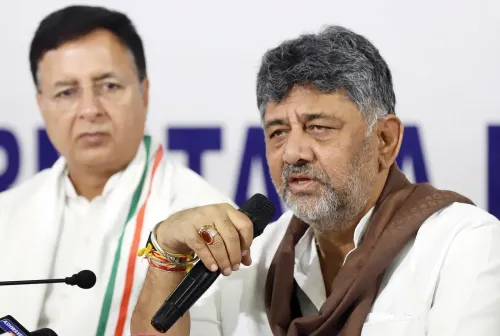
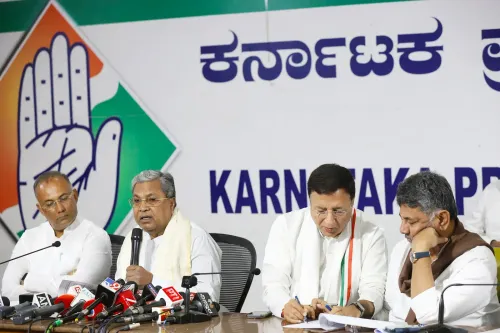
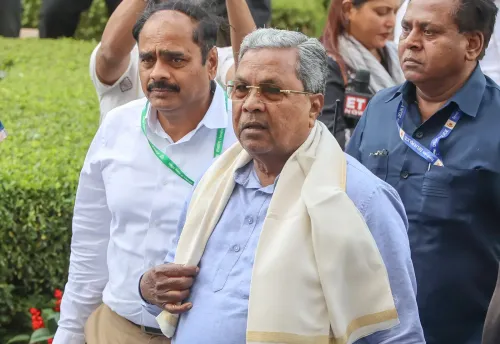
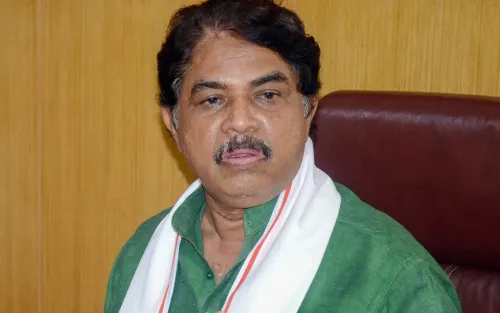
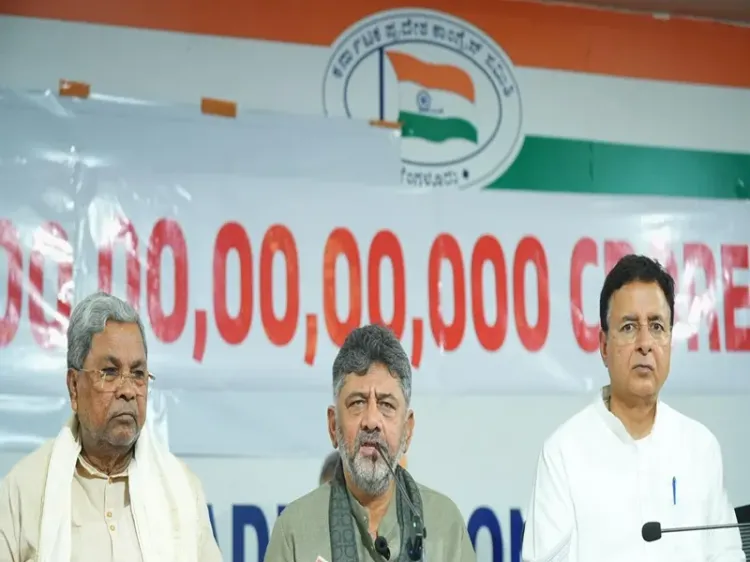
Bengaluru, March 27 (NationPress) Karnataka's Chief Minister Siddaramaiah, Deputy Chief Minister D.K. Shivakumar, and AICC General Secretary Randeep Singh Surjewala have intensified their critique of the Union government, accusing it of systematic "loot" via fuel taxes over the last decade. During a press briefing at the KPCC office in Bengaluru, Surjewala asserted that the Centre has amassed a staggering Rs 43 lakh crore from petrol and diesel taxes since 2014, equating to around Rs 1,000 crore daily.
He contended that the recent cut in excise duty on these fuels does not genuinely alleviate the burden on the average citizen and instead serves private oil companies. "This reduction in excise duty is merely a trick. Although portrayed as relief, the actual benefit will not reach ordinary people. Instead, it facilitates an annual duty concession of Rs 3.6 lakh crore for private oil firms," he stated.
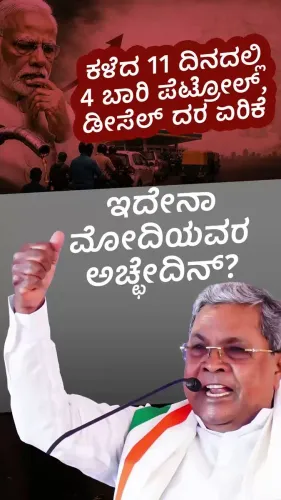
Moreover, CM Siddaramaiah highlighted that fuel prices have remained elevated despite drops in global crude oil costs. He cited that in May 2014, petrol was priced at Rs 71.41 per litre and diesel at Rs 56.71 per litre, while current rates in Bengaluru are Rs 102.96 and Rs 90.99, respectively.
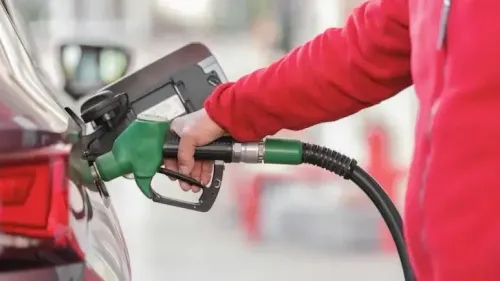
Siddaramaiah argued that petrol and diesel should be significantly cheaper based on international oil prices, blaming the Centre's high excise duties for the inflated costs. He noted that since 2014, the Union government has imposed an average excise duty of Rs 19.70 per litre on petrol and Rs 15.50 per litre on diesel, making fuel taxation a crucial revenue source.
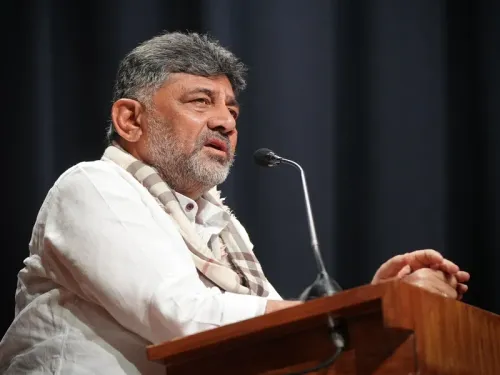
Deputy Chief Minister Shivakumar accused the Centre of repeatedly altering excise duties, reporting that there have been 21 revisions, including 12 increases, over the years. He alleged a pattern where fuel prices rise following elections, referencing increases after the 2014, 2019, and 2022 elections.
He also pointed out the significant hike in LPG prices, with the cost of a domestic cylinder soaring from Rs 412 in 2014 to Rs 913 in March 2026, while international LPG prices have dropped during the same timeframe.
Shivakumar expressed concerns about impending fuel price hikes, indicating that oil companies have already started increasing rates and warned of more increases following upcoming state elections. He urged the Union government to offer relief to the public instead of imposing high fuel prices.
"The Prime Minister must step forward and respond to the citizens of Karnataka and the entire nation," Shivakumar asserted.
Point of View
The criticism from Karnataka's leaders reflects growing concerns over fuel taxation and its impact on the public. As the government faces scrutiny, the responses indicate a need for transparency and accountability regarding fiscal policies and pricing strategies.
NationPress
20 Sept 2026
Frequently Asked Questions
What are the allegations against the Union government?
Karnataka leaders accuse the Union government of large-scale exploitation through excessive taxation on petrol and diesel, amounting to significant revenue without benefiting the public.
How much revenue has the Union government collected from fuel taxes?
Since 2014, the Union government has reportedly collected Rs 43 lakh crore from taxes on petrol and diesel.
What do the Karnataka leaders propose?
They are demanding immediate relief for the public from high fuel costs and transparency in taxation policies.
How have fuel prices changed since 2014?
Fuel prices have increased significantly in Karnataka, with petrol rising from Rs 71.41 in 2014 to Rs 102.96 currently.
What patterns have been observed with fuel price hikes?
The leaders allege that fuel prices tend to increase shortly after elections, indicating a pattern of price manipulation.