Karnataka stands by ethanol blending findings, challenges IOCL, BPCL, HPCL
Synopsis
Karnataka has fired back at India's three largest public sector oil companies — IOCL, BPCL, and HPCL — refusing to back down from its Operation Nikhar findings that E20 petrol supplied across the state exceeded the mandated 20% ethanol ceiling. With NABL-accredited lab results in hand and a pointed warning about two-wheeler engine damage, the state is forcing a question the Centre has yet to directly answer.
Key Takeaways
Karnataka Minister Rizwan Arshad on 9 November reaffirmed the state's ethanol blending test findings and challenged oil firms IOCL , BPCL , and HPCL to directly answer questions on E20 compliance.
Under Operation Nikhar , NABL-accredited labs reportedly found ethanol levels exceeding the mandated 20 per cent ceiling in petrol samples from districts including Bengaluru , Mangaluru , and Tumakuru .
Arshad rejected oil companies' attempts to attribute blending discrepancies to local petrol dealers, noting the companies themselves describe blending as a centralised, automated process .
The Minister also dismissed allegations of improper sampling, stating three samples were collected per the prescribed legal procedure, co-signed by oil company representatives.
Arshad warned that high-ethanol blends risk damaging engines of two-wheelers and vehicles used by middle-class consumers, escalating the dispute into a consumer welfare issue.
The Centre has yet to issue a direct response, with the Minister publicly calling for federal-level accountability on the matter.
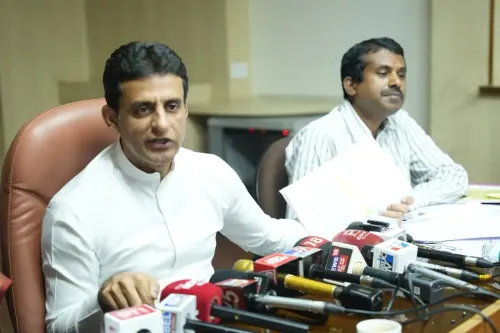
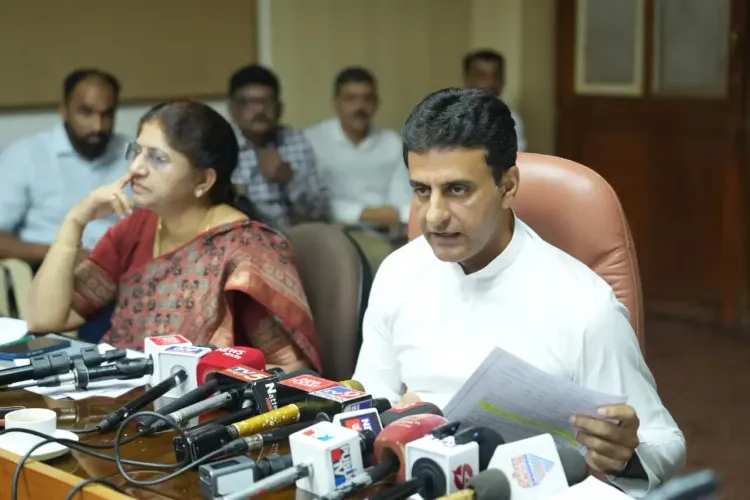
Karnataka Food, Civil Supplies, Consumer Affairs and Legal Metrology Minister Rizwan Arshad on Monday, 9 November reaffirmed that the state government stands firmly by its testing findings on alleged excessive ethanol blending in petrol, while sharply questioning the responses issued by public sector oil marketing companies Indian Oil Corporation (IOCL), Bharat Petroleum (BPCL), and Hindustan Petroleum (HPCL).
Addressing a press conference in Bengaluru, Arshad said the matter had come to public attention after the state raised concerns over the proportion of ethanol blended in petrol sold across Karnataka — and he maintained the Centre should have responded with equivalent seriousness, given the public interest at stake.
What the Minister Said
'The oil marketing companies have responded to our findings, but when an elected government raises an issue, the Central government should respond. We are a pro-people government and have raised this issue only to protect the interests of consumers. We have no personal or selfish interests in the matter,' Arshad said.
He accused the oil companies of sidestepping the core question on the actual proportion of ethanol in the fuel blend. 'You claim the fuel is E20, but you have not given a direct answer to this question. Instead, you are talking about technicalities. Whatever has been exposed by the state government and the methods adopted for testing, we stand firmly by our report,' he said.
Rejecting the Blame on Local Dealers
The Minister pushed back against oil companies' references to irregularities at individual petrol outlets. He argued that since the companies themselves describe ethanol blending as a sophisticated, controlled, and automated process, local petrol bunk dealers cannot logically be held responsible for any discrepancy in blending proportions.
'If the process is controlled and automated, how can local petrol pump dealers carry out such blending? The oil companies are attempting to wash their hands of responsibility by blaming local dealers. Petroleum dealers have nothing to do with this,' Arshad stated.
Defending the Sampling Methodology
Responding to oil companies' allegations of improper sampling, Arshad firmly rejected the charge. He said samples were collected strictly in accordance with the law, citing the relevant clause and sub-section governing the procedure.
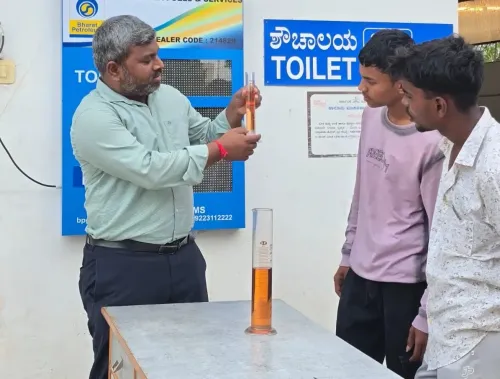
'We collected three samples. One was handed over to the oil company representatives, one was retained by us, and the third was sent to the laboratory for testing. The representatives of the oil companies and our officials signed the relevant documents. The density was recorded, and all other details were duly documented,' he said, asserting that 'as a responsible government, we cannot act irrationally or make allegations without following due procedures.'
Operation Nikhar: What the Tests Found
The Karnataka government launched Operation Nikhar to test and investigate ethanol concentrations in E20 petrol supplied across fuel stations in the state. Fuel samples were collected from major oil brands across multiple districts, including Bengaluru, Kolar, Chikkaballapura, Bengaluru Rural, Ramanagara, Mangaluru, and Tumakuru.
Laboratory tests conducted through NABL-accredited and ISO-certified facilities reportedly revealed ethanol levels exceeding the mandated 20 per cent ceiling. Arshad also cited the potential impact on vehicles, noting that even premium automotive technology struggles with non-compliant blends: 'Even BMW vehicles, which are equipped with highly sophisticated, cutting-edge engine technology, do not support this. What about the vehicles used by middle-class people, particularly two-wheelers? Can their engines support it?'
What Happens Next
The Minister reiterated that the state government would continue demanding accountability from all concerned authorities. The standoff between the Karnataka government and the central oil marketing companies signals an escalating Centre-state friction over fuel quality regulation — a domain that sits at the intersection of consumer protection, energy policy, and federal jurisdiction. The question of who carries institutional responsibility for blending compliance remains unanswered.
Point of View
But consumer protection enforcement often falls to states. The oil companies' deflection toward local dealer irregularities is structurally implausible given their own description of blending as a centralised, automated process, and Karnataka is right to call that out. What is missing from the Centre's response is any commitment to an independent, third-party re-test — which is the only way to resolve the dispute credibly. If Karnataka's findings are upheld, the implications for two-wheeler owners — the most price-sensitive and engine-vulnerable segment of Indian motorists — are significant, and no government at any level has yet addressed what remediation would look like.
NationPress
9 Nov 2026
Frequently Asked Questions
What is Operation Nikhar and what did it find?
Operation Nikhar is a Karnataka government initiative to test ethanol concentrations in E20 petrol supplied at fuel stations across the state. Laboratory tests conducted through NABL-accredited and ISO-certified facilities reportedly found ethanol levels exceeding the mandated 20 per cent ceiling in samples collected from multiple districts including Bengaluru, Kolar, Mangaluru, and Tumakuru.
What is the E20 petrol standard and why does it matter?
E20 petrol refers to fuel blended with up to 20 per cent ethanol, a threshold mandated under India's national biofuel blending programme. Exceeding this limit can damage vehicle engines, particularly in older two-wheelers and cars not designed for higher ethanol concentrations — affecting millions of middle-class motorists.
How did IOCL, BPCL, and HPCL respond to Karnataka's findings?
The three oil marketing companies issued responses that, according to Minister Rizwan Arshad, focused on technical aspects and referenced irregularities at individual petrol outlets rather than directly addressing the state's question about actual blending proportions. Arshad rejected this framing, arguing that since blending is centralised and automated, local dealers cannot be held responsible.
Did Karnataka follow proper procedures in collecting fuel samples?
Minister Arshad said three samples were collected per location strictly in accordance with the relevant legal clause and sub-section — one given to oil company representatives, one retained by the state, and one sent to a laboratory. Oil company representatives and state officials co-signed the documentation, with density and other details duly recorded.
What is the Centre's position on the Karnataka ethanol blending dispute?
As of 9 November, the Centre had not issued a direct response to the Karnataka government's findings. Arshad publicly called on the Central government to respond with the same seriousness as the issue warrants, given its implications for consumer welfare and vehicle safety.