CM Siddaramaiah Launches 10,000 Bharat Jodo Yuva Sanghas, Orders Revenue Land Audit
Synopsis
The Karnataka government has announced the launch of 10,000 Bharat Jodo Yuva Sanghas, each receiving Rs 10 lakh, to promote Kuvempu's constitutional values. Simultaneously, a statewide audit of Revenue Department land has been ordered, with a mandatory plan to provide residential sites to all landless poor households.
Key Takeaways
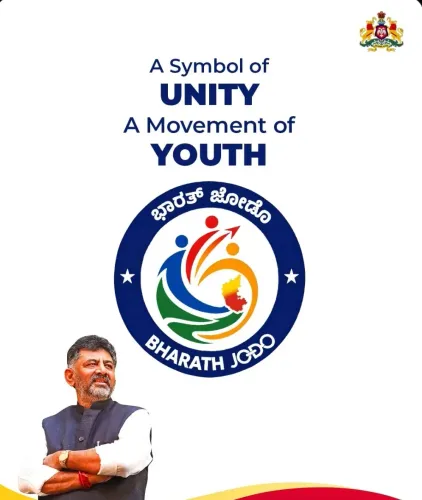
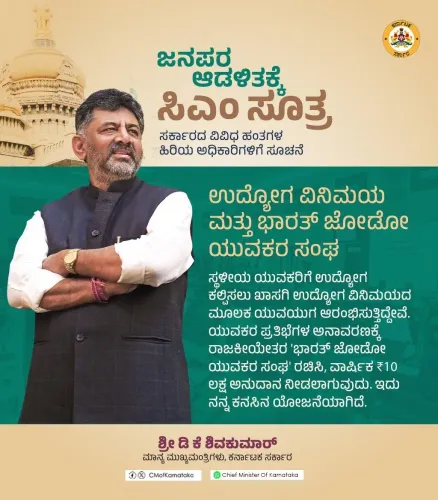
10,000 Bharat Jodo Yuva Sanghas will be established across Karnataka to promote cultural activities rooted in Kuvempu's ideals and constitutional values.
Each sangha will receive a government grant of Rs 10 lakh , implying a total outlay of up to Rs 1,000 crore .
A comprehensive audit of all Revenue Department land across the state has been ordered, with officials directed to submit clear land records.
The government has committed to a mandatory site-allotment plan to provide residential plots to every landless poor person in Karnataka.
The announcements are anchored in the legacy of Kuvempu , whose state anthem is cited as the inspiration for the youth cultural programme.
The Chief Minister's Office of Karnataka announced on Thursday, 9 July 2026 that the state government will establish 10,000 'Bharat Jodo Yuva Sangha' organisations across Karnataka, each receiving a grant of Rs 10 lakh, alongside a comprehensive audit of all Revenue Department land with a mandatory plan to provide residential sites to every landless poor person in the state.
Context
The announcement, part of a thread posted by the Chief Minister's Office of Karnataka, quotes the Chief Minister directly. The post states: 'ವಿಶ್ವ ಮಾನವ ಸಂದೇಶ ಸಾರಿದ ಕುವೆಂಪು ಅವರ ನಾಡಗೀತೆಯಲ್ಲಿರುವ ಆಶಯಗಳು...' — translating to: 'To carry the aspirations of Kuvempu's state anthem, which proclaims a universal human message, and the values enshrined in the Constitution into every home and heart, we are opening 10,000 Bharat Jodo Yuva Sanghas in the state. Each sangha will receive a grant of Rs 10 lakh.' The post is the ninth and final part of a series, indicating a comprehensive policy address.
Kuvempu, the celebrated Kannada poet and writer, authored Jaya Bharata Jananiya Tanujate, Karnataka's official state anthem. The anthem is widely regarded as a call for universal humanism and constitutional values, making it the thematic anchor for the proposed youth cultural organisations.
Policy Backdrop
The dual announcement ties together cultural outreach and land reform — a combination that Karnataka governments have pursued historically. The Karnataka Land Reforms Act, 1974 established mechanisms for land redistribution and ceiling enforcement to address rural inequality. More recently, land record transparency has been pursued under the Digital India Land Records Modernisation Programme, active since 2008, which pushed states to computerise revenue records.
The new announcement goes a step further: the government says all Revenue Department land across the state will undergo auditing, and officials have been directed to compile and submit clear documentation and details of wherever such land exists. A 'clear plan' (ಸ್ಪಷ್ಟವಾದ ಯೋಜನೆ) is being formulated to make site allotment to every landless poor person mandatory and enforceable.
Stakeholders and Impact
Landless poor households across Karnataka stand as the primary beneficiaries of the proposed site-allotment drive. The government's directive to audit all revenue land is aimed at identifying available plots that can be redistributed, addressing a long-standing gap in urban and rural land access for economically weaker sections.
Youth groups are the second major stakeholder. The 10,000 Bharat Jodo Yuva Sanghas, each funded with Rs 10 lakh, are envisioned as hubs for 'harmonious cultural activities' (ಸೌಹಾರ್ದಯುತ ಸಾಂಸ್ಕೃತಿಕ ಚಟುವಟಿಕೆಗಳು) rooted in Kuvempu's ideals and constitutional principles. If fully operationalised, the total grant outlay for the sanghas would amount to Rs 1,000 crore.
What's Next
The government has indicated that a detailed plan for the mandatory site-allotment scheme is currently being formulated. Revenue officials across the state have been instructed to gather and submit precise records of all revenue land under their jurisdiction — a data-collection exercise that will precede the audit.
The rollout of the Bharat Jodo Yuva Sanghas, disbursement of the Rs 10 lakh grants per unit, and the timeline for completing the statewide revenue land audit will be closely watched as the government moves from announcement to implementation.
Point of View
Even as the 'Bharat Jodo' branding carries unmistakable political resonance. The mandatory site-allotment commitment, if backed by enforceable timelines, would mark a meaningful escalation beyond earlier land-record digitisation efforts. Whether the audit mechanism translates into actual redistribution — rather than a data-collection exercise — will be the real test of the policy's ambition.
NationPress
8 Oct 2026
Frequently Asked Questions
What is Bharat Jodo Yuva Sangha in Karnataka?
Bharat Jodo Yuva Sangha is a state-government initiative to establish 10,000 youth organisations across Karnataka, each granted Rs 10 lakh, to conduct harmonious cultural activities inspired by poet Kuvempu's state anthem and constitutional values.
How much grant will each Bharat Jodo Yuva Sangha receive?
Each of the 10,000 Bharat Jodo Yuva Sanghas announced by the Karnataka government will receive a grant of Rs 10 lakh, amounting to a potential total outlay of Rs 1,000 crore.
What is the Karnataka revenue land audit announced in July 2026?
The Karnataka government has ordered a comprehensive audit of all land held by the Revenue Department across the state. Officials have been directed to compile and submit clear records of all such land as a precursor to a mandatory site-allotment plan for landless poor households.
Who was Kuvempu and why is he linked to this scheme?
Kuvempu was a celebrated Kannada poet and writer who authored Karnataka's official state anthem, 'Jaya Bharata Jananiya Tanujate', a call for universal humanism and constitutional values. The Karnataka government has cited his ideals as the thematic foundation for the Bharat Jodo Yuva Sanghas.
Will Karnataka provide free sites to landless poor?
Yes, the Karnataka government has announced a plan to make it mandatory to provide residential sites to all landless poor people in the state. A detailed scheme is being formulated following the statewide audit of Revenue Department land.