Karnataka Launches Textile Policy 4.0 to Attract ₹20,000 Cr
Synopsis
Karnataka's CMO announced the Textile and Apparel Policy 4.0 (2026–31) on 30 September 2026, backed by ₹4,000 crore, targeting ₹20,000 crore in investment and 5 lakh jobs, with new incentives for 34 priority taluks, silk reeling inclusion, and special concessions for Kalaburagi's PM-MITRA Park.
Key Takeaways
Karnataka Textile and Apparel Policy (4.0) 2026–31 has been officially launched by the state government.
The state has allocated ₹4,000 crore to support the policy's implementation over five years.
The policy targets attracting ₹20,000 crore in investment and creating 5 lakh new jobs .
Silk reeling and spinning activities are included in a state textile policy for the first time.
34 special priority taluks will receive enhanced incentives to promote balanced regional development.
The PM-MITRA Park in Kalaburagi gets special concessions, stacking state benefits on top of the Central government scheme.
Karnataka has drawn a bold line in the sand for India's textile future. The Chief Minister's Office of Karnataka announced on 30 September 2026 the launch of the Karnataka Textile and Apparel Policy (4.0) 2026–31, a five-year framework backed by ₹4,000 crore in state support, aimed at transforming the state into a globally competitive garment and textile manufacturing destination.
₹20,000 Crore Target and 5 Lakh Jobs: What the Policy Promises
The numbers are ambitious by any measure. The policy sets a target of attracting ₹20,000 crore in fresh investment and generating 5 lakh new employment opportunities over its five-year run. The CMO's post stated the goal plainly: 'ರಾಜ್ಯವನ್ನು ಜಾಗತಿಕ ಮಟ್ಟದ ಜವಳಿ ಮತ್ತು ಉಡುಪು ಉತ್ಪಾದನಾ ಕೇಂದ್ರವನ್ನಾಗಿ ರೂಪಿಸಲು' — 'to shape our state into a world-class textile and apparel manufacturing hub.'
If realised, the employment figure alone would represent one of the largest single-policy job-creation pushes in Karnataka's recent industrial history. Textile and apparel manufacturing skews heavily toward women workers, meaning the human impact of hitting that number would be disproportionately felt in households across the state.
Silk Reeling Enters the Policy Framework for the First Time
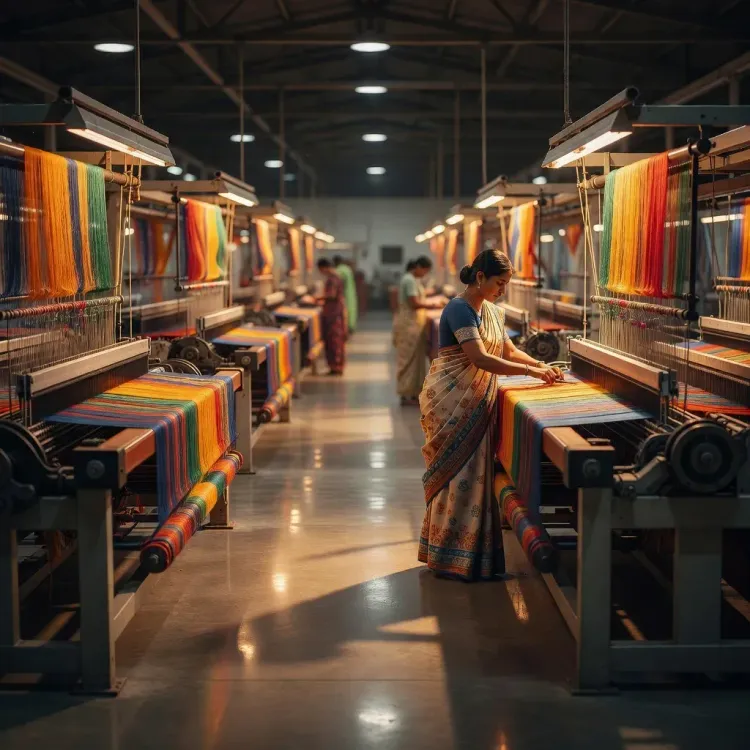
One of the most structurally significant moves is the first-ever formal inclusion of silk reeling and spinning activities within the state's textile policy architecture. Karnataka is India's largest silk-producing state, yet the upstream reeling and spinning segments had historically sat outside the formal incentive framework. Bringing them in closes a long-standing gap, integrating a traditional, rural-anchored industry into the export-oriented value chain the policy is designed to build.
That integration matters beyond symbolism. Silk reelers — many of them small operators in districts like Ramanagara and Mysuru — now stand to access state incentives that were previously unavailable to them, potentially accelerating modernisation of a sector that has remained largely artisanal.
Kalaburagi's PM-MITRA Park and the Regional Equity Play
The policy also takes direct aim at Karnataka's persistent north-south development divide. 34 special priority taluks — largely in the historically underserved northern and coastal regions — will receive enhanced incentives to draw investment away from the already-saturated Bengaluru corridor.
Central to this is the PM-MITRA Park in Kalaburagi, the northern Karnataka district that hosts one of the Central government's Mega Integrated Textile Region and Apparel parks launched under the PM-MITRA scheme in 2021. The new state policy layers special concessions on top of the existing Central framework, making Kalaburagi a doubly-incentivised destination for textile investors. That kind of Centre-state policy stacking is exactly the playbook that has worked in states like Gujarat and Tamil Nadu to anchor large manufacturing clusters.
Karnataka's Bid to Outcompete in a Crowded Race
The timing is pointed. India's textile and apparel sector is in the middle of a global realignment, as buyers diversify supply chains away from China and Bangladesh. States like Tamil Nadu, Gujarat, and Telangana are all competing aggressively for the same investment flows, backed by their own policy incentives and PLI-linked benefits.
Karnataka's Policy 4.0 is its answer — a comprehensive refresh that bundles regional equity, traditional-sector integration, and a Central-scheme multiplier into a single framework. Whether the ₹20,000 crore investment target materialises will depend on execution speed, single-window clearance efficiency, and how quickly the Kalaburagi PM-MITRA infrastructure becomes investor-ready.
Five years. Five lakh jobs. The policy is on paper. The clock starts now.
Point of View
And its most consequential structural move may be the formal inclusion of silk reeling — signalling a shift from treating traditional industries as heritage assets to integrating them into export-linked value chains. The double-incentive architecture at Kalaburagi, combining Central PM-MITRA support with new state concessions, mirrors a Centre-state coordination model that has historically been effective in anchoring large manufacturing clusters. The real test, however, is implementation velocity: Karnataka's industrial policies have often set ambitious targets that outpaced on-ground infrastructure delivery, and the ₹20,000 crore investment figure will be the scorecard that investors, opposition, and the state's own industrial department will watch closely through 2031.
NationPress
30 Sept 2026
Frequently Asked Questions
What is Karnataka Textile and Apparel Policy 4.0?
The Karnataka Textile and Apparel Policy (4.0) 2026–31 is a five-year state industrial policy launched to position Karnataka as a global textile and garment manufacturing hub, backed by ₹4,000 crore in state support and targeting ₹20,000 crore in investment and 5 lakh new jobs.
How much investment is Karnataka targeting under Textile Policy 4.0?
Karnataka is targeting ₹20,000 crore in fresh investment under the Textile and Apparel Policy 4.0 over the 2026–31 period, with ₹4,000 crore allocated by the state to support implementation.
What is the PM-MITRA Park in Kalaburagi?
PM-MITRA (Mega Integrated Textile Region and Apparel) is a Central government scheme launched in 2021 to establish large integrated textile parks. The Kalaburagi unit in northern Karnataka is one such park and will receive special additional concessions under the new state policy.
Why is silk reeling included in Karnataka's new textile policy?
Silk reeling and spinning are included in a Karnataka textile policy for the first time to formally integrate the state's large traditional silk industry into the incentive framework, allowing silk reelers and spinners to access state benefits previously unavailable to them.
Which taluks get special incentives under Karnataka Textile Policy 4.0?
34 special priority taluks across Karnataka, largely in historically underserved regions, will receive higher incentives under Policy 4.0 to promote balanced regional industrial development and draw investment beyond the Bengaluru corridor.