Is Pakistan's 'Kashmir Solidarity Day' a True Advocacy or a Paradox?
Synopsis
Pakistan celebrates 'Kashmir Solidarity Day' annually, highlighting its commitment to Kashmiris' rights. Yet, this global advocacy contrasts sharply with its internal suppression of political freedoms and civil liberties. Can a nation genuinely champion human rights abroad while denying them at home? This article explores this paradox and its implications for Pakistan's credibility.
Key Takeaways
Kashmir Solidarity Day reflects a significant contradiction in Pakistan's advocacy.
Political freedoms are suppressively managed in regions under Pakistan's governance.
True solidarity requires a commitment to universal human rights .
Pakistan's narrative risks being dismissed as performative without addressing internal issues.
Enhancing credibility involves reforms and genuine representation.
New Delhi: Annually on February 5, Pakistan commemorates 'Kashmir Solidarity Day' through rallies, speeches, diplomatic efforts, and synchronized media campaigns across various capitals and international platforms. Official communications emphasize themes of human rights, self-determination, and moral obligation. However, beneath this meticulously crafted global outreach lies a profound contradiction: while Pakistan presents itself as the foremost advocate for the rights of Kashmiris abroad, it concurrently enforces severe restrictions on political freedoms, dissent, and fundamental civil liberties within its own territories.
This contradiction compels us to confront an unsettling question: can a nation genuinely advocate for human rights in Kashmir while simultaneously denying these rights within its own borders?
Pakistan’s 'Kashmir Solidarity Day' has transformed into an intricate political maneuver. Embassies conduct seminars, diaspora organizations spearhead protests, and social media is inundated with emotionally charged narratives. The objective is clear: to keep the Kashmir issue relevant on the global stage and portray Pakistan as the moral custodian in a protracted conflict.
Nevertheless, much of this advocacy is built on selective narratives. While accusations of rights violations in Jammu and Kashmir take center stage in speeches and demonstrations, there is a conspicuous absence of discourse concerning the realities faced by individuals in regions occupied by Pakistan. This selective indignation undermines the ethical underpinnings of Pakistan’s advocacy and erodes its credibility among impartial observers.
The most conspicuous gap in Pakistan’s Kashmir narrative pertains to Pakistan-occupied Jammu and Kashmir (PoJK) and Gilgit Baltistan. Despite being central to the Kashmir conflict, these areas remain politically sidelined.
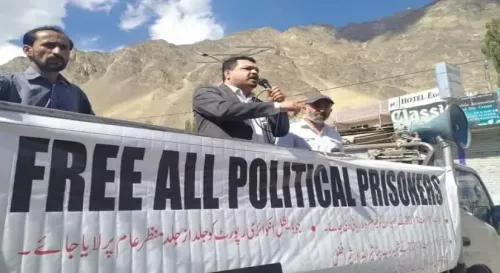
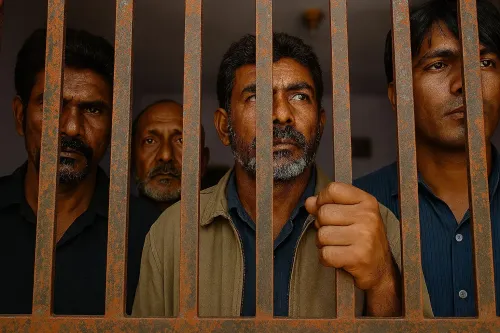
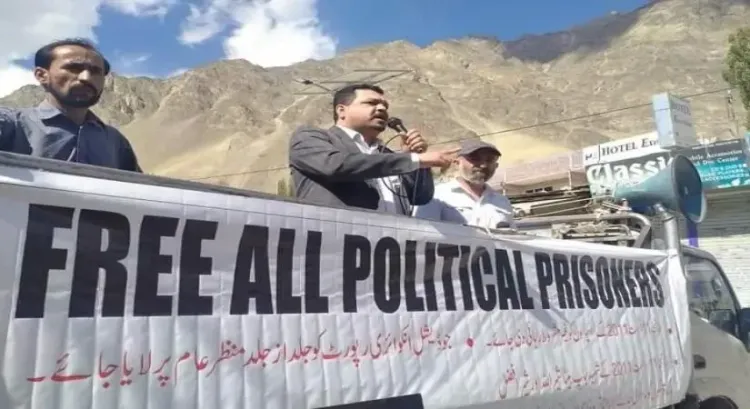
Gilgit Baltistan, which is home to over two million residents, is devoid of constitutional recognition within Pakistan. Its inhabitants are unable to participate in national elections, have limited legislative power, and lack substantial representation in the nation’s decision-making processes. Local political activists advocating for constitutional rights have frequently faced arrests, surveillance, and restrictions on their ability to assemble.
In PoJK, political expression is strictly regulated through legal frameworks that criminalize dissent. Any advocacy that questions Pakistan’s official stance on Kashmir or demands greater autonomy is often met with intimidation or legal action. Independent journalism is heavily constrained, and protests critical of Islamabad’s policies are routinely suppressed.
The irony is striking: while Pakistan calls for a plebiscite and freedom of expression for Kashmiris in other regions, it denies these very rights to Kashmiris living under its governance.
Pakistan frequently rationalizes its internal repression in PoJK and Gilgit Baltistan with references to national security. Laws that limit speech, assembly, and political organization are justified as essential for maintaining territorial integrity. Yet these justifications echo the very arguments Pakistan condemns when employed by other nations.
International human rights organizations have consistently raised alarms regarding enforced disappearances, media restrictions, and the targeting of activists in these regions. However, these concerns rarely receive attention during 'Kashmir Solidarity Day' activities, where the narrative is meticulously curated and focused outwardly.
In the realm of global diplomacy, moral authority holds significant value. States that successfully advocate for human rights abroad typically display consistency in their domestic policies. Pakistan’s selective human rights discourse has increasingly attracted scrutiny from international analysts, journalists, and policymakers who question whether 'Kashmir Solidarity Day' genuinely reflects concern for Kashmiris or is merely a political facade.
This gap in credibility becomes especially pronounced in multilateral settings, where Pakistan’s assertions are often met with calls for self-reflection regarding its governance. Advocacy that overlooks internal contradictions risks being perceived as performative rather than principled.
True solidarity with Kashmir cannot be merely symbolic or selective. It necessitates a commitment to universal rights, irrespective of geographical or political expediency. If Pakistan aspires to be regarded as a serious stakeholder in Kashmir's future, it must first address the democratic deficits within its administered territories.
Granting constitutional recognition to Gilgit Baltistan, ensuring freedom of expression in PoJK, safeguarding journalists and activists, and fostering genuine political plurality would not undermine Pakistan’s stance on Kashmir; rather, such actions would enhance its moral credibility and demonstrate authenticity.
The observance of 'Kashmir Solidarity Day', in its current form, exemplifies a paradox that Pakistan must confront. Advocacy abroad cannot replace accountability at home. The international community, increasingly attuned to discrepancies in human rights narratives, is unlikely to be swayed by mere slogans.
Real solidarity with Kashmiris on both sides of the Line of Control demands consistency, introspection, and reform. Until such changes occur, February 5 will serve less as a day of solidarity and more as a reminder of an ever-widening credibility gap.
(The author is the National Chairman of Muslim Students Organisation of India. The opinions expressed herein are personal.)
Point of View
It is crucial to approach the topic of Pakistan's 'Kashmir Solidarity Day' with a focus on the importance of accountability and consistency in human rights advocacy. While the intent to support Kashmiris is commendable, it must be matched with a commitment to uphold those very rights within Pakistan's own borders. A balanced perspective is vital for fostering genuine discourse around this sensitive issue.
NationPress
10 Sept 2026
Frequently Asked Questions
What is Kashmir Solidarity Day?
Kashmir Solidarity Day is an annual observance in Pakistan, held on February 5, to express support for the people of Kashmir and highlight their right to self-determination.
Why is there criticism of Pakistan's position on Kashmir?
Critics argue that Pakistan's advocacy for Kashmiris' rights abroad starkly contrasts with its suppression of political freedoms and civil liberties within regions it administers.
What are the living conditions in Gilgit Baltistan and PoJK?
Residents of Gilgit Baltistan and Pakistan-occupied Jammu and Kashmir face political marginalization, lack constitutional recognition, and experience restrictions on their rights.
How do international organizations view Pakistan's treatment of these regions?
International human rights organizations have raised concerns about enforced disappearances, media restrictions, and the targeting of activists in Gilgit Baltistan and PoJK.
What reforms are suggested for Pakistan to strengthen its Kashmir narrative?
Reforms such as granting constitutional status to Gilgit Baltistan, ensuring freedom of expression in PoJK, and allowing political pluralism are suggested to enhance Pakistan's moral standing.