Are Indian Agencies Addressing the Renewed Push for Kashmiris to Enter PoK?
Synopsis
Indian agencies are sounding the alarm on a worrying resurgence of attempts by Jammu and Kashmir residents to cross into Pakistan-occupied-Kashmir (PoK). With echoes of the 1990s, officials are ramping up efforts to counteract this troubling trend. Explore the implications of this renewed push and the strategies being employed to combat it.
Key Takeaways
Indian agencies are alarmed by the resurgence of exfiltration attempts.
Recent crackdowns target both terror handlers and those luring locals.
The ISI is employing propaganda to entice individuals.
Social media plays a significant role in spreading disinformation.
Authorities warn of escalating risks if not curtailed.
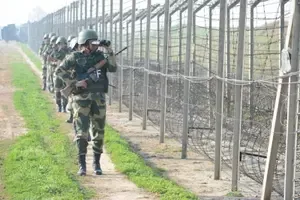
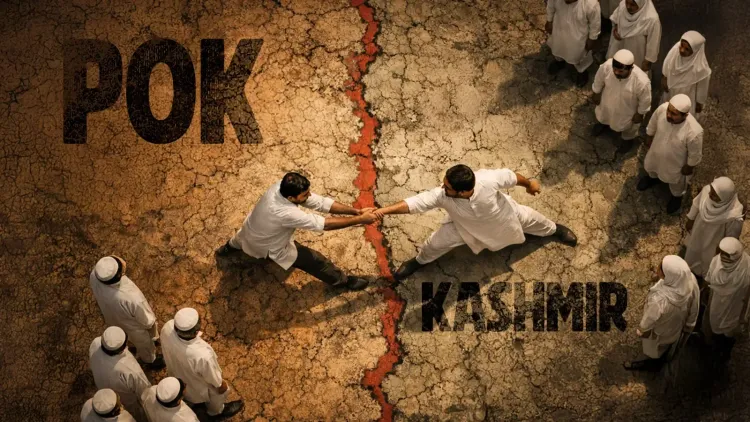
New Delhi, Jan 8 (NationPress) Indian agencies are alarmed by a troubling trend in which individuals from Jammu and Kashmir are attempting to cross into Pakistan-occupied-Kashmir (PoK) and Pakistan.
Officials indicate that this trend echoes the rampant movement of the 1990s.
The resurgence of this activity has compelled authorities to intensify their efforts against these elements.
Recently, Poonch Police took action against properties belonging to a terror handler based in Pakistan, Rafiq Nai. Similar measures were implemented against another handler, Jamal Lone, both of whom are charged with facilitating infiltration and enticing residents of Jammu and Kashmir to relocate to Pakistan and PoK.
According to police reports, Lone had successfully crossed into PoK and has since engaged in activities opposing India. Officials suggest that Pakistan is in need of more locals from Jammu and Kashmir to facilitate its agenda, thereby enticing them.
These individuals are reportedly being recruited for narcotics smuggling and aiding terrorist infiltration from Pakistan into Jammu and Kashmir.
Moreover, the ISI is seeking local guides to assist in launching terrorists into Jammu and Kashmir, as noted by officials.
Intelligence agencies report that, reminiscent of the 1990s, announcements are being made from mosques on the other side, enticing the local population to cross over.
Promises of financial rewards and improved living conditions are being made to potential recruits. While officials acknowledge that the current scale of this issue is not as significant as during the 1990s, there is an evident and desperate push for more exfiltrations from Jammu and Kashmir.
An official from the Intelligence Bureau shared insights that many who previously crossed over have later expressed regret, realizing that the situation is not as favorable as anticipated.
Numerous individuals have reached out to Indian agencies seeking to return, with India facilitating their repatriation, followed by their placement in rehabilitation camps before reintegration into society.
Authorities warn that if not addressed, the issue of exfiltration could escalate. This time, the ISI is not solely relying on financial incentives; it has launched a comprehensive propaganda campaign to attract youth.
Social media has emerged as a significant platform for these disinformation efforts, according to officials.
In the wake of the Pahalgam terror attack that resulted in 26 fatalities, India initiated Operation Sindoor, which severely impacted the operational capabilities of Lashkar-e-Tayiba and Jaish-e-Mohammad.
Consequently, infiltrations into India have become increasingly challenging. The ISI has adapted its strategy, focusing on developing local terror modules rather than sending operatives from Pakistan.
Efforts are underway to establish localized terror units, with plans to incorporate more Over Ground Worker (OGW) modules, including women.
This renewed push for exfiltrations from Jammu and Kashmir aligns with a broader strategy aimed at increasing local involvement, as stated by an Intelligence Bureau official.
In recent months, the ISI has commenced a substantial operation to extract locals from Jammu and Kashmir. Beyond engaging them in narco-smuggling and counterfeiting, the ISI aims to utilize them as terror guides.
The strategy targets individuals from nearby border areas, who are familiar with the terrain, making them ideal candidates for assisting terrorists from Pakistan in infiltrating Jammu and Kashmir.
This activity has been particularly noted in the Poonch-Rajouri sector, a region previously targeted by the ISI in the 1990s, and is now under similar scrutiny.
Indian agencies have launched a comprehensive crackdown on those who have crossed into PoK and Pakistan, actively working to prevent further luring of individuals into such actions. The police have confiscated properties belonging to these individuals, and further actions are anticipated in the coming days.
Point of View
It is essential to recognize the gravity of the situation unfolding in Jammu and Kashmir. The resurgence of individuals attempting to cross into Pakistan-occupied-Kashmir poses significant security concerns. It is imperative that Indian agencies remain vigilant and proactive in countering these attempts to ensure the safety and stability of the region.
NationPress
6 Oct 2026
Frequently Asked Questions
What is the current trend regarding Kashmir residents?
Indian agencies have reported an alarming increase in attempts by Jammu and Kashmir residents to cross into Pakistan-occupied-Kashmir (PoK) and Pakistan.
What actions are being taken to combat this trend?
Authorities are intensifying crackdowns on individuals involved in luring others, including recent actions against known terror handlers.
How does this situation compare to the 1990s?
While the scale of the current issue is not as significant as in the 1990s, officials note that there is a desperate push for more exfiltrations.
What are the motivations for crossing over?
Individuals are being promised financial rewards and improved living conditions, as part of a broader propaganda campaign by the ISI.
What is the potential impact of these actions?
If not addressed, the problem of exfiltration could escalate, leading to increased local involvement in terrorist activities.