Kejriwal Claims Petrol Should Cost Rs 82, Not Rs 102
Synopsis
AAP convenor Arvind Kejriwal alleged on 9 July 2026 that petrol should cost Rs 82 per litre but the government charges Rs 102, and announced a 4 PM press conference to detail the tax-driven gap — reigniting the opposition's long-running critique of central excise duties on fuel.
Key Takeaways
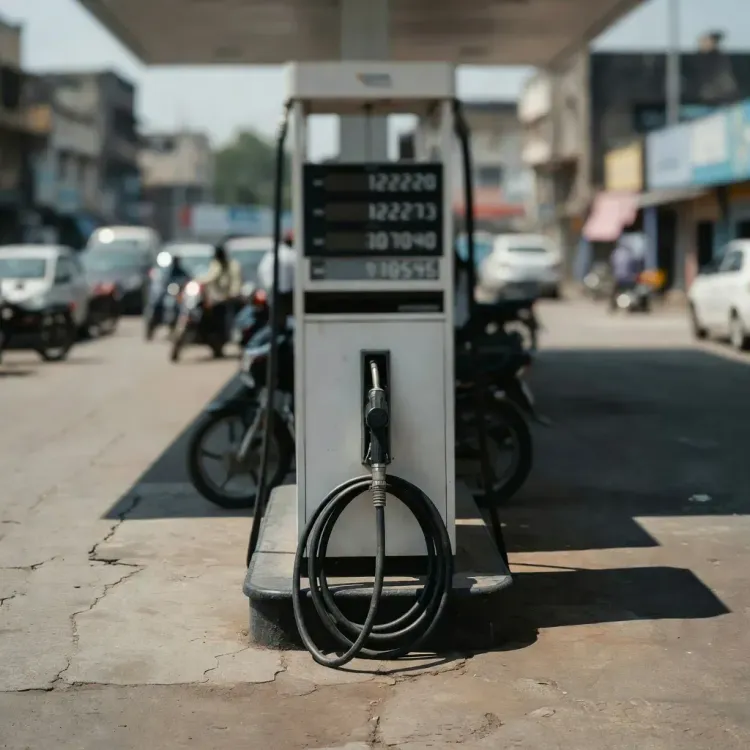
Arvind Kejriwal claimed on 9 July 2026 that petrol's fair price is Rs 82 per litre against a prevailing retail price of Rs 102 per litre .
He attributed the Rs 20 per litre gap to government taxation, implicitly targeting central excise duty and state VAT.
A press conference was announced for 4 PM the same day to elaborate on the claim with supporting data.
Central excise duty on petrol peaked at over Rs 32 per litre between 2014 and 2021 , forming the backdrop to this critique.
Retail petrol prices have been deregulated since 2010 , linked to international crude plus taxes and dealer margins.
Opposition parties including AAP have consistently argued that consumers do not benefit proportionately when global crude prices fall.
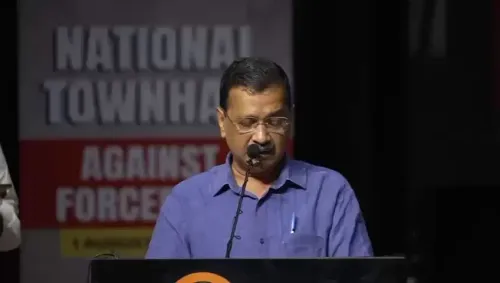
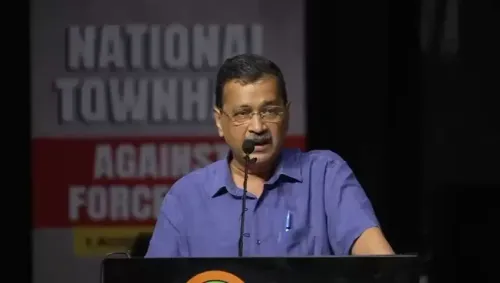
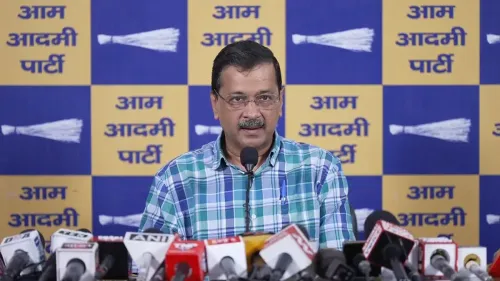
AAP convenor Arvind Kejriwal on Thursday, 9 July 2026 alleged that petrol in India should be available at Rs 82 per litre but consumers are being charged Rs 102 per litre, and announced a press conference at 4 PM the same evening to elaborate on the claim.
In his post on X, Kejriwal wrote: 'Aaj hamare desh mein petrol 82 rupaye prati litre milna chahiye jabki sarkar humse 102 rupaye prati litre le rahi hai.' ('Today, petrol in our country should be available at Rs 82 per litre, but the government is charging us Rs 102 per litre.') He announced a press conference at 4 PM to present his case publicly.
Context
The post fits a long-running pattern in Indian opposition politics where parties contrast the retail pump price of petrol with an estimated 'fair' price derived by stripping out central excise duty, state VAT, and dealer margins. Kejriwal and the Aam Aadmi Party (AAP) have previously criticised the central government's tax structure on petroleum products, arguing that consumers bear a disproportionate burden even when global crude prices fall.
Retail petrol prices in India were fully deregulated in 2010, meaning they are linked to international crude oil benchmarks plus applicable taxes and dealer margins rather than being administratively fixed.
Policy Backdrop
Central excise duty on petrol was raised multiple times by the government between 2014 and 2021, reaching over Rs 32 per litre at its peak. State governments additionally levy VAT, which varies significantly across states and adds another substantial layer to the final retail price.
Even as global crude prices have fluctuated — including periods of significant decline — successive central governments have been reluctant to pass the full benefit to consumers, citing fiscal revenue requirements. Opposition parties, including AAP, have consistently argued this amounts to an unfair tax burden on ordinary citizens and vehicle owners.
Stakeholders and Impact
The immediate stakeholders are petrol consumers and vehicle owners across India, for whom fuel costs represent a direct and recurring household expenditure. A gap of Rs 20 per litre between the claimed fair price and the current retail price, if substantiated, would translate into significant cumulative savings for millions of daily commuters and commercial vehicle operators.
The claim also has political salience ahead of any forthcoming state or national electoral cycle, as fuel prices are a tangible, everyday issue that resonates with urban and semi-urban voters — a core constituency for AAP.
What's Next
Kejriwal's 4 PM press conference on 9 July 2026 is expected to provide the detailed methodology behind the Rs 82 per litre figure, likely breaking down the central excise duty and state VAT components that he argues inflate the price. A response from the Union Petroleum Ministry or the ruling BJP is anticipated.
Analysts will watch whether the press conference triggers a broader political debate on excise duty revision or prompts non-BJP ruled states to signal VAT adjustments as a counter-narrative. Any formal demand for a parliamentary discussion or a public interest litigation on fuel pricing could follow if the issue gains traction.
Point of View
Not a market outcome, and force the ruling party onto the defensive ahead of any electoral cycle. The Rs 20-per-litre differential claim, if backed with credible arithmetic at the press conference, could reopen the excise duty debate in Parliament and pressure non-BJP states to signal VAT cuts as a competitive gesture. More broadly, this fits AAP's pattern of using consumer-economy issues — electricity bills, water tariffs, fuel costs — as wedge arguments against the central government. The durability of the attack depends entirely on the methodology Kejriwal presents: a well-sourced breakdown will sustain the narrative; a vague claim will be dismissed quickly by the treasury benches.
NationPress
8 Oct 2026
Frequently Asked Questions
Why does Kejriwal say petrol should cost Rs 82 per litre?
Kejriwal argues that after accounting for the actual cost of crude oil and necessary margins, petrol should retail at Rs 82 per litre, with the remaining Rs 20 per litre representing excess taxation by the central and state governments. He announced a press conference on 9 July 2026 to detail the breakdown.
What is the current petrol price in India in July 2026?
According to Kejriwal's post on 9 July 2026, the prevailing retail petrol price is Rs 102 per litre. Actual pump prices vary by city depending on state VAT and local levies.
How much tax is included in the price of petrol in India?
Petrol in India carries a central excise duty component that peaked at over Rs 32 per litre between 2014 and 2021, plus state-level VAT that varies across states. Together, taxes typically account for a significant share of the final pump price.
What is AAP's stand on petrol prices?
The Aam Aadmi Party has consistently criticised the central government for maintaining high excise duties on petrol and diesel even when global crude prices decline, arguing that consumers are denied the benefit of lower international oil costs.
When is Kejriwal's press conference on petrol prices?
Kejriwal announced a press conference for 4 PM on Thursday, 9 July 2026, where he is expected to present the methodology behind his claim that petrol should cost Rs 82 per litre.