Kejriwal Slams Exam Leak, Questions BJP's Governance Grip
Synopsis
AAP convenor Arvind Kejriwal on 27 June 2026 accused the ruling establishment of orchestrating systemic exam leaks and temple mismanagement, alleging that corruption money funds legislative defections, and declared the country 'unsafe' under the current government.
Key Takeaways
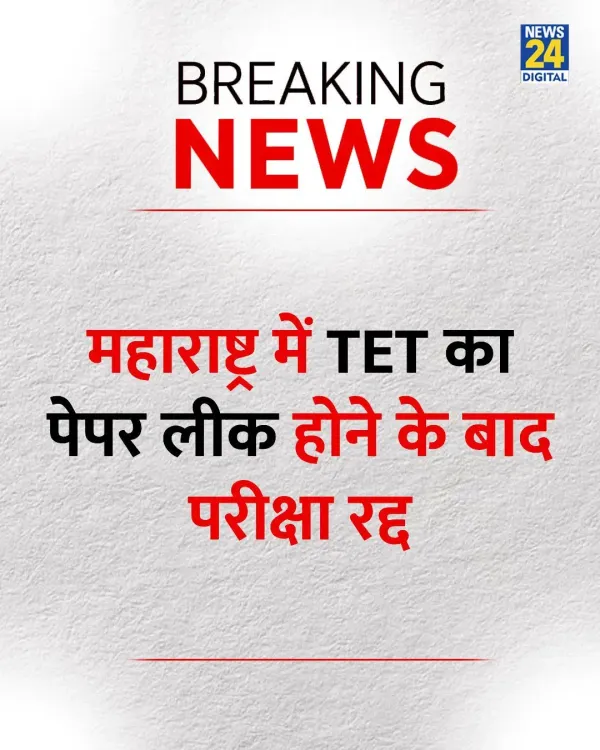
Arvind Kejriwal alleged on 27 June 2026 that another competitive examination paper has been leaked under the watch of the central government.
He rejected the defence that only lower-level officials are responsible, arguing that large-scale daily irregularities require top-level participation.
Kejriwal alleged that corruption proceeds are being used to purchase the loyalty of MPs and MLAs .
He extended his critique to the management of temples , framing both as evidence of broad institutional failure.
The Aam Aadmi Party declared the country 'not safe' in the hands of the current leadership, signalling an escalating opposition campaign on governance.
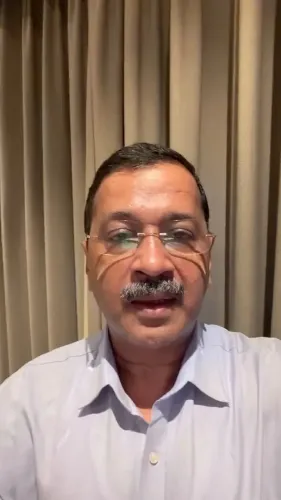
AAP convenor Arvind Kejriwal launched a sharp attack on the ruling establishment on Saturday, 27 June 2026, alleging that a fresh examination paper leak exposes systemic corruption reaching the highest levels of government, and declaring that the country is not safe in the hands of the current leadership.
Context
Kejriwal's post, written in Hindi, opens with a blunt charge: 'Ek aur pariksha leak ho gayi' ('Another examination has been leaked'). He broadened the attack to include alleged irregularities at religious institutions, stating that those in power have 'spared neither examinations nor temples.' The remarks come against a backdrop of recurring complaints from student communities and civil society groups about the integrity of competitive examinations administered under central oversight.
The AAP convenor rejected the defence that lower-level functionaries alone are responsible. 'Corruption at this scale, happening continuously every day, is not possible without the participation of those at the top,' he argued. He further alleged that the money collected through these irregularities is being used to 'buy' Members of Parliament and Members of Legislative Assembly.
Policy Backdrop
Paper leaks in competitive examinations have been a recurring governance flashpoint in India. Opposition parties, including the Aam Aadmi Party, have consistently demanded stricter anti-cheating legislation and independent oversight of examination bodies. The AAP itself traces its origins to the 2011-12 India Against Corruption movement, and Kejriwal has built his political identity around the issue of institutional integrity.
Allegations of using unaccounted funds to engineer legislative defections — often called 'horse-trading' in Indian political discourse — are not new. They have surfaced repeatedly during periods of political realignment, and opposition leaders across the spectrum have levelled such charges against whichever party holds central power.
Stakeholders and Impact
The most immediate stakeholders are lakhs of examination aspirants across India who invest years preparing for competitive tests, only to see results invalidated or credibility questioned when leaks occur. Student groups and coaching-industry associations have previously called for a dedicated anti-paper-leak law with stringent penalties.
Kejriwal also referenced temple administration, widening his critique beyond education to suggest a pattern of institutional mismanagement. 'They cannot manage temples. They cannot conduct examinations. How will they run the country?' he wrote, posing a direct electoral challenge to the Bharatiya Janata Party, which has governed at the centre since 2014.
What's Next
The government has not yet issued a formal response to Kejriwal's specific allegations. Parliamentary sessions on education oversight and any official probe into the reported examination irregularity will be closely watched. The AAP, currently in opposition at the national level, is expected to raise the issue in legislative forums and use it as campaign material ahead of upcoming electoral cycles.
If the government does not act swiftly and transparently on the latest leak, pressure from student organisations and opposition parties is likely to intensify, potentially forcing the issue onto the agenda of the next parliamentary sitting.
Point of View
A framing designed to appeal simultaneously to aspirant youth and religiously observant voters. The allegation that corruption money funds legislative defections is particularly sharp, as it ties institutional misconduct directly to political survival, a charge that is difficult for any ruling party to rebut without a credible independent inquiry. This follows a well-worn AAP playbook of using episodic controversies to sustain a meta-narrative about systemic rot, which proved electorally potent in Delhi but has yet to translate into national gains. How the ruling party responds — and whether any official probe materialises — will determine whether this moment becomes a sustained political liability or fades as another opposition broadside.
NationPress
27 Jun 2026
Frequently Asked Questions
What did Arvind Kejriwal say about the exam paper leak?
Kejriwal alleged on 27 June 2026 that another examination paper was leaked, and that such large-scale and continuous irregularities could not happen without the involvement and knowledge of top leadership.
Which exam paper was leaked according to Kejriwal?
Kejriwal did not name a specific examination in his post; he referred to a fresh leak in general terms as part of a broader pattern of institutional failure under the current central government.
What did Kejriwal mean by 'buying MPs and MLAs'?
Kejriwal alleged that money collected through corruption — including from exam leaks — is being used to engineer legislative defections by purchasing the loyalty of elected Members of Parliament and Members of Legislative Assemblies.
Why did Kejriwal mention temples alongside exam leaks?
He used the alleged mismanagement of temples as a second example of institutional failure to argue that the ruling establishment cannot govern any public institution effectively, broadening his critique beyond education.
What is the AAP's position on paper leaks in competitive exams?
The Aam Aadmi Party has consistently demanded independent oversight of examination bodies and stronger anti-cheating measures, framing repeated paper leaks as evidence of corruption and governance failure at the central level.