Kenya picks Chinese firm for $3bn airport deal, 50% pricier than shelved Adani offer
Synopsis
Kenya scrapped a sub-$2 billion Adani airport deal in 2024 after a targeted political campaign — then quietly signed a $3 billion replacement contract with a Chinese state-backed firm. The 50 per cent price jump, with no official cost breakdown, is the most uncomfortable number in this story.
Key Takeaways
Kenya has signed a nearly $3 billion airport overhaul contract with China Communications Construction Co. for Jomo Kenyatta International Airport (JKIA) .
The deal is approximately 50 per cent more expensive than the earlier Adani Group proposal, which was valued at under $2 billion .
The Adani concession was scrapped in 2024 following protests, aviation worker strikes, and a campaign by Nelson Amenya and Jairam Ramesh .
No official explanation has been provided for the cost escalation between the two deals.
The award to a Chinese state-owned enterprise fits a broader pattern of Chinese infrastructure expansion across Africa.
Kenya has awarded a nearly $3 billion overhaul contract for Jomo Kenyatta International Airport (JKIA) to China Communications Construction Co., a state-backed Chinese giant — roughly 50 per cent more expensive than the earlier proposal from India's Adani Group that Nairobi abandoned in 2024 amid political controversy. The deal marks a significant pivot in Kenya's infrastructure strategy, and raises pointed questions about the cost of that reversal.
The Adani Deal That Was Shelved
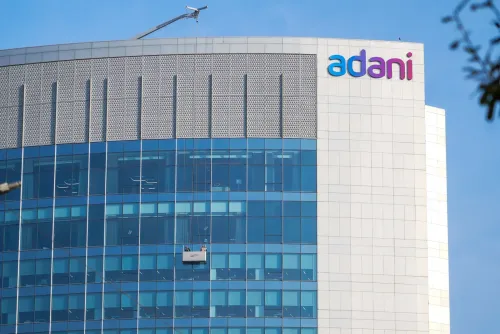
Two years ago, Adani Group had tabled a long-term concession proposal to finance, upgrade, and operate JKIA — East Africa's busiest international airport — at a valuation of under $2 billion. The arrangement would have seen the Indian conglomerate take on operational control for several decades in exchange for funding the overhaul.
The proposal was scrapped in 2024 following a wave of opposition from aviation workers, civil society organisations, and political figures who raised concerns over transparency and national sovereignty. The idea of transferring a strategic national asset to a foreign private operator proved deeply contentious, and the Kenyan government ultimately walked away from the talks under sustained pressure.
The Campaign Against the Adani Proposal
Among the most prominent voices against the deal were Nelson Amenya, a France-based Kenyan who described himself as a whistle-blower, and Jairam Ramesh, an Indian politician. According to reports, both ran a sustained campaign questioning the project's intent, framing it around an anti-Adani narrative. Critics of that campaign argue it was targeted rather than principled — a charge the campaigners have not accepted.
The protests triggered strikes by airport workers and drew in civil society groups, creating enough political noise for the government to call off negotiations entirely.
The Chinese Deal: A Costlier Replacement
The contract now signed with China Communications Construction Co. — a state-owned enterprise with a significant footprint across African infrastructure — is valued at close to $3 billion, making it approximately 50 per cent more expensive than the shelved Adani offer. The scope covers a comprehensive overhaul of JKIA, Kenya's primary international gateway.
The price differential has drawn scrutiny. Analysts and observers are asking whether modest inflation and higher global borrowing costs since 2024 can fully account for the gap, or whether the premium reflects other factors — including the cost of the two-year delay itself. No official breakdown of the cost escalation has been provided by the Kenyan government.
Geopolitical Undercurrents
This is not an isolated episode. Across Africa, Chinese state-backed firms have steadily expanded their presence in port, road, and airport infrastructure — often through government-to-government arrangements that sidestep the competitive scrutiny applied to private-sector bids. Kenya's decision fits a broader continental pattern, even as debt sustainability concerns around Chinese infrastructure financing have intensified in several African economies.
For India, the episode is a pointed reminder of the vulnerabilities that attend private-sector-led infrastructure diplomacy in politically volatile environments. The Adani Group's JKIA proposal was not a government-backed bid, which may have made it more susceptible to the kind of campaign that ultimately derailed it.
What Comes Next
With the contract signed, attention now shifts to implementation timelines, financing terms, and the governance framework under which China Communications Construction Co. will operate. Whether Kenya's aviation sector — and its taxpayers — will ultimately be better served by the costlier arrangement remains an open question that only execution can answer.
Point of View
Then awarded the same project to a Chinese state firm at a 50 per cent premium — with no public cost justification. The campaign against the Adani deal, whatever its merits, has effectively cost Kenyan taxpayers a significant sum. This also exposes a structural weakness in India's infrastructure diplomacy: private-sector bids, unlike state-backed Chinese offers, are far more vulnerable to politically orchestrated opposition. New Delhi should be watching closely — not to relitigate Kenya, but to draw lessons for the next contested infrastructure bid in the Global South.
NationPress
22 Sept 2026
Frequently Asked Questions
Why did Kenya cancel the Adani airport deal?
Kenya cancelled the Adani Group 's concession proposal for JKIA in 2024 following protests by aviation workers, civil society opposition, and a campaign questioning the deal's transparency and implications for national sovereignty. The Kenyan government relented under sustained political pressure.
Which company has Kenya now awarded the JKIA airport contract to?
Kenya has awarded the overhaul contract to China Communications Construction Co. , a Chinese state-owned enterprise, for close to $3 billion . The firm has a significant infrastructure presence across the African continent.
How much more expensive is the Chinese deal compared to the Adani offer?
The Chinese deal is valued at nearly $3 billion , roughly 50 per cent more than the Adani Group's proposal, which was under $2 billion . No official breakdown explaining the cost difference has been released.
Who campaigned against the Adani airport deal in Kenya?
Nelson Amenya , a France-based Kenyan who described himself as a whistle-blower, and Jairam Ramesh , an Indian politician, were among the most prominent voices running a campaign against the Adani proposal. Their efforts, combined with worker strikes, contributed to the deal's collapse.
What does Kenya's decision mean for India-Africa infrastructure ties?
The episode highlights the vulnerability of private-sector-led Indian infrastructure bids in politically contested environments. Unlike Chinese state-backed offers, private bids such as Adani's carry greater exposure to organised political opposition, a dynamic New Delhi may need to factor into its broader Africa engagement strategy.