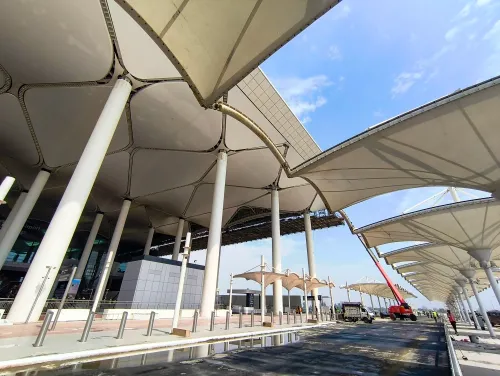
Kenya airport deal exposes China's disinformation playbook in Africa
Synopsis
A report by The Mount Kenya Times alleges China combined state-backed media, covert journalist cultivation, and anonymous social media campaigns to win Kenya's airport expansion contract — priced nearly one and a half times higher than the previous proposal. With debt servicing consuming over half of Kenya's revenue, the deal is being cited as a textbook example of Beijing's debt trap playbook in Africa.
Key Takeaways
A report by The Mount Kenya Times alleges China used disinformation and debt pressure to secure Kenya's international airport expansion contract.
The contract was reportedly priced nearly one and a half times higher than the previous proposal, yet was awarded to a Chinese state-owned enterprise .
Kenya's debt servicing now reportedly consumes more than half of the country's government revenue , limiting social spending.
The report alleges Chinese operatives cultivated local journalists through training trips and financial incentives to discredit rival bids.
Anonymous social media campaigns were allegedly used to reinforce the narrative that only China could deliver the project.
The deal is cited as a case study in debt trap diplomacy , a pattern the report says extends across multiple African nations.
A new report has alleged that China is systematically deploying media manipulation, psychological operations, and debt diplomacy to secure overpriced infrastructure contracts across Africa, with Kenya's international airport expansion cited as the latest and most striking example. The report, published by The Mount Kenya Times, claims the contract was awarded to a Chinese state-owned enterprise under significant pressure, at a price reportedly inflated by nearly one and a half times the previous proposal.
The Airport Deal: What the Report Alleges
According to the report, Kenya's government approved the airport expansion contract despite the cost being substantially higher than an earlier bid. The contract was awarded to a Chinese state-owned firm, which the report attributes to a combination of financial pressure and coordinated influence operations. Kenya already carries billions in debt to China from prior infrastructure projects, including railways and highways, making it particularly vulnerable to such leverage, the report argued.
The report noted that debt servicing now consumes more than half of Kenya's government revenue, leaving limited fiscal space for social spending — a condition it describes as a direct consequence of Chinese lending terms.
Disinformation Tactics: How It Allegedly Works
The report alleged that Chinese operatives cultivated relationships with local editors and journalists through training trips, financial incentives, and other support mechanisms. These contacts were then reportedly used to plant stories portraying rival contract proposals as corrupt, environmentally harmful, or financially unviable.
State-backed media and sponsored content were also deployed to shape public opinion in favour of Chinese bids, the report claimed. 'Social media campaigns, often run through anonymous accounts, reinforced the message that only China had the capacity to deliver,' the report stated, describing what it characterised as a multi-layered disinformation operation.
Debt Trap Diplomacy: The Broader Pattern
The report situates the Kenya airport deal within what it describes as a well-established Chinese model: funding large infrastructure projects at inflated costs, creating long-term debt dependency, and then extracting concessions when repayment becomes unsustainable. According to the report, these concessions can take the form of strategic asset transfers, policy influence, or leverage over sovereign decisions.
'Kenya's airport expansion fits squarely into this model. The country is now locked into a cycle of debt that compromises its sovereignty and limits its ability to chart an independent course,' the report stated. Critics have described Beijing's approach as securing strategic projects 'by hook or by crook.'
Wider Implications for African Sovereignty
The report's findings, if verified, point to a pattern extending well beyond Kenya. Several African nations have faced similar scrutiny over Chinese-financed infrastructure deals, with concerns raised about transparency, contract terms, and the long-term fiscal impact on host governments. Notably, this is not the first time a Chinese infrastructure contract in Africa has drawn allegations of inflated pricing and opaque procurement.
Analysts have long flagged that the combination of media influence and debt leverage gives Beijing a powerful toolkit to shape outcomes in countries with limited fiscal alternatives. Whether Kenya's government will seek to renegotiate terms or seek alternative financing partners remains to be seen.
Point of View
Journalist co-option, social media manipulation, and debt leverage into a single procurement strategy. What makes this particularly difficult to counter is that each element — training trips for journalists, sponsored content, anonymous social accounts — is individually deniable. The report's credibility will hinge on whether its sourcing holds up to independent scrutiny, but the structural pattern it describes is consistent with documented cases in Sri Lanka, Zambia, and Pakistan. African governments seeking infrastructure finance face a genuine dilemma: Chinese capital is fast and abundant, while alternatives from the West and multilateral lenders come with slower timelines and stricter conditionalities. Until that gap closes, the leverage Beijing holds will remain substantial.
NationPress
16 Oct 2026
Frequently Asked Questions
What does the report allege about China's role in Kenya's airport expansion?
The report, published by The Mount Kenya Times, alleges that China used a combination of media manipulation, covert journalist cultivation, and debt pressure to secure the contract for Kenya's international airport expansion. The contract was reportedly awarded to a Chinese state-owned enterprise at a price nearly one and a half times higher than the previous proposal.
What is debt trap diplomacy and how does it apply to Kenya?
Debt trap diplomacy refers to the alleged practice of funding large infrastructure projects at inflated costs, creating unsustainable debt, and then extracting strategic concessions when repayment falters. In Kenya's case, the report says debt servicing already consumes more than half of government revenue, and the airport deal is cited as deepening that dependency.
How did China allegedly use disinformation in the Kenya airport deal?
According to the report, Chinese operatives allegedly cultivated local editors and journalists through training trips and financial incentives, who then planted stories discrediting rival bids as corrupt or financially unviable. Anonymous social media campaigns were also reportedly used to promote the narrative that only China could deliver the project.
Which other infrastructure projects has Kenya financed through China?
Kenya already carries billions in debt to China from previous infrastructure projects, including railways and highways, according to the report. The airport expansion contract is described as adding to an existing cycle of financial dependency.
Is this pattern limited to Kenya?
The report suggests the model extends across multiple African nations. Analysts have noted similar concerns in other countries where Chinese-financed infrastructure deals have raised questions about contract transparency, pricing, and long-term fiscal impact on sovereign governments.