Keonjhar tribal banking row: Centre directs all 28 RRBs on compassionate service
Synopsis
A tribal man carrying his sister's exhumed remains to a bank branch to claim ₹19,402 has forced a nationwide reckoning. The Centre has now directed all 28 Regional Rural Banks to overhaul how they treat rural and tribal customers — a rare instance of a single local incident triggering a systemic federal directive.
Key Takeaways
Jitu Munda carried the skeletal remains of his sister Kalara Munda to an Odisha Grameen Bank branch in Malliposi, Keonjhar on 27 April 2026 to initiate a death claim.
The claim amount of ₹19,402 was settled in favour of Jitu Munda and two legal heirs after local administration intervened.
The Branch Manager of the Malliposi branch was suspended by OGB following the incident.
BJD president Naveen Patnaik wrote to Finance Minister Nirmala Sitharaman on 2 May 2026 demanding action.
The Department of Financial Services issued an advisory on 29 May 2026 to all 28 RRBs in India directing compassionate, transparent service for vulnerable customers.
The Department of Financial Services under the Union Finance Ministry has issued a nationwide advisory to all 28 Regional Rural Banks (RRBs) on 29 May 2026, directing them to ensure responsive, compassionate, and transparent customer service — particularly for rural, tribal, and vulnerable communities. The directive follows the widely condemned Keonjhar incident in which tribal man Jitu Munda carried the skeletal remains of his deceased sister to an Odisha Grameen Bank (OGB) branch in Malliposi to claim her deposit.
The Incident That Triggered the Reforms
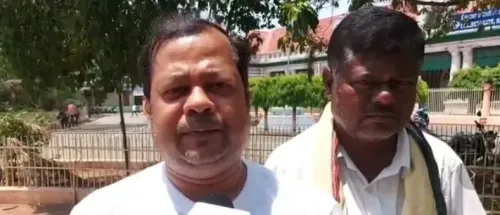
On 27 April 2026, Jitu Munda arrived at the Malliposi branch of Odisha Grameen Bank in Keonjhar district carrying the exhumed skeletal remains of his sister, Kalara Munda. He had reportedly exhumed the body after bank officials asked him to produce a death certificate and legal heir documents to process the death claim on her account. The incident sparked nationwide outrage on social media and drew sharp criticism from opposition parties, who demanded immediate reforms in rural banking practices.
According to the bank, the deceased depositor's account had no surviving nominee, making submission of prescribed documents — including a death certificate and legal heir details — a mandatory procedural requirement. Following intervention by the local administration, the necessary documents were issued and a claim amount of ₹19,402 was subsequently settled in favour of Jitu Munda and two legal heirs.
Government's Response and Political Backdrop
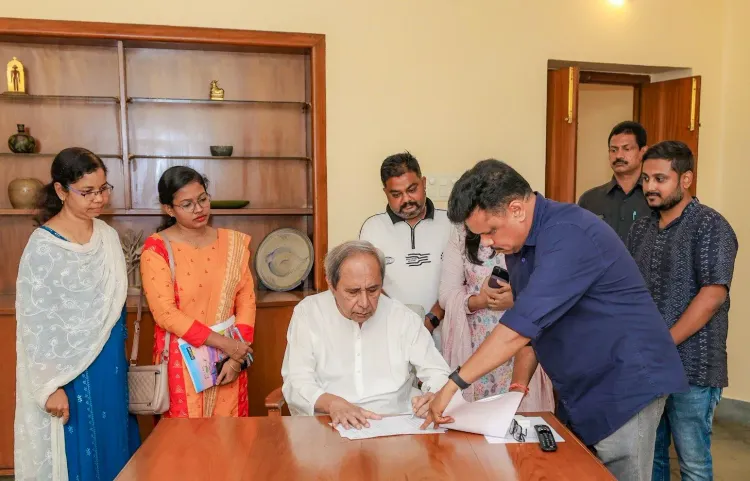
Leader of Opposition Naveen Patnaik, also president of the Biju Janata Dal (BJD), wrote to Union Finance Minister Nirmala Sitharaman on 2 May 2026, expressing anguish over the incident. In response, Union Minister of State for Finance Pankaj Chaudhary wrote to Patnaik confirming that the Department of Financial Services had taken serious note of the matter and had immediately examined it with Odisha Grameen Bank.
Chaudhary acknowledged that while strict adherence to prescribed banking procedures was essential, such procedures must be implemented with sensitivity, empathy, and effective communication — especially in rural and tribal settings.
Action Taken Against the Branch
The OGB suspended the Branch Manager of the Malliposi branch following the incident. The bank also issued an internal advisory to all field-level functionaries, directing them to ensure transparent, compassionate, and customer-friendly service delivery. This comes amid growing scrutiny of how rural banking institutions handle claims from marginalised communities who often lack ready access to documentation.
Nationwide Advisory to RRBs
Going beyond the immediate case, the Department of Financial Services issued a formal advisory on 29 May 2026 to all 28 RRBs across India, reinforcing citizen-centric service standards. The advisory specifically calls out the need for responsive and empathetic handling of customers from rural, tribal, and other vulnerable sections of society.
Notably, this is among the first instances where a single localised incident at a rural bank branch has prompted a nationwide systemic directive from the Union Finance Ministry. Whether the advisory translates into measurable change on the ground — particularly for claimants without nominees or formal documents — remains to be seen.
Point of View
But advisories alone do not change entrenched behaviour at the branch level. The real question is whether the Department of Financial Services will mandate training, grievance redressal timelines, and accountability metrics for RRBs — or whether this remains a strongly worded circular that gathers dust. With over 28 RRBs serving some of India's most marginalised communities, the gap between policy intent and ground-level empathy has rarely been more starkly illustrated.
NationPress
21 Sept 2026
Frequently Asked Questions
What happened in the Keonjhar Odisha Grameen Bank incident?
On 27 April 2026, tribal man Jitu Munda carried the exhumed skeletal remains of his sister Kalara Munda to the Malliposi branch of Odisha Grameen Bank in Keonjhar district to claim her bank deposit. Bank officials had previously asked him to produce a death certificate and legal heir documents to process the ₹19,402 death claim, which he struggled to obtain. The incident triggered nationwide outrage and demands for banking reform.
Was the claim amount settled for Jitu Munda?
Yes. Following intervention by the local administration, the required documents were issued and the claim amount of ₹19,402 was settled in favour of Jitu Munda and two legal heirs. The account had no surviving nominee, which had made the documentation requirement mandatory under bank procedures.
What action was taken against the Odisha Grameen Bank branch?
Odisha Grameen Bank suspended the Branch Manager of the Malliposi branch after the incident came to light. The bank also issued an advisory to all its field-level staff directing them to ensure transparent, compassionate, and customer-friendly service delivery.
What did the Centre do in response to the Keonjhar incident?
Union Minister of State for Finance Pankaj Chaudhary informed BJD president Naveen Patnaik that the Department of Financial Services had taken serious note of the incident. On 29 May 2026, the department issued a formal advisory to all 28 Regional Rural Banks in India, directing them to ensure responsive, compassionate, and transparent service — particularly for rural, tribal, and vulnerable customers.
What role did Naveen Patnaik play in escalating the matter?
Leader of Opposition Naveen Patnaik, as BJD president, wrote to Union Finance Minister Nirmala Sitharaman on 2 May 2026 expressing anguish over the incident. His intervention prompted a formal response from Minister of State Pankaj Chaudhary and contributed to the Department of Financial Services examining the matter directly with Odisha Grameen Bank.