Kerala floating solar, pumped storage plan to end 1,000 MW power deficit
Synopsis
With a 1,000 MW demand-supply gap forcing daily power cuts, Kerala is betting on floating solar — potentially 2,000 MW from water bodies alone — plus pumped storage and battery systems. It is an ambitious pivot for a state whose geography has long resisted conventional solar and wind scale-up.
Key Takeaways
Kerala's peak demand crossed 5,200 MW this month while availability was only around 4,200 MW , forcing KSEB to impose peak-hour restrictions.
Electricity Minister Sunny Joseph announced plans to explore floating solar , pumped-storage and community battery storage on 18 September 2026 .
Narayanan put Kerala's floating solar potential at up to 2,000 MW and called for a single-window clearance system.
Rajamanickam described energy conservation as the most practical immediate response and flagged the growing impact of rooftop solar on consumption patterns.
The crisis stems from depleted reservoirs cutting hydel output, high temperatures boosting demand, and constrained inter-state power supply.
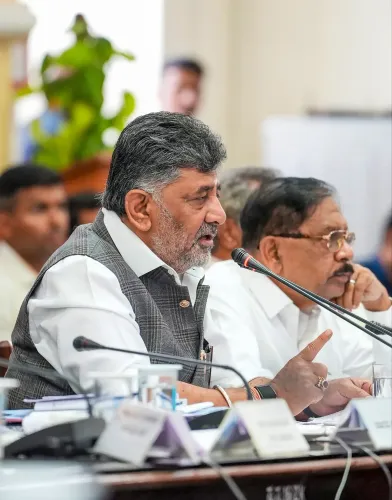
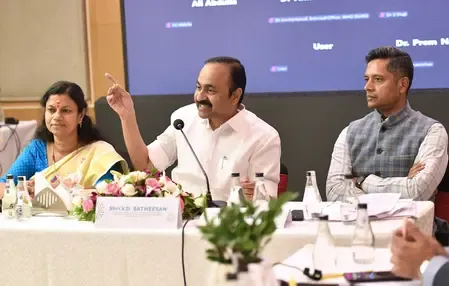
Electricity Minister Sunny Joseph on Friday, 18 September 2026 said the Kerala government would seriously explore floating solar projects, pumped-storage facilities, and community-level battery storage systems to address the state's worsening power crisis. Joseph made the announcement at a roundtable on renewable energy held on the concluding day of the three-day Reimagining Keralam programme in Thiruvananthapuram.
Scale of the Crisis
The announcement comes as Kerala grapples with an acute demand-supply mismatch. Peak demand surged past 5,200 MW earlier this month while availability hovered around 4,200 MW — a gap of roughly 1,000 MW — forcing the Kerala State Electricity Board (KSEB) to impose restrictions during peak hours. The shortfall has been driven by a combination of poor rainfall, depleted reservoir levels reducing hydropower output, soaring temperatures pushing up consumption, and constrained supply from other states.
Why Conventional Alternatives Fall Short
Minister Joseph acknowledged that Kerala's terrain and changing climate make large-scale conventional solar and wind installations difficult. The government will therefore focus on alternative models: floating solar on water bodies, pumped-storage hydro, and decentralised battery systems deployed at the community, institutional, and household levels — all with local body participation. This reflects a structural rethink rather than a quick fix.
Floating Solar Potential and Expert Input
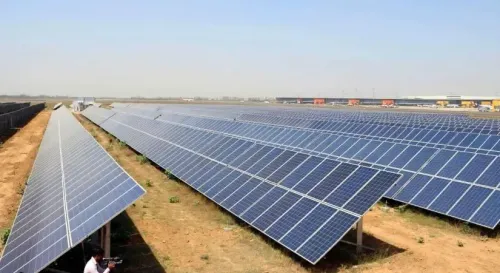
M.R. Narayanan, who pioneered concrete-based floating solar installations at the Banasura Sagar reservoir in Wayanad, said Kerala has the potential to generate up to 2,000 MW through such projects. He called for a single-window clearance mechanism to accelerate approvals. The roundtable also discussed integrating solar photovoltaic, wind, small hydropower, biomass, and waste-to-energy sources into a unified energy management platform.
KSEB's Conservation Push
KSEB chairman and managing director M.G. Rajamanickam argued that energy conservation must be embedded in government policy, describing it as the most practical near-term response to the crisis. He noted that the rising number of households installing rooftop solar systems is already altering consumption patterns, and called for consumer alert mechanisms and conservation incentives to be built into the grid.
Political and Public Pressure
The power cuts have drawn sharp public criticism, particularly because prolonged outages had become relatively uncommon during the previous decade under Left Democratic Front (LDF) rule. The present government has consequently faced pressure to deliver an immediate solution even as it frames longer-term capacity plans. The dual challenge — keeping lights on today while future-proofing supply — remains unresolved. How quickly the state can move from roundtable proposals to commissioned capacity will determine whether Kerala escapes this cycle the next time reservoir levels fall.
Point of View
Hydel-dependent states face as rainfall patterns grow erratic. The floating solar pivot is sensible geography-wise, but 2,000 MW of potential means little without execution speed — and Kerala's track record on large infrastructure clearances is mixed at best. The single-window demand from experts is not new; it has been on the table for years. The real question is whether this roundtable translates into tendered capacity before the next dry season, or whether it becomes another well-intentioned proposal that the state revisits at the next crisis roundtable.
NationPress
18 Sept 2026
Frequently Asked Questions
Why is Kerala facing a power crisis in 2026?
Kerala is facing a power crisis because poor monsoon rainfall has reduced water levels in reservoirs, cutting hydropower generation — the backbone of the state's electricity supply. Simultaneously, soaring temperatures have driven peak demand past 5,200 MW while availability has been limited to around 4,200 MW, forcing the Kerala State Electricity Board to impose peak-hour restrictions.
What is the Kerala government's plan to solve the power shortage?
The Kerala government plans to explore floating solar projects, pumped-storage hydro facilities, and community and household-level battery storage systems. Electricity Minister Sunny Joseph outlined the strategy at the Reimagining Keralam summit on 18 September 2026, citing the state's difficult terrain as the reason conventional solar and wind projects are not practical at scale.
How much power can floating solar generate in Kerala?
According to M.R. Narayanan, who pioneered concrete-based floating solar at the Banasura Sagar reservoir in Wayanad, Kerala has the potential to generate up to 2,000 MW through floating solar installations on its water bodies. He called for a single-window clearance mechanism to speed up project approvals.
What is KSEB doing about the immediate power crisis?
KSEB chairman M.G. Rajamanickam has said energy conservation must become a core government policy and described it as the most practical near-term response. KSEB is also tracking the impact of growing rooftop solar adoption on consumption patterns and has called for consumer alert systems and conservation incentives.
How does this crisis compare to Kerala's recent power history?
The current shortfall stands out because extended power cuts had become relatively rare during the previous decade of Left Democratic Front governance. The return of routine restrictions has drawn public criticism and placed the current government under considerable pressure to find both an immediate fix and a durable long-term solution.