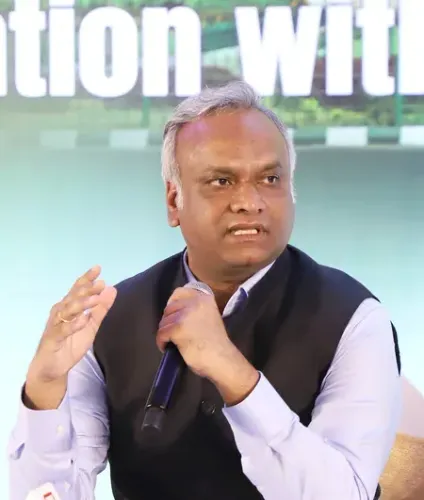
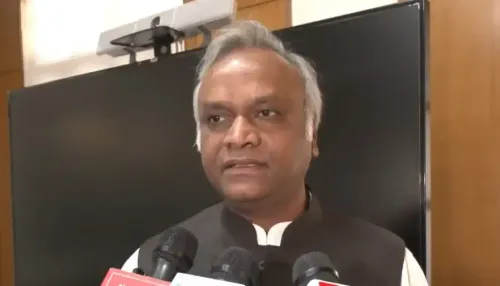
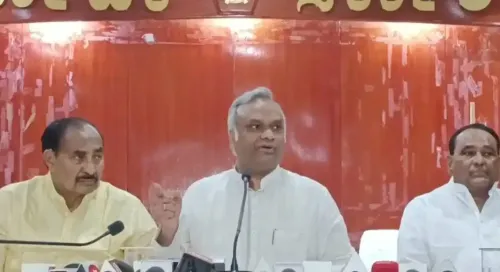
Priyank Kharge demands RSS disclose funding, legal status on centenary
Synopsis
On the RSS's 100th anniversary, Karnataka Minister Priyank Kharge has written to chief Mohan Bhagwat demanding the organisation disclose its legal status, funding sources, and tax compliance — citing its own annual report showing 4,127 daily shakhas and 2.21 lakh uniformed volunteers in Karnataka alone. The letter frames the demand not as an attack but as a constitutional obligation.
Key Takeaways
Karnataka Minister Priyank Kharge wrote to RSS chief Mohan Bhagwat on 13 June , demanding disclosure of the organisation's legal status, funding, and finances.
The letter coincides with the RSS completing 100 years of its existence.
Kharge cited the RSS's own 2025-26 ABPS annual report , which lists 4,127 daily shakhas , 1,389 weekly milans , and 562 route marches involving over 2.21 lakh uniformed volunteers in Karnataka.
He questioned the legal basis on which the RSS conducts activities without formal registration as a legal entity.
Kharge called on the RSS to formally register, disclose finances, and pay applicable taxes as part of 'constitutional introspection' during its centenary year.
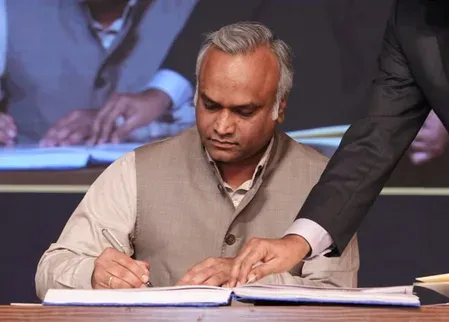
Karnataka Minister Priyank Kharge has written to Rashtriya Swayamsevak Sangh (RSS) chief Mohan Bhagwat, demanding that the organisation publicly disclose its legal status, organisational structure, and sources of funding. The letter, dated 13 June, was sent on the occasion of the RSS completing 100 years of its existence.
What Kharge Has Asked
Kharge, a Congress leader and Karnataka cabinet minister, congratulated the RSS on its centenary but argued that its vast reach and public presence warrant greater scrutiny and compliance with constitutional and legal norms. He sought details on the organisation's legal and organisational structure, office-bearers, sources of donations and income, expenditure and assets, tax compliance, and the legal basis on which it conducts activities without formal registration as a legal entity.
He also asked for details of permissions and compliance mechanisms followed for public events, mass gatherings, and route marches.
The Scale That Prompted the Questions
Citing figures from the RSS's 2025-26 annual report released by the Akhil Bharatiya Pratinidhi Sabha (ABPS), Kharge noted that the organisation has a significant presence in Karnataka alone — with 4,127 daily shakhas, 1,389 weekly milans, and 60 monthly mandalis. According to the same report, the RSS organised 2,194 Samajotsavas in the state, drawing more than 19.6 lakh participants, and conducted 562 route marches involving over 2.21 lakh uniformed volunteers.
Kharge argued that such a large organisational network — involving regular public mobilisation, route marches, and mass outreach — raises legitimate questions about its legal standing, financial transparency, and compliance with Indian law.
What Kharge Said
'An organisation that regularly invokes nationalism, discipline and duty must also demonstrate these values through transparency, compliance and respect for the Constitution of India,' Kharge said. He added that no organisation, regardless of its size or influence, can remain beyond public accountability in a constitutional democracy.
Drawing a pointed comparison, he said: 'In Bharat, even a safai karamchari must be registered to avail government benefits. Religious institutions, charitable trusts, NGOs, societies and companies are required to disclose their activities, finances and organisational structures. It is only fair that the RSS also adheres to the same standards.'
Call for Constitutional Introspection
Kharge urged the RSS to treat its centenary year as an opportunity for 'constitutional introspection' and called on the organisation to formally register itself, disclose its finances and activities, pay all applicable taxes, and function within a transparent legal framework. He said he was looking forward to a formal response and requested that authorised office-bearers be deputed for discussions on the issues raised.
The letter adds to a broader debate about the accountability of large civil society organisations in India, and arrives at a politically charged moment as the RSS marks a century of uninterrupted organisational activity.
Point of View
But citing the RSS's own annual report data gives the demand more traction than past rhetorical attacks. The RSS has historically operated in a legally ambiguous space, neither a registered society nor a trust in the conventional sense, and that ambiguity has never been tested in a sustained public accountability framework. Kharge's demand for a formal response and deputed office-bearers suggests this is intended as a sustained pressure campaign, not a one-time letter. Whether the RSS engages or ignores will itself be a political signal.
NationPress
20 Sept 2026
Frequently Asked Questions
What has Priyank Kharge demanded from the RSS?
Karnataka Minister Priyank Kharge has demanded that the RSS publicly disclose its legal status, organisational structure, sources of funding, tax compliance, and the legal basis for conducting public activities without formal registration. He wrote to RSS chief Mohan Bhagwat on 13 June on the occasion of the organisation's centenary.
Why did Kharge write to the RSS now?
The letter was timed to coincide with the RSS completing 100 years of existence. Kharge used the centenary as an occasion to call for 'constitutional introspection,' arguing that an organisation of the RSS's scale and public presence cannot remain beyond accountability norms.
What data did Kharge cite to support his demand?
Kharge cited the RSS's own 2025-26 annual report released by the Akhil Bharatiya Pratinidhi Sabha, which shows 4,127 daily shakhas, 1,389 weekly milans, 562 route marches involving over 2.21 lakh uniformed volunteers, and 2,194 Samajotsavas with more than 19.6 lakh participants — all in Karnataka alone.
What is the legal status of the RSS currently?
The RSS does not operate as a formally registered legal entity in the conventional sense — it is neither a registered society, trust, nor company. Kharge's letter specifically questions the constitutional and statutory framework under which the organisation conducts its activities.
Has the RSS responded to Kharge's letter?
As of the date of this report, no formal response from the RSS has been made public. Kharge said he was looking forward to a reply and requested that authorised office-bearers be deputed for discussions on the issues raised.