Khattar Highlights Cabinet Nod for Semicon 2.0, Varanasi Corridors
Synopsis
The Union Cabinet, chaired by PM Modi, has approved six major decisions: two road corridor projects for Varanasi, the Rs 1.27 lakh crore Semicon 2.0 scheme, a Rs 62,500 crore Mobile Phone Manufacturing Scheme, the NIPU-2026 urea policy, and two railway multitracking projects adding 145 km of capacity in Odisha and Jharkhand.
Key Takeaways
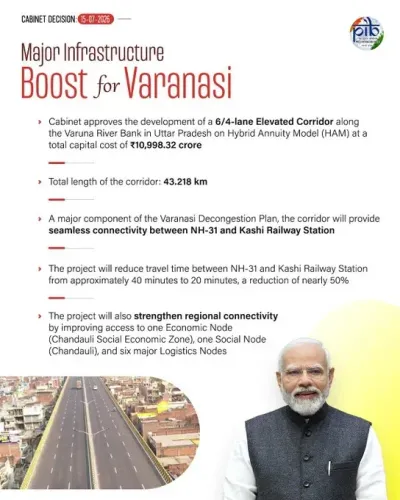
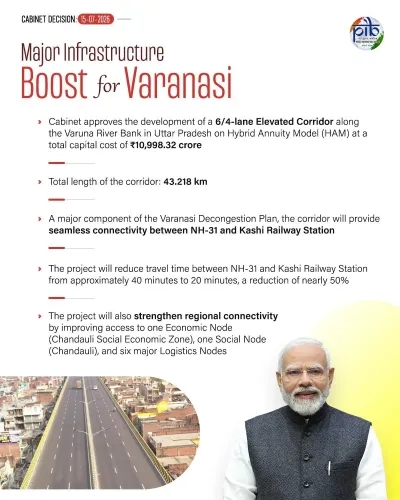
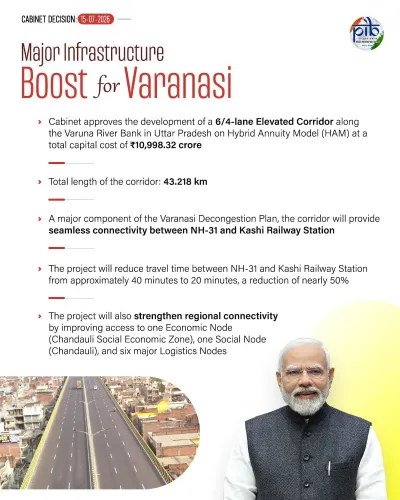
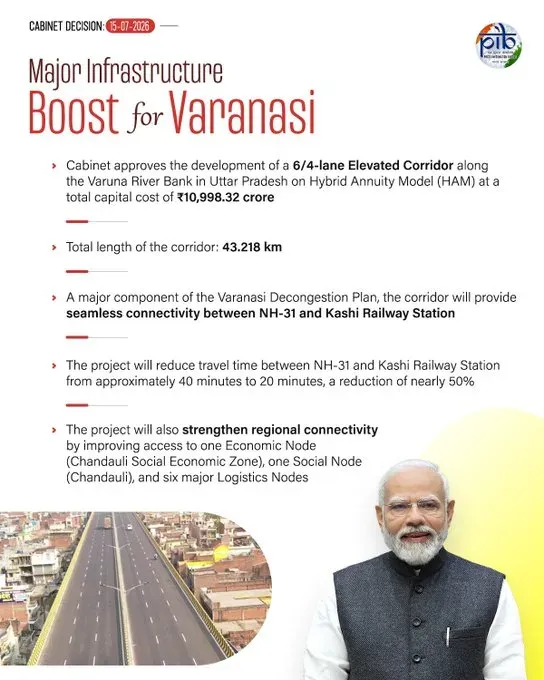
The Union Cabinet approved a 6/4-lane, 43.218-km road corridor along the River Varuna linking NH-31 and the Varanasi Ring Road for urban decongestion.
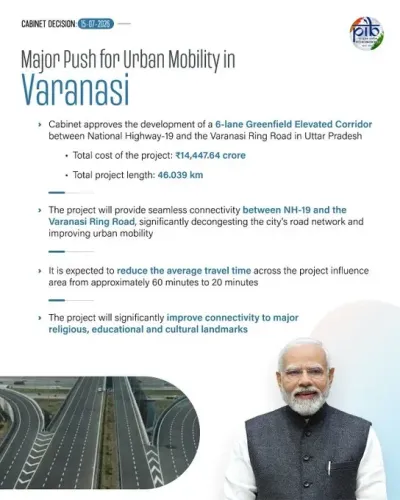
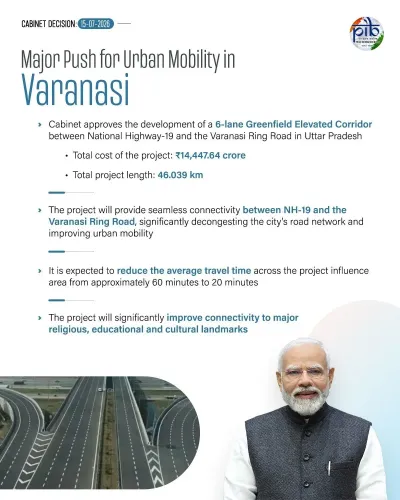
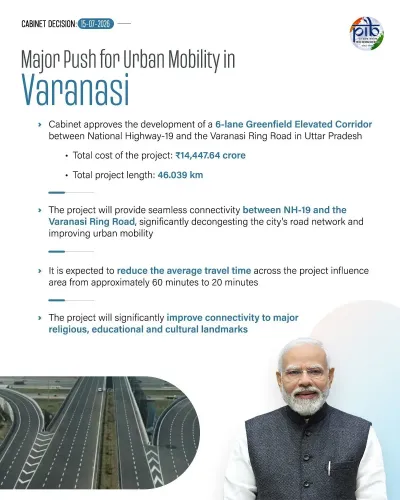
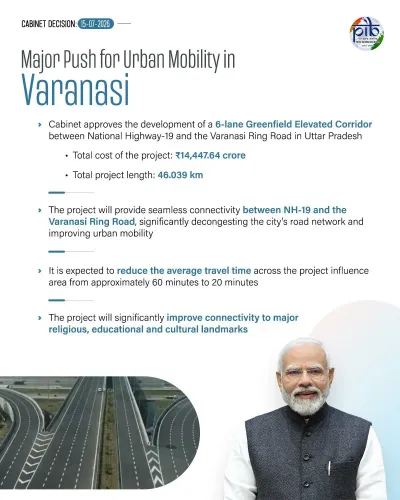
A 6-lane greenfield elevated corridor with ramps, loops, and a foot overbridge connecting NH-19 to the Varanasi Ring Road was also cleared.
Semicon 2.0 received an outlay of Rs 1.27 lakh crore to accelerate India's semiconductor design and manufacturing ecosystem.
The Mobile Phone Manufacturing Scheme (MPMS) was approved with Rs 62,500 crore to deepen domestic value addition and strengthen global supply chain positioning.
NIPU-2026 aims to promote new gas-based urea plants under the Atmanirbhar Bharat framework to reduce fertiliser import dependence.
Two railway multitracking projects in Odisha and Jharkhand will add approximately 145 km of new rail capacity.
Union Power Minister Manohar Lal Khattar on Wednesday, 15 July 2026, shared details of a clutch of major approvals by the Union Cabinet, chaired by Prime Minister Narendra Modi, spanning road infrastructure in Varanasi, semiconductor and mobile manufacturing schemes, a new urea investment policy, and railway capacity additions in Odisha and Jharkhand.
Context
The cabinet approved two separate road corridor projects for Varanasi, the Prime Minister's own parliamentary constituency in Uttar Pradesh. The first is a 6/4-lane, 43.218-km link and connector corridor along the River Varuna that will join National Highway-31 with the Varanasi Ring Road, aimed at easing chronic urban congestion. The second is a 6-lane greenfield elevated corridor with ramps, loops, and a foot overbridge connecting National Highway-19 to the same ring road. Together, the two projects represent a significant push to modernise movement within one of India's most densely trafficked heritage cities.
Policy Backdrop
The cabinet cleared Semicon 2.0 with an outlay of Rs 1.27 lakh crore, a follow-on to the India Semiconductor Mission first approved in 2021 with an initial allocation of Rs 76,000 crore. The new programme is intended to deepen India's semiconductor design and fabrication ecosystem, which remains heavily import-dependent. Alongside it, the Mobile Phone Manufacturing Scheme (MPMS) received an allocation of Rs 62,500 crore to scale domestic production, deepen value addition across the supply chain, and strengthen India's position in global electronics networks — extending the logic of the Production Linked Incentive approach for mobile phones introduced in 2020.
The cabinet also approved the National Investment Policy for Urea-2026 (NIPU-2026) under the Atmanirbhar Bharat framework. The policy is designed to attract investment in new gas-based urea plants, reducing India's dependence on imported fertiliser — a goal that has been part of the government's self-reliance agenda since the Atmanirbhar Bharat package was announced in May 2020. Two railway multitracking projects in Odisha and Jharkhand received approval as well, adding approximately 145 km of new rail capacity to improve freight and passenger movement in the eastern corridor.
Stakeholders and Impact
Commuters and businesses in Varanasi stand to benefit most immediately from the two road corridor approvals, which address bottlenecks that have worsened with the city's growing traffic load. For the electronics sector, the combined outlay of over Rs 1.89 lakh crore across Semicon 2.0 and MPMS signals sustained government commitment to domestic chip and handset production — a priority for companies already operating or planning to invest under earlier incentive schemes. Farmers and the agricultural input industry will watch the implementation of NIPU-2026 closely, as new urea capacity could moderate input costs over the medium term. Rail users and freight operators in Odisha and Jharkhand are set to gain from reduced congestion on key eastern lines once the multitracking projects are executed.
What's Next
Detailed operational guidelines, bidding timelines, and implementing agency notifications for Semicon 2.0 and MPMS are expected to follow the cabinet approval. Progress on the Varanasi corridors will likely be tracked under the PM Gati Shakti National Master Plan, which coordinates multimodal infrastructure approvals since its launch in 2021. Parliamentary sessions in the coming months are expected to see scrutiny of the fiscal timelines for the two large manufacturing schemes. Khattar's post underscores the government's framing of these decisions as collectively advancing a 'Viksit and Atmanirbhar Bharat' — a developed and self-reliant India — a phrase that has anchored the ruling dispensation's economic messaging heading into the second half of the decade.
Point of View
Combining physical connectivity in the Prime Minister's constituency with headline industrial-policy numbers. The Rs 1.27 lakh crore Semicon 2.0 outlay, if executed, would mark a substantial escalation from the 2021 semiconductor mission and signals that the government sees domestic chip capacity as a strategic priority beyond mere import substitution. The pairing of MPMS with Semicon 2.0 suggests a vertically integrated ambition — moving India up the electronics value chain from assembly toward component and chip production. The eastern railway projects and NIPU-2026, while less headline-grabbing, address persistent infrastructure and agricultural input gaps that have long featured in opposition critiques of regional development equity.
NationPress
15 Jul 2026
Frequently Asked Questions
What is Semicon 2.0 and how much money has been approved for it?
Semicon 2.0 is the government's follow-on semiconductor design and manufacturing programme, approved by the Union Cabinet with an outlay of Rs 1.27 lakh crore. It builds on the original India Semiconductor Mission approved in 2021 with Rs 76,000 crore and aims to deepen India's chip ecosystem.
What are the new road projects approved for Varanasi?
The cabinet approved two projects: a 6/4-lane, 43.218-km corridor along the River Varuna connecting NH-31 with the Varanasi Ring Road, and a 6-lane greenfield elevated corridor with ramps, loops, and a foot overbridge linking NH-19 to the Varanasi Ring Road, both aimed at decongesting the city.
What is the Mobile Phone Manufacturing Scheme (MPMS)?
MPMS is a new central scheme approved with an outlay of Rs 62,500 crore. It is designed to scale up domestic mobile phone production, deepen value addition across the supply chain, and strengthen India's role in global electronics supply chains.
What is NIPU-2026 and why does it matter?
NIPU-2026 stands for the National Investment Policy for Urea-2026. It is intended to encourage investment in new gas-based urea plants under the Atmanirbhar Bharat framework, reducing India's dependence on imported fertiliser and lowering agricultural input costs over time.
Which states benefit from the railway multitracking projects approved by the cabinet?
Odisha and Jharkhand will benefit from two railway multitracking projects approved by the cabinet, which together add approximately 145 km of new rail capacity to improve mobility, operational efficiency, and service reliability in the eastern region.