Power Minister Khattar pushes grid, solar, DISCOM reforms
Synopsis
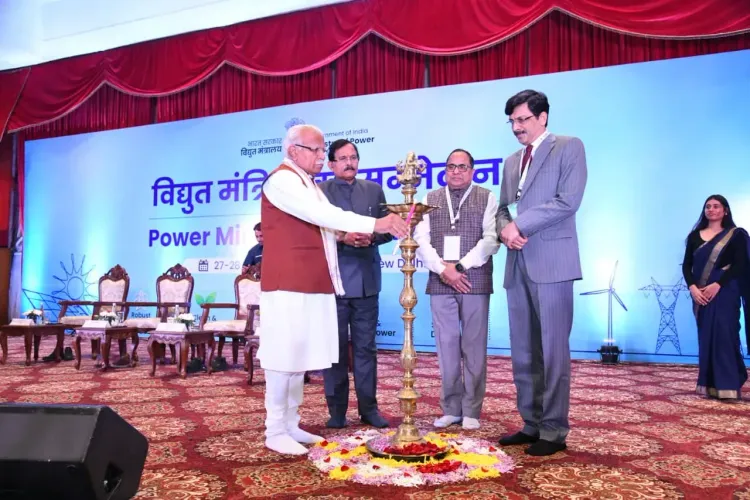
At a two-day Power Ministers Conference in New Delhi on November 27, 2026, Union Power Minister Manohar Lal Khattar called for stronger transmission, faster solar, more storage and sustained DISCOM reforms, pledging the Centre's full support to States and UTs.
Key Takeaways
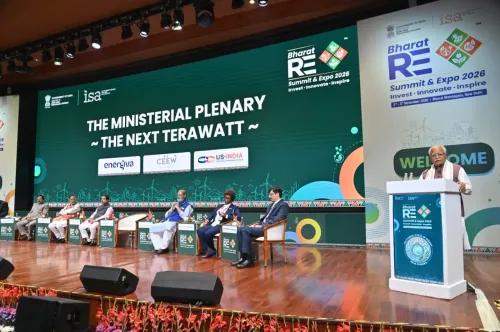
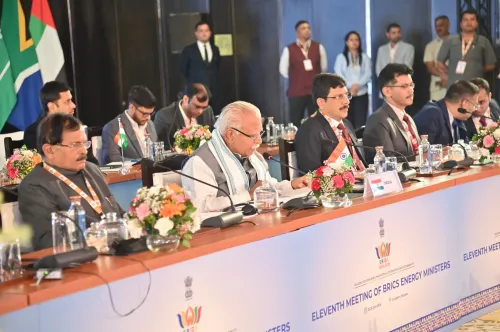
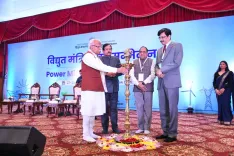
Union Power Minister Manohar Lal Khattar addressed the opening session of a two-day Power Ministers' Conference of States and UTs in New Delhi on November 27, 2026 .
He called for stronger transmission infrastructure, faster solar energy deployment, expanded energy storage and more integrated power-sector planning.
He stressed the need to sustain the financial turnaround of DISCOMs through continued policy and operational reforms.
He assured States and UTs of the Centre's full support in addressing concerns and building a more resilient, sustainable power sector.
The pitch sits against India's 500 GW non-fossil target by 2030 and earlier DISCOM schemes such as UDAY (2015) and RDSS (2021).
Union Power Minister Manohar Lal Khattar opened a two-day Power Ministers' Conference of States and UTs in New Delhi on November 27, 2026 by putting three infrastructure jobs and one financial job on the table: stronger transmission, faster solar, more energy storage, and a sustained turnaround of DISCOMs. India's next leap in power, he told the States, will not come from generation numbers alone — the grid, the batteries and the distribution companies have to move together.
After the opening session he said he had emphasised and called for 'strengthening transmission infrastructure, accelerating solar energy deployment, and expanding energy storage,' along with a more integrated approach to power sector planning. He also flagged 'the need to sustain the financial turnaround of DISCOMs through continued reforms in policy & operations,' and assured States and UTs of the Centre's full support in addressing their concerns, resolving challenges, and collectively advancing a stronger, more resilient, and sustainable power sector.
Transmission, solar and storage as one package
The order of those asks is the story. India has spent years adding generation. The constraint has shifted to moving that power, absorbing variable solar, and storing it when the sun drops. Transmission bottlenecks have been a recurring theme in policy documents since the Electricity Act 2003. Storage is the newer piece — the sign that planning has moved from capacity addition to system integration.
That shift sits against a national clock: the 500 GW non-fossil fuel capacity target by 2030, announced at COP26 in 2021. Solar parks without evacuation lines become stranded assets. Storage without a joined-up plan becomes expensive idle kit. Khattar's opening remarks treated wires, solar and batteries as a single planning problem, not three separate files.
DISCOM books still decide who gets paid
Distribution companies collect the revenue that pays generators, transmission utilities and, eventually, investors in new solar and storage. When DISCOMs slip, the whole chain tightens. The Ujjwal DISCOM Assurance Yojana (UDAY), launched in 2015, restructured debt and pushed operational efficiency. The Revamped Distribution Sector Scheme (RDSS), approved in 2021, funds smart metering, network upgrades and loss reduction.
Khattar did not declare victory. He spoke of sustaining the turnaround through continued policy and operational reforms — a reminder that UDAY and RDSS are tools, not a finished result. State power departments and DISCOMs remain the operators. Renewable developers remain the ones watching payment discipline before they commit the next gigawatt.
A two-day meet, a longer test for States
He pledged the Centre's full support to States and UTs as they work through concerns and challenges. Periodic Power Ministers' conferences have long been Delhi's way of lining up state execution with national renewable and grid targets. The next test is whether those asks land in annual state action plans, and whether any fresh central assistance is wrapped into the next Union Budget.
Two days of talks will not rewire the grid. The question Khattar left in the room is simpler: will States treat transmission, solar, storage and DISCOM reform as one plan — or as four competing files?
Point of View
Solar and storage with DISCOM reform is the current phase of that arc: generation targets only work if the grid can carry the power and distributors can pay for it. The bargain remains familiar — the Centre offers support and schemes, States must execute on losses, metering and planning. The test after New Delhi is whether those four asks become one capital programme in state action plans.
NationPress
27 Nov 2026
Frequently Asked Questions
What did Manohar Lal Khattar say at the Power Ministers Conference in New Delhi?
Union Power Minister Manohar Lal Khattar, opening the two-day Power Ministers Conference of States and UTs in New Delhi on November 27, 2026, called for stronger transmission, faster solar deployment, expanded energy storage, more integrated planning and sustained DISCOM financial reforms, while assuring States and UTs of the Centre's full support.
Why did Khattar stress DISCOM reforms at the conference?
He said the financial turnaround of DISCOMs must be sustained through continued policy and operational reforms. Weak distribution companies undermine payments across the power chain and slow investment in solar, storage and networks.
What is the Revamped Distribution Sector Scheme (RDSS)?
RDSS, approved in 2021, is a central scheme that funds smart metering, distribution infrastructure upgrades and loss reduction to improve the operational and financial health of state electricity distribution companies.
How does this conference link to India's 500 GW target?
India's 500 GW non-fossil capacity goal by 2030 depends on solar being evacuated and balanced on the grid. Khattar's emphasis on transmission and energy storage is aimed at converting that capacity target into usable, reliable power.
What is the Power Ministers Conference of States and UTs?
It is a periodic Centre-State meeting used to align state-level execution with national renewable, grid and DISCOM targets. States and union territories handle distribution and much of the on-ground implementation of central power schemes.