Khattar Unveils Plan for 40 Lakh Affordable Homes with TOD Policy
Synopsis
Union Minister Manohar Lal Khattar announced a master plan targeting 40 lakh new affordable housing flats in urban India, backed by a Transit-Oriented Development policy designed to integrate high-density housing with public transport corridors — the most ambitious pairing of housing supply and transit planning in recent central government policy.
Key Takeaways
Union Minister Manohar Lal Khattar announced a master plan targeting approximately 40 lakh new affordable housing flats .
A dedicated TOD (Transit-Oriented Development) policy has been prepared to strengthen public transport corridors alongside the housing push.
TOD clusters high-density residential development along metro, BRT, and suburban rail lines to reduce urban sprawl and private vehicle dependence.
The plan builds on the Pradhan Mantri Awas Yojana (Urban) framework launched in 2015 and the National Urban Housing and Habitat Policy of 2007 .
Primary beneficiaries are urban poor and low-income commuters ; state-level approvals and PMAY-U or AMRUT funding releases will determine actual rollout pace.
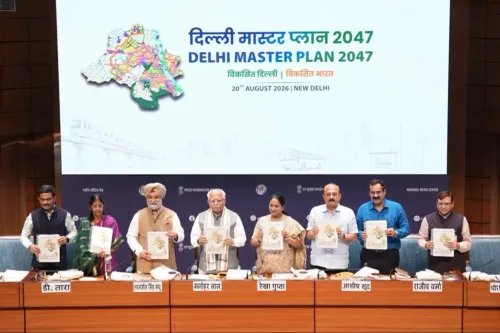
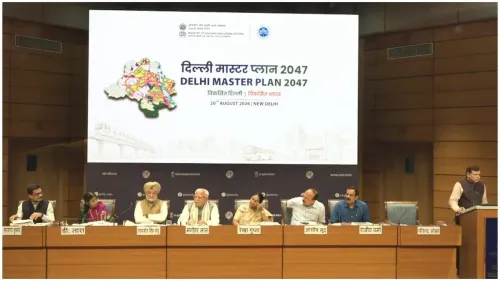
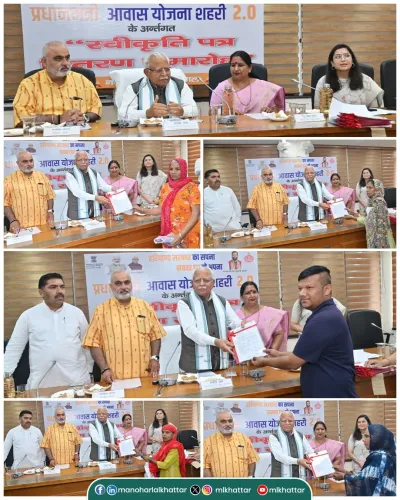
Forty lakh new affordable homes — that is the scale of ambition Union Minister of Housing and Urban Affairs Manohar Lal Khattar put on the table on Thursday, 20 August 2026, as he outlined the contours of a master plan that pairs a massive housing push with a dedicated Transit-Oriented Development policy designed to reshape how Indian cities move and grow.
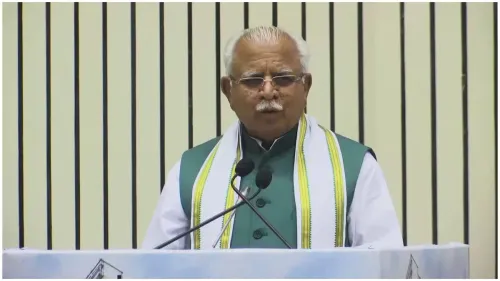
Sharing details on X, Khattar stated: 'इस मास्टर प्लान में लगभग 40 लाख नए affordable housing flats विकसित करने का लक्ष्य रखा गया है' — 'This master plan targets the development of approximately 40 lakh new affordable housing flats.' Alongside that housing goal, he announced that a TOD (Transit-Oriented Development) policy has been specifically prepared to strengthen public transport corridors.
What the TOD Policy Actually Does
Transit-Oriented Development is not a new concept in Indian urban planning, but its integration at this scale into a housing master plan is significant. The approach clusters high-density residential and commercial development along public transport corridors — metro lines, BRT routes, suburban rail — so that residents live close to transit and cities reduce their dependence on private vehicles.
Central government urban initiatives since 2015 have increasingly linked housing supply targets with transit infrastructure, particularly to manage rapid urbanisation in major metros and the National Capital Region. TOD components have appeared in multiple city master plans as a tool to curb urban sprawl while boosting housing supply near employment hubs.
The Affordable Housing Arc: From PMAY to This Master Plan
The 40 lakh unit target sits within a long policy lineage. The Pradhan Mantri Awas Yojana (Urban), launched in 2015, set the original framework for subsidised urban housing for the economically weaker sections and lower-income groups. Successive revisions expanded scope and supply targets as urban migration accelerated faster than original projections anticipated.
The National Urban Housing and Habitat Policy of 2007 had already flagged integrated land-use and transport planning as essential — but implementation remained patchy across states. What Khattar's announcement signals is an attempt to hardwire that integration into the master plan itself, rather than leaving it as an aspiration.
Who Stands to Gain — and What Comes Next
The direct beneficiaries are urban poor and low-income city commuters — the demographic that bears the sharpest cost of both the housing shortage and inadequate public transport. Affordable flats near transit corridors could compress daily commute times and household transport spending simultaneously.
The harder question is execution. State-level approvals, funding releases under PMAY-Urban or AMRUT, and any cabinet notes formalising the master plan rollout will be the real test of whether the 40 lakh target moves from announcement to construction. Urban housing plans in India have historically faced gaps between stated targets and units actually delivered at scale.
A plan this size, anchored to transit, is a bet that India's cities can grow up — not just out. Whether the funding and state partnerships follow will define whether it lands.
Point of View
If backed by state buy-in and PMAY-U funding tranches, could represent the most consequential urban housing push since the 2015 PMAY launch. The real political test will be whether the TOD policy acquires statutory teeth at the city-plan level or remains an advisory overlay.
NationPress
20 Aug 2026
Frequently Asked Questions
What is the 40 lakh affordable housing plan announced by Manohar Lal Khattar?
Union Minister Manohar Lal Khattar announced a master plan targeting the development of approximately 40 lakh new affordable housing flats in urban India, paired with a Transit-Oriented Development policy to integrate housing with public transport corridors.
What is TOD policy in India and how does it relate to housing?
TOD, or Transit-Oriented Development, is a planning approach that clusters high-density housing and commercial development along public transport corridors such as metro lines and BRT routes, reducing urban sprawl and making affordable homes accessible to commuters without private vehicles.
How does this plan connect to Pradhan Mantri Awas Yojana Urban?
The 40 lakh unit target builds on the PMAY (Urban) framework launched in 2015, which provided the subsidy and supply architecture for affordable urban housing; the new master plan appears to extend and integrate that framework with transit planning.
Who will benefit from Khattar's affordable housing master plan?
The primary beneficiaries are urban poor and low-income city commuters who face both a housing shortage and inadequate public transport; affordable flats near transit corridors could reduce both housing costs and daily commute burdens.
What needs to happen for the 40 lakh housing target to be achieved?
State-level approvals, funding releases under PMAY-Urban or AMRUT, and formal cabinet or parliamentary endorsement of the master plan will be critical steps before construction at scale can begin.