Kishan Reddy Marks 12 Years of North East Transformation
Synopsis
Union Minister G. Kishan Reddy marked twelve years of BJP-led governance by highlighting infrastructure-driven transformation in India's eight North Eastern states, framing the region as a key pillar of Viksit Bharat and India's gateway to Southeast Asia under the Act East Policy.
Key Takeaways
Kishan Reddy posted on 20 June 2026 marking #12YearsOfRisingNorthEast under PM Narendra Modi .
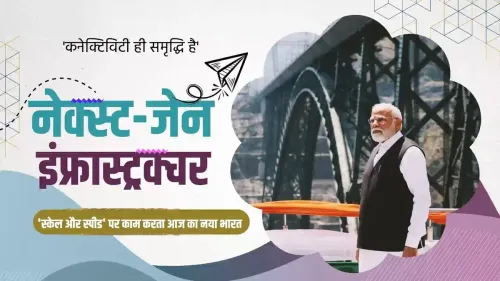
The minister cited 'Transformation by Transportation' as the central mantra driving North East connectivity gains.
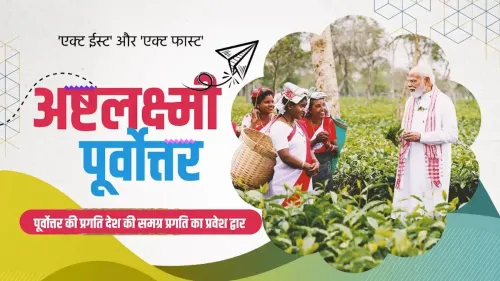
All eight North Eastern states — referred to as Ashta Lakshmi — are positioned as pillars of the Viksit Bharat 2047 vision.
The Act East Policy (2014), Bharatmala Pariyojana (2015) and North East Special Infrastructure Development Scheme (2017) form the key policy foundations cited.
Trade, tourism, employment and entrepreneurship are identified as the primary sectors benefiting from improved infrastructure.
The North East is framed as India's strategic gateway to Southeast Asia and the ASEAN region.
Union Coal and Mines Minister G. Kishan Reddy on Saturday, 20 June 2026, highlighted twelve years of infrastructure-led development in India's North East under Prime Minister Narendra Modi, sharing what he described as glimpses of a 'transformational journey' driven by the mantra of 'Transformation by Transportation'.
Context
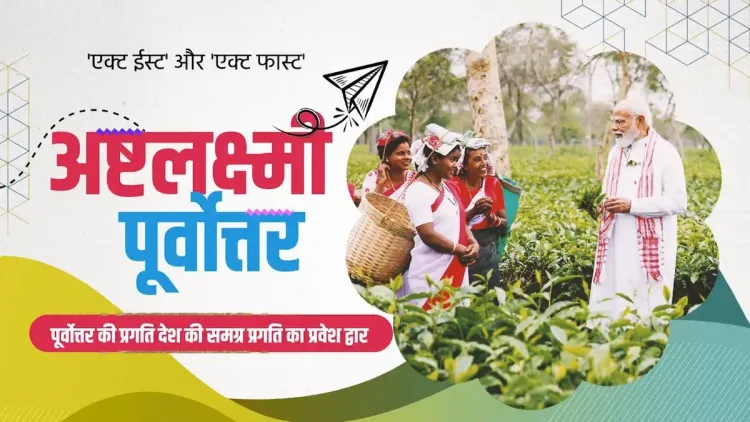
Reddy's post, tagged #12YearsOfRisingNorthEast, invoked the phrase 'Ashta Lakshmi' — the eight North Eastern states (Arunachal Pradesh, Assam, Manipur, Meghalaya, Mizoram, Nagaland, Sikkim and Tripura) — framing them as the 'Purvottar ki Aath Shaktiyaan' (eight powers of the North East). The minister cited enhanced connectivity and infrastructure as the primary levers that have 'unlocked new opportunities for trade, tourism, employment and entrepreneurship' across the region.
The post accompanied a video and arrived as part of a broader ruling-party communication effort marking the completion of twelve years since May 2014, when the BJP-led National Democratic Alliance first came to power at the Centre.
Policy Backdrop
The 'Transformation by Transportation' framing has been the central government's consistent pitch for the North East since 2014, when the Act East Policy formally replaced the earlier Look East approach, deepening India's outreach toward ASEAN nations by prioritising physical connectivity through the region. Road, rail, air and digital links have all been expanded under successive budget cycles.
The Bharatmala Pariyojana, launched in 2015, directed a substantial share of highway projects toward the North East. The North East Special Infrastructure Development Scheme, created in 2017, further supplemented connectivity and trade-facilitation spending. Together, these schemes form the policy lineage Reddy's post implicitly references.
The minister also flagged the region's assets — 'rich culture, biodiversity, organic farming, sports talent and clean energy potential' — as foundations for its role as 'India's gateway to Southeast Asia' and a 'key pillar of Viksit Bharat,' the government's vision for a developed India by 2047.
Stakeholders and Impact
The primary beneficiaries of improved North East connectivity are the region's residents, who have historically faced geographic and economic isolation. Tourism operators, local entrepreneurs and cross-border traders stand to gain most directly from the infrastructure push, as better roads, rail links and air connectivity lower logistics costs and open new markets.
The strategic dimension is equally significant: a better-connected North East strengthens India's land-border trade routes with Bangladesh, Myanmar, Bhutan and China, and supports the Act East Policy's objective of deeper economic integration with Southeast Asia.
What's Next
Parliamentary discussions on updated North East connectivity targets are expected during the 2026-27 budget session, with further project announcements likely at the next North Eastern Council meeting. Reddy's post signals that the ruling party intends to keep the region's development record prominent in its political messaging ahead of any upcoming state or national electoral cycle.
As the North East's infrastructure base matures, the policy conversation is expected to shift toward translating physical connectivity into measurable gains in per-capita income, employment and export volumes — the metrics that will ultimately define whether the 'Transformation by Transportation' promise has been fulfilled.
Point of View
The communication links cultural resonance with a long-term national vision, a formula the party has used consistently to broaden its appeal in the North East. The emphasis on connectivity as the master lever reflects a genuine policy consensus, but also sidesteps harder questions about whether infrastructure investment has yet translated into commensurate improvements in livelihoods and employment. Ahead of potential state elections in the region, expect this narrative to intensify as the party seeks to consolidate gains made since 2014.
NationPress
18 Sept 2026
Frequently Asked Questions
What is the 'Transformation by Transportation' policy for India's North East?
'Transformation by Transportation' is the central government's framework — articulated since 2014 — that treats road, rail, air and digital connectivity as the primary driver of economic development in India's eight North Eastern states.
What are the Ashta Lakshmi states of India?
The Ashta Lakshmi states are the eight North Eastern states of India: Arunachal Pradesh, Assam, Manipur, Meghalaya, Mizoram, Nagaland, Sikkim and Tripura, referred to collectively in official government communication as the 'eight powers' of the North East.
What is the Act East Policy and how does it relate to the North East?
The Act East Policy, formally launched in 2014, replaced the earlier Look East approach and prioritises physical connectivity through the North Eastern states to deepen India's economic and strategic engagement with ASEAN nations and Southeast Asia.
What is Viksit Bharat and when is its target year?
Viksit Bharat is the central government's vision for transforming India into a fully developed nation by 2047, the centenary of independence, with infrastructure growth in regions like the North East presented as a key pillar of that goal.
What schemes has the Centre launched for North East infrastructure development?
Key schemes include the Bharatmala Pariyojana launched in 2015 for road and highway expansion, and the North East Special Infrastructure Development Scheme created in 2017 to supplement connectivity and trade facilitation across the region.