Kishan Reddy backs fast-track courts for paper leak cases

Synopsis
Union Minister G. Kishan Reddy on 23 July 2026 endorsed the Modi government's move to establish fast-track courts for paper leak cases, citing the need for swift justice and strict accountability to protect students' aspirations and restore trust in India's examination system.
Key Takeaways
Union Coal and Mines Minister G.
Kishan Reddy publicly backed the government's fast-track court decision for paper leak cases on 23 July 2026 .
The government's stated goal is 'swift justice, strict accountability and preserving the integrity of our examination system.' The Public Examinations (Prevention of Unfair Means) Act, 2024 provides the legislative foundation for prosecuting paper leak offenders.
The NEET 2024 paper leak controversy was a major trigger for the push toward specialised judicial mechanisms.
Fast-track courts will require state-level operationalisation; case disposal rates will be the key measure of effectiveness.
Kishan Reddy's statement also carries regional political significance as BJP Telangana state president .
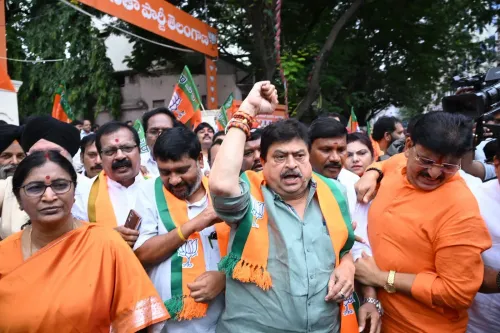
Union Coal and Mines Minister G. Kishan Reddy on Thursday, 23 July 2026, voiced strong support for the government's decision to establish fast-track courts to adjudicate paper leak cases, framing it as a decisive measure to protect the integrity of India's competitive examination system and the aspirations of millions of honest students.
Context
In his post on X, Kishan Reddy stated that the government 'remains unwavering in its commitment to protecting the aspirations of India's students and youth.' He described the fast-track court decision as 'a decisive step towards ensuring swift justice, strict accountability and preserving the integrity of our examination system,' adding that 'those who seek to compromise their future will face the full force of the law.'
The statement comes against the backdrop of repeated paper leak incidents in national-level competitive examinations in recent years, which have eroded public trust and triggered widespread protests among student communities across the country.
Policy Backdrop
The central government enacted the Public Examinations (Prevention of Unfair Means) Act, 2024, a landmark piece of legislation designed to deter malpractices — including paper leaks — in public examinations and to impose stringent penalties on offenders. The law marked a significant shift from administrative circulars to hard statutory deterrence.
The National Eligibility cum Entrance Test (NEET) paper leak controversy in 2024 was among the most prominent incidents that galvanised public demand for systemic reform. Protests by students and parents pushed the issue to the top of the national policy agenda, prompting the government to explore both legislative and judicial remedies.
Fast-track courts, which have previously been deployed in cases involving crimes against women and economic offences, are now being proposed as a mechanism to ensure time-bound disposal of paper leak cases — a signal that the government views examination fraud as a serious criminal matter warranting specialised judicial attention.
Stakeholders and Impact
The primary beneficiaries of the proposed fast-track mechanism are millions of examination candidates who appear annually for national and state-level competitive tests for admission to medical and engineering colleges, government jobs, and other public services. A swift judicial process would reduce the uncertainty that typically follows a paper leak — including cancelled examinations, re-tests, and prolonged legal battles.
For students who have invested months or years of preparation, delayed justice has historically translated into lost academic years and career setbacks. Faster case disposal could act as a meaningful deterrent to organised paper leak networks, which research has shown operate with significant logistical and financial resources.
Kishan Reddy, as BJP Telangana state president, also has a regional political stake in the issue: Telangana has seen its share of examination malpractice controversies, making the Centre's visible commitment to accountability particularly resonant with voters in the state.
What's Next
The practical impact of the fast-track court initiative will depend on the pace of rollout by state governments, which share jurisdiction over many recruitment and entrance examinations. Key indicators to watch include the designation of specific benches, appointment of dedicated prosecutors, and case disposal timelines once the courts are operationalised.
Further implementation guidelines from the Ministry of Education or the Ministry of Home Affairs are expected to provide clarity on the scope and structure of the fast-track mechanism. The government's ability to demonstrate early convictions under the Public Examinations (Prevention of Unfair Means) Act, 2024 will be critical to restoring confidence in the examination ecosystem.
Point of View
2024, signalling a shift from reactive cancellations to proactive deterrence through judicial speed. For the BJP, visible action on examination fraud is electorally significant, particularly in states like Telangana where competitive exam culture is deeply embedded. The real test, however, will be whether fast-track courts translate into actual convictions quickly enough to change the calculus for organised paper leak networks.
NationPress
23 Jul 2026
Frequently Asked Questions
What are fast-track courts for paper leak cases in India?
Fast-track courts for paper leak cases are specialised judicial benches designed to ensure time-bound disposal of cases involving examination fraud and malpractice, reducing the prolonged uncertainty that students face after a paper leak incident.
What did G. Kishan Reddy say about paper leaks?
On 23 July 2026, Union Minister G. Kishan Reddy stated that the government's decision to establish fast-track courts for paper leak cases is 'a decisive step towards ensuring swift justice, strict accountability and preserving the integrity of our examination system.'
What is the Public Examinations (Prevention of Unfair Means) Act 2024?
The Public Examinations (Prevention of Unfair Means) Act, 2024 is a central legislation enacted to deter malpractices such as paper leaks in public examinations and to impose stringent criminal penalties on those found guilty of examination fraud.
How does the NEET paper leak relate to fast-track courts?
The NEET 2024 paper leak controversy, which triggered nationwide student protests, was a key catalyst for the government's push toward stronger deterrence mechanisms, including the proposal to establish fast-track courts for examination fraud cases.
Which ministry is responsible for implementing fast-track courts for exam fraud?
Implementation is expected to involve both the Ministry of Education and the Ministry of Home Affairs, with state governments playing a crucial role in designating specific benches and operationalising the fast-track court mechanism.