Kishan Reddy Calls Mineral Self-Reliance a National Security Must
Synopsis
At the Business Today Infrastructure Summit 2026, Union Minister G. Kishan Reddy declared mineral self-reliance a non-negotiable national security priority, citing auction-based reforms, the National Critical Mineral Mission, and a ₹46,000 crore coal gasification push as pillars of India's Viksit Bharat 2047 strategy.
Key Takeaways
Union Coal and Mines Minister G.
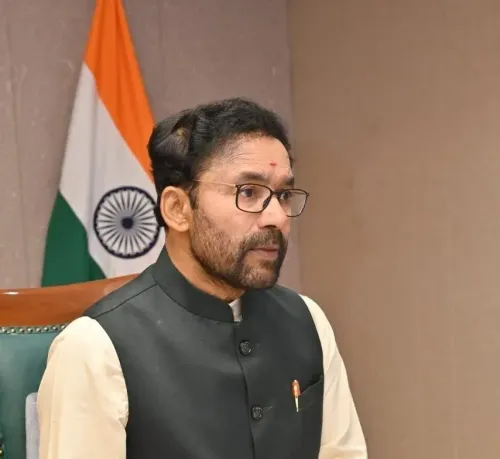
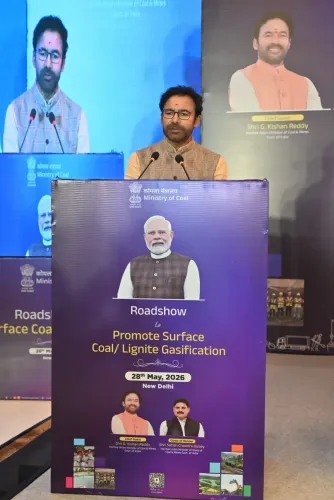
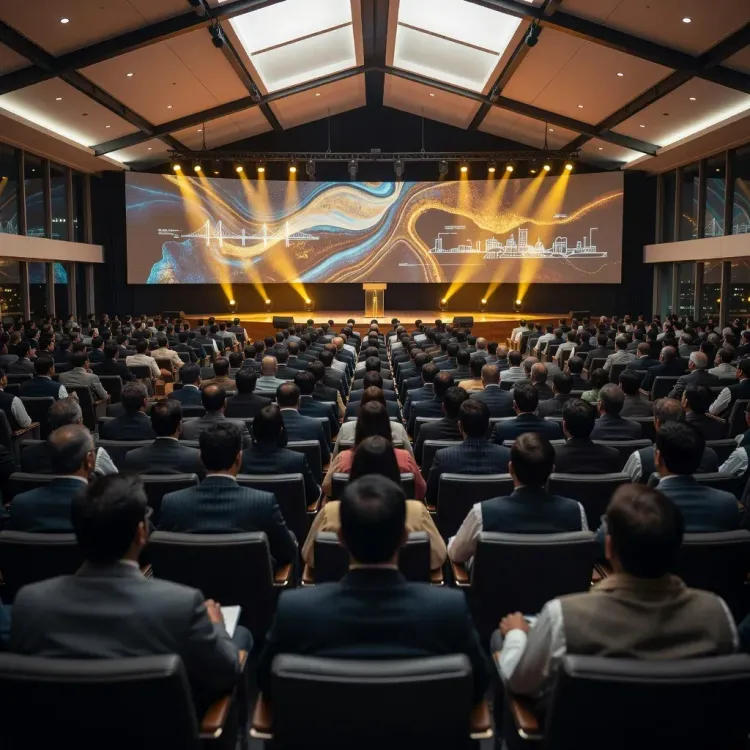
Kishan Reddy addressed the Business Today Infrastructure Summit 2026 in New Delhi on 31 July 2026 .
India is the world's second-largest coal producer and consumer ; coal remains central to energy security alongside the critical-minerals push.
Reforms include 100% auction-based allocation of mineral blocks, MMDR Act amendments, simplified clearances, and the opening of commercial coal mining to private players in 2020 .
The National Critical Mineral Mission targets accelerated exploration and processing of lithium, cobalt, graphite, copper, nickel and rare earth elements.
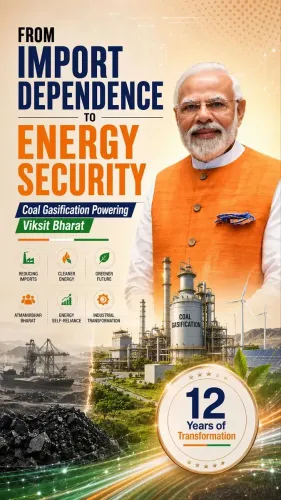
A ₹46,000 crore coal gasification initiative and deployment of AI, satellite mapping and drone technology are part of the technology modernisation agenda.
Reddy framed mineral security as sitting at the convergence of economic, energy and national security , calling Atmanirbharta in minerals a non-negotiable priority.
India cannot build the batteries of tomorrow without securing the minerals of today — and Union Coal and Mines Minister G. Kishan Reddy made that case with force at the Business Today Infrastructure Summit 2026 in New Delhi on Friday, 31 July 2026, telling an audience of industry leaders and policymakers that Atmanirbharta in minerals is a 'non-negotiable national priority.'
Why Mineral Security Is Now a Three-Front Imperative
Reddy framed India's mining ambitions across three converging imperatives: economic security, energy security, and national security. The argument is blunt and specific — lithium, cobalt and graphite for batteries; copper, nickel and rare earth elements for clean energy infrastructure. Without domestic supply chains for these inputs, India's green transition remains hostage to overseas suppliers. That single equation, the minister argued, is why the sector can no longer be treated as a legacy industry.
India already holds significant weight in global coal markets — the country is the world's second-largest coal producer and consumer — and Reddy reaffirmed coal's continued role in powering energy security and industrial growth even as the critical-minerals push accelerates in parallel.
The Reform Architecture: Auctions, Clearances, and Private Capital
The minister pointed to a structural overhaul that has been years in the making. The MMDR Amendment Act, 2015 replaced discretionary block allotments with mandatory auctions, a shift designed to bring transparency to a sector long dominated by public undertakings. The National Mineral Policy, 2019 extended that logic — encouraging private investment and sustainable practices. Then, in 2020, commercial coal mining was opened to private players under the Atmanirbhar Bharat package, marking a decisive break from the public-sector-only model.
Reddy described the cumulative effect as 'a transparent and competitive mining ecosystem,' citing 100% auction-based allocation of mineral blocks, simplified clearances, and an investor-friendly regulatory framework as its pillars. The direction of travel is clear: faster mine operationalisation, greater private capital, and advanced technology adoption across the value chain.
Critical Mineral Mission, Coal Gasification, and the Tech Push
At the centre of the forward agenda sits the National Critical Mineral Mission, the government's flagship programme to accelerate exploration, mining, and processing of strategic inputs. Reddy also highlighted a ₹46,000 crore coal gasification initiative alongside a suite of technology deployments — AI-driven exploration, satellite mapping and drone technology — as instruments to modernise the entire mineral value chain from exploration through to processing and recycling.
The summit address effectively served as a status report and a call to action simultaneously: reforms are in place, the architecture exists, but the pace of execution — new block auctions, operationalising mines, building processing capacity — will determine whether the vision of Viksit Bharat 2047 translates from blueprint to reality.
Private Sector as the Missing Multiplier
Running through Reddy's address was a consistent appeal to private industry. Strong public-private partnerships, he argued, are not optional additions to the mining reform story — they are the multiplier that converts policy into production. For EV manufacturers, energy companies and infrastructure developers in the audience, the message was direct: the regulatory ground has shifted, the auctions are real, and the government wants capital to move.
India's mineral ambitions are no longer a distant policy aspiration. The framework is built. The clock is running.
Point of View
Processing capacity build-out — matches the reform rhetoric will be the test that markets and policymakers will watch closely.
NationPress
31 Jul 2026
Frequently Asked Questions
What is the National Critical Mineral Mission India?
The National Critical Mineral Mission is a central government programme to accelerate the exploration, mining and processing of strategic minerals such as lithium, cobalt, graphite, copper, nickel and rare earth elements that are essential for batteries, clean energy and defence applications.
What did G. Kishan Reddy say at the Business Today Infrastructure Summit 2026?
Reddy called Atmanirbharta in minerals a non-negotiable national priority, highlighted India's status as the world's second-largest coal producer, and outlined reforms including 100% auction-based mineral block allocation, the National Critical Mineral Mission, and a ₹46,000 crore coal gasification initiative.
What are the MMDR Act reforms in India's mining sector?
The MMDR Amendment Act, 2015 replaced discretionary allotment of mineral blocks with mandatory auctions to improve transparency. Subsequent amendments have further streamlined clearances and encouraged private investment, including the opening of commercial coal mining to private players in 2020.
Why is mineral security important for India's clean energy goals?
India needs lithium, cobalt and graphite for EV batteries and copper, nickel and rare earth elements for solar and wind infrastructure. Without domestic supply chains for these inputs, India's clean energy transition remains dependent on overseas suppliers, creating economic and strategic vulnerability.
What is India's coal gasification initiative and its budget?
India has announced a ₹46,000 crore coal gasification initiative aimed at converting coal into synthetic gas and chemicals, reducing direct combustion dependence while adding value to domestic coal reserves as part of the broader mineral value chain strategy.