Kishan Reddy Deposits Smartphone in Ministry E-Waste Drive
Synopsis
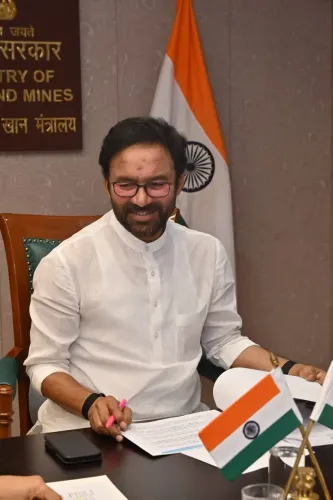
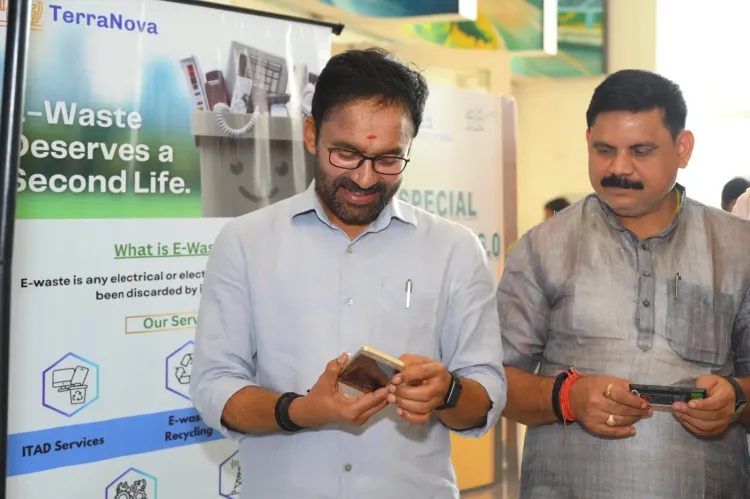
Union Mines Minister G. Kishan Reddy personally deposited a discarded smartphone in the Ministry's E-Waste Collection Drive under Special Campaign 6 on 13 October 2026, framing e-waste as an 'urban mine' vital to India's critical-mineral security and circular economy goals.
Key Takeaways
Kishan Reddy personally deposited a discarded smartphone at the Ministry of Mines E-Waste Collection Drive on 13 October 2026 .
The drive is part of Special Campaign 6 , the latest in annual government-wide waste-management campaigns running since 2021 .
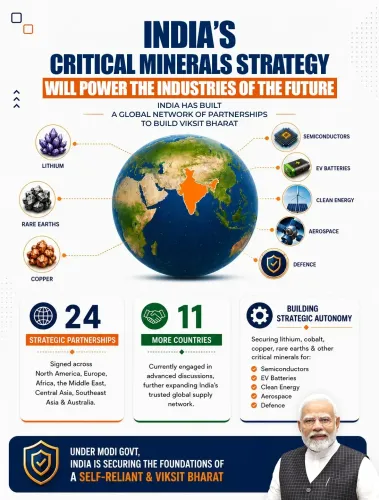
India notified a list of 30 critical minerals in 2023 to reduce import dependence; e-waste recycling is now a formal channel to recover them.
The E-Waste (Management) Rules, 2022 provide the legal framework for structured collection and scientific recycling of discarded electronics.
The initiative is positioned under Aatmanirbhar Bharat , linking urban mining to India's EV, battery, and renewable energy supply-chain goals.
Citizens are urged to deposit unused devices at designated collection points to feed a formal recycling pipeline.
A discarded smartphone, slipped into a collection bin at the Ministry of Mines, became a small but pointed statement on Tuesday, 13 October 2026 — Union Coal and Mines Minister G. Kishan Reddy personally depositing an old device to kick off the ministry's E-Waste Collection Drive under Special Campaign 6, reframing electronic scrap as an 'urban mine' hiding critical minerals.
What a Dead Phone Actually Contains
The pitch is not merely symbolic. A single smartphone holds trace quantities of lithium, cobalt, copper, and rare earth elements — the same minerals that power electric-vehicle batteries, solar panels, and advanced electronics. India's Ministry of Mines notified a list of 30 critical minerals in 2023 explicitly to track domestic supply gaps and reduce reliance on concentrated overseas sources. Every uncollected device sitting in a drawer is, by that logic, a small import that never had to happen.
Special Campaign 6 and the E-Waste Rules Behind It
Reddy framed the drive within Special Campaign 6, the latest iteration of government-wide cleanliness and waste-management pushes that have run annually since 2021. This cycle goes further than prior editions by directly linking responsible e-waste collection to mineral security goals. The legal scaffolding was laid by the E-Waste (Management) Rules, 2022, which expanded producer responsibility and formalised collection channels — turning the drive from a voluntary gesture into a structured pipeline.
The minister urged citizens to deposit unused electronic devices at designated collection points, with recovered materials channelled into scientific recycling processes rather than informal dismantling that releases toxic by-products.
Circular Economy as Mineral Policy
What makes the campaign strategically significant is the explicit link to Aatmanirbhar Bharat — the self-reliance programme launched in 2020 that treats domestic critical-mineral supply as an energy and manufacturing security issue. India's EV ambitions and renewable energy targets create steep forward demand for cobalt and lithium; primary mining alone cannot fill it fast enough. Urban mining — recovering materials from the estimated hundreds of millions of discarded devices in Indian households — is increasingly seen as the faster, cheaper second leg of that supply strategy.
Reddy's post summarised the ask in three lines: 'Join the drive. Unlock our Urban Mines. Turn Waste into Wealth!' — a slogan that doubles as a policy brief.
What Comes Next
The real test of Special Campaign 6 will be participation scale — whether collection points see meaningful volume beyond government offices, and whether recovered material feeds into licensed recycling facilities rather than leaking back into the informal sector. Analysts and industry watchers will also track whether the government moves toward dedicated critical-minerals recycling parks, an idea that has circulated in policy discussions as a natural downstream complement to primary-exploration auctions.
India's window to build a circular-mineral economy is open — but it fills up one forgotten smartphone at a time.
Point of View
Not aspirational. The Aatmanirbhar branding ties it to a broader narrative of import substitution, giving the campaign political staying power beyond a single cleanliness drive. Whether it scales depends on whether collection infrastructure reaches beyond government buildings into the vast informal retail and consumer sector.
NationPress
13 Oct 2026
Frequently Asked Questions
What is Special Campaign 6 in India?
Special Campaign 6 is the latest edition of the Indian government's annual ministry-wide drive for cleanliness, waste reduction, and disposal initiatives; this cycle specifically incorporates e-waste collection and scientific recycling to recover critical minerals.
What are critical minerals and why does India want them from e-waste?
Critical minerals — including lithium, cobalt, copper, and rare earth elements — are essential for electric vehicles, batteries, and renewable energy. India's Ministry of Mines identified 30 such minerals in 2023 to reduce import dependence, and e-waste recycling is now a key domestic recovery channel.
Where can I deposit my old smartphone or electronics for the e-waste drive?
The Ministry of Mines has set up designated collection points as part of Special Campaign 6; citizens are urged to check with their nearest government office or ministry-notified centre for exact locations, as the operational details are being rolled out.
What are India's E-Waste Management Rules 2022?
The E-Waste (Management) Rules, 2022 expanded producer responsibility for electronics companies and formalised collection channels, creating a legal framework that channels discarded devices into licensed scientific recycling facilities rather than informal dismantling.
How does e-waste recycling connect to Aatmanirbhar Bharat?
Aatmanirbhar Bharat aims for self-reliance across critical supply chains; by recovering lithium, cobalt, and rare earths from domestic e-waste, India reduces dependence on imports from a handful of overseas sources, directly supporting the programme's mineral-security goals.