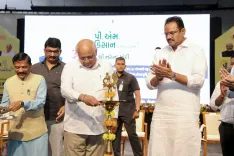
Kishan Reddy flags coal gasification push for Aatmanirbhar Bharat
Synopsis
Union Coal Minister G. Kishan Reddy, speaking in Odisha on 20 June 2026, championed a coal gasification project aimed at producing ammonia for domestic fertiliser use, cutting chemical imports, and creating jobs — framing it as central to PM Modi's Aatmanirbhar Bharat vision and India's agricultural self-reliance.
Key Takeaways
Union Coal and Mines Minister G.
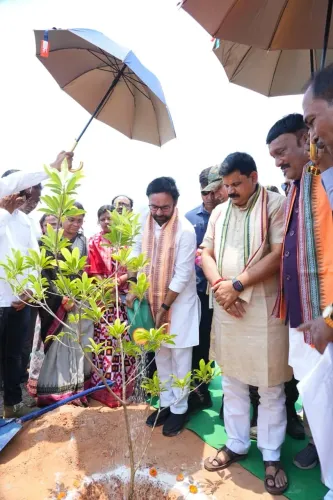
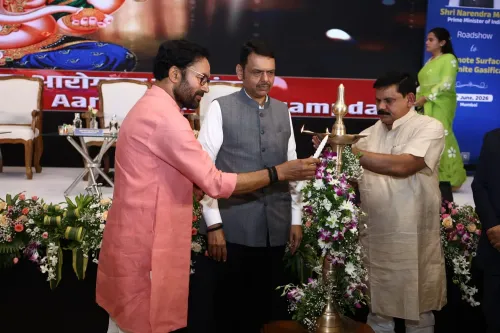
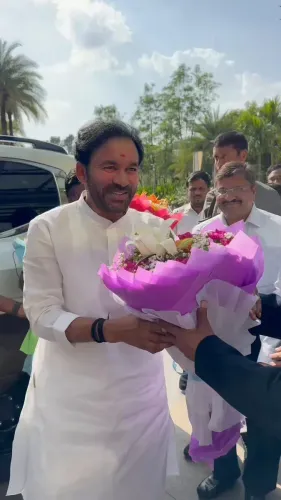
Kishan Reddy attended a coal gasification programme in Odisha on 20 June 2026 .
The project aims to produce ammonia from domestic coal to support fertiliser manufacturing and reduce import dependence on chemicals and feedstocks.
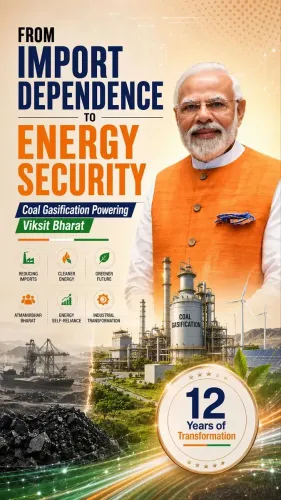
The initiative is positioned under the Aatmanirbhar Bharat framework and the government's target of 100 million tonnes of coal gasification capacity by 2030 .
Mahanadi Coalfields Limited (MCL) , an Odisha-based Coal India subsidiary, is a key institutional stakeholder in the programme.
Odisha Governor Hari Babu Kambhampati , Chief Minister Mohan Majhi , and MoS Coal Satish Dubey participated in the event.
Farmers, coal sector workers, and fertiliser manufacturers are among the primary intended beneficiaries of the project.
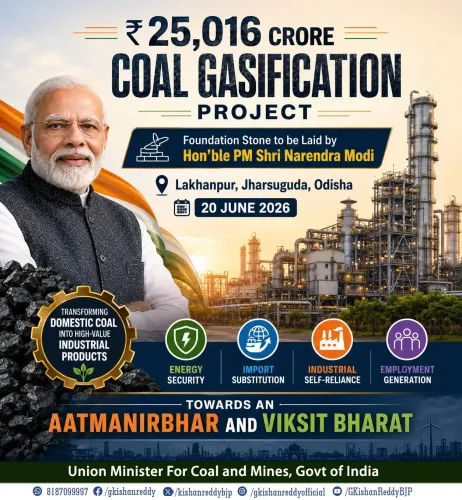
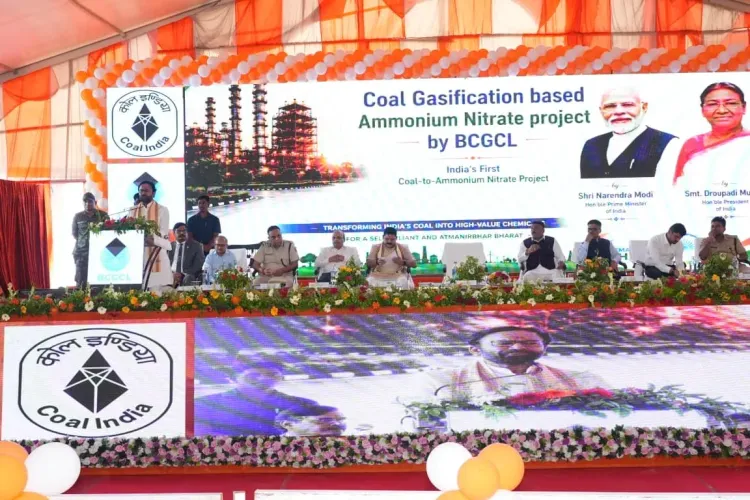
Union Coal and Mines Minister G. Kishan Reddy on Saturday, 20 June 2026 reaffirmed the government's commitment to coal gasification as a pillar of India's industrial self-reliance, speaking at a programme held on the sacred land of Mahaprabhu Jagannath in Odisha. The minister highlighted a coal gasification project designed to produce ammonia for fertiliser manufacturing, reduce dependence on imported chemicals, and generate employment, while expressing gratitude to the people of Odisha.
Context
Addressing the gathering in Odisha, Kishan Reddy described the project as one that will 'strengthen India's energy security, promote import substitution, reduce dependence on critical imported chemicals and feedstocks, generate employment opportunities, and support the vision of Aatmanirbhar Bharat through the cleaner and more efficient utilisation of domestic coal resources.' The event was attended by Governor of Odisha Shri Hari Babu Kambhampati, Chief Minister Shri Mohan Majhi, Minister of State for Coal and Mines Shri Satish Dubey, senior officials from the Coal Ministry and Mahanadi Coalfields Limited (MCL), district administration officials, public representatives, and local residents.
The minister specifically highlighted the agricultural dimension of the initiative, stating that 'the ammonia produced through this project will support fertiliser manufacturing, benefiting farmers and strengthening India's agricultural self-reliance through the efficient utilisation of domestic coal resources.'
Policy Backdrop
Coal gasification — the conversion of solid coal into synthesis gas (syngas), which can then be processed into ammonia, methanol, and other chemicals — has been a stated priority of the Union Coal Ministry since at least 2021, when roadmaps targeting 100 million tonnes of gasification capacity by 2030 were outlined. The Aatmanirbhar Bharat framework, launched in May 2020, provided the overarching policy rationale for reducing import dependence across energy, chemicals, and agriculture.
Odisha, home to Mahanadi Coalfields Limited — a subsidiary of Coal India Limited — holds some of India's largest coal reserves, making it a natural hub for gasification-linked industrial projects. Kishan Reddy noted that 'under the leadership of Prime Minister Shri Narendra Modi, coal gasification is emerging as a key pillar of India's industrial self-reliance and economic growth, unlocking new opportunities for manufacturing, innovation and value addition.'
Stakeholders and Impact
The project's stated beneficiaries span multiple segments: farmers stand to gain from domestically produced fertilisers at potentially lower cost; coal sector workers and youth in Odisha could benefit from new employment opportunities in gasification and downstream chemical manufacturing; and fertiliser manufacturers could reduce their exposure to volatile global ammonia and LNG import prices.
India currently imports a significant share of its ammonia and urea requirements, making domestic coal-to-ammonia pathways strategically attractive. The programme in Odisha underscores the government's intent to leverage the state's coal endowment for value-added industrial output rather than raw coal extraction alone.
What's Next
Attention will now turn to construction milestones and commissioning timelines for the gasification-linked fertiliser plant, as well as any fresh capital allocation or technology tie-up announcements expected in forthcoming Coal Ministry reviews or the next Union Budget. The minister's reaffirmation of the government's commitment to the 'welfare of farmers, youth, women and the poor' in Odisha also signals continued political focus on the state, which has emerged as a key constituency for the BJP-led central government. Progress on the 100 million tonne gasification target by 2030 will serve as the broader benchmark against which individual projects like this one are measured.
Point of View
Self-reliance, and the sanctity of the Jagannath region, a combination that reflects the BJP's broader effort to consolidate its foothold in the state after recent electoral gains. The ammonia-fertiliser linkage is a deliberate bridge between the energy and agriculture ministries' agendas, signalling cross-sectoral coordination at the central level. Framing coal gasification as 'cleaner and more efficient' also serves a dual purpose: deflecting environmental scrutiny while presenting coal as compatible with a modernising, value-addition economy. The 2030 gasification target provides a measurable policy anchor, but execution risk — particularly around technology partnerships and capital mobilisation — remains the critical variable to watch.
NationPress
20 Jun 2026
Frequently Asked Questions
What is coal gasification and why is India pursuing it?
Coal gasification converts solid coal into syngas, which can be used to produce ammonia, methanol, and other chemicals. India is pursuing it to reduce dependence on imported LNG, ammonia, and fertiliser feedstocks while utilising its large domestic coal reserves under the Aatmanirbhar Bharat framework.
How will the Odisha coal gasification project benefit farmers?
The project will produce ammonia domestically, which is a key input for urea and other nitrogenous fertilisers. Domestic production can reduce fertiliser import costs and improve supply security, directly benefiting Indian farmers.
What is India's coal gasification target for 2030?
The Coal Ministry has outlined a target of 100 million tonnes of coal gasification capacity by 2030, with projects in coal-rich states like Odisha forming part of this roadmap.
What is Mahanadi Coalfields Limited's role in coal gasification?
Mahanadi Coalfields Limited (MCL), a Coal India subsidiary based in Odisha, is a key institutional player in the state's coal gasification push, providing the domestic coal feedstock central to these projects.
Who attended the coal gasification programme in Odisha with Kishan Reddy?
The programme was attended by Odisha Governor Hari Babu Kambhampati, Chief Minister Mohan Majhi, Minister of State for Coal and Mines Satish Dubey, senior Coal Ministry and MCL officials, district administration officials, and local residents.