Kishan Reddy Highlights 12 Years of Cultural Revival Under Modi
Synopsis
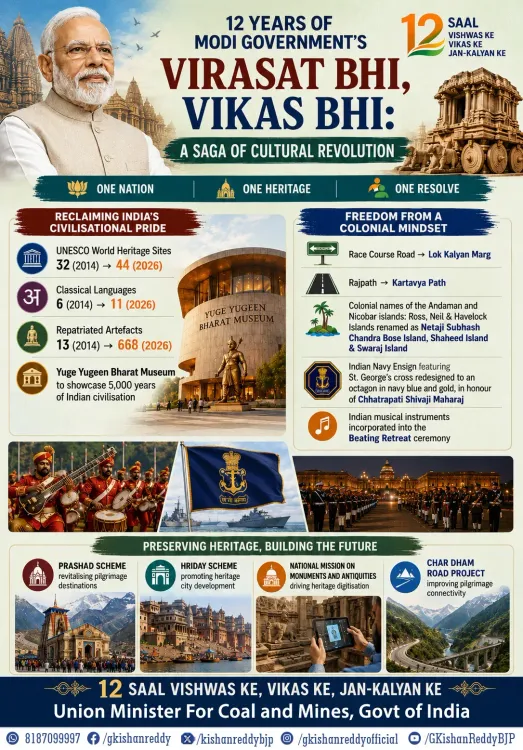
Union Minister G. Kishan Reddy has catalogued 12 years of cultural policy under PM Modi, citing growth in UNESCO heritage sites, classical language recognitions, artefact repatriations, and flagship schemes like PRASHAD, HRIDAY, and the proposed Yuge Yugeen Bharat Museum under the 'Virasat Bhi, Vikas Bhi' framework.
Key Takeaways
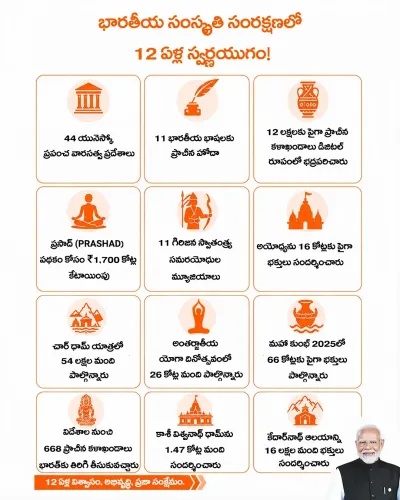
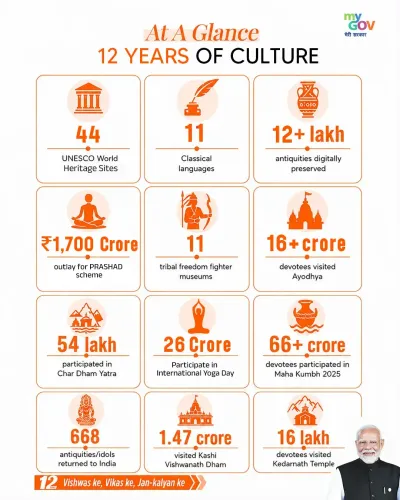
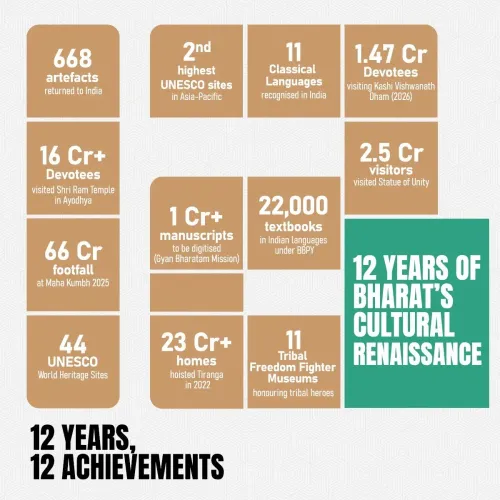
India's UNESCO World Heritage Sites rose from 32 in 2014 to 44 in 2026 , according to the post.
The number of Classical Languages recognised by the government grew from 6 to 11 over the same period.
Repatriated artefacts increased from 13 in 2014 to 668 in 2026 , the minister stated.
The proposed Yuge Yugeen Bharat Museum is intended to display 5,000 years of Indian civilisation and be the world's largest museum.
Schemes including PRASHAD , HRIDAY , and the National Mission on Monuments and Antiquities underpin the government's heritage-development push.
Civic campaigns Azadi Ka Amrit Mahotsav and Har Ghar Tiranga are cited as people's movements strengthening patriotism and collective ownership of India's development journey.
Union Coal and Mines Minister G. Kishan Reddy, who also serves as BJP's Telangana state president, on Wednesday, 24 June 2026, posted a detailed account on X marking 12 years of the Modi government, cataloguing what he described as a cultural renaissance under Prime Minister Narendra Modi — spanning UNESCO heritage recognitions, classical language expansions, artefact repatriations, and landmark infrastructure schemes.
Context
Reddy opened his post with a quote attributed to Prime Minister Modi: 'Whether it is national unity or the sense of civic duty, our cultural heritage serves as a vital link that connects not only the country, but also the world with India.' The post, tagged #12YearsOfModiGovernment and #VirasatBhiVikasBhi, frames the decade-plus tenure as a period of deliberate civilisational reclamation alongside economic development.
The minister listed several headline figures: UNESCO World Heritage Sites rising from 32 in 2014 to 44 in 2026, the number of Classical Languages growing from 6 to 11, and repatriated artefacts climbing from 13 in 2014 to 668 in 2026. These figures, presented as markers of cultural diplomacy and domestic pride, are the centrepiece of the government's Virasat Bhi, Vikas Bhi (Heritage Too, Development Too) narrative.
Policy Backdrop
Several schemes underpin the claims in Reddy's post. The PRASHAD Scheme (Pilgrimage Rejuvenation and Spiritual Augmentation Drive), launched in 2014-15, was designed to integrate pilgrimage tourism with heritage conservation. The HRIDAY Scheme (Heritage City Development and Augmentation Yojana), announced in 2015, targeted holistic conservation of historic urban areas.
The Char Dham Road Project and the National Mission on Monuments and Antiquities are cited alongside these as infrastructure and documentation efforts that run parallel to the cultural agenda. Reddy also highlighted the proposed Yuge Yugeen Bharat Museum, which the government says will showcase 5,000 years of Indian civilisation and is intended to be the world's largest museum, serving as a hub for education, research, and cultural tourism.
On the decolonisation front, the post references the renaming of colonial-era Andaman and Nicobar islands, the redesignation of Kartavya Path (formerly Rajpath) and Lok Kalyan Marg (formerly Race Course Road), and the adoption of Indian symbols in national institutions — all framed as steps toward shedding a colonial mindset.
Stakeholders and Impact
The cultural policy arc described by Reddy touches a wide set of constituencies. Linguistic communities associated with newly recognised classical languages — which now number 11, up from 6 — gain access to central funding for research, documentation, and promotion. Heritage tourists and the domestic tourism industry stand to benefit from improved infrastructure at pilgrimage and monument sites under the PRASHAD and HRIDAY schemes.
Mass civic campaigns such as Azadi Ka Amrit Mahotsav — the commemoration of 75 years of independence — and the Har Ghar Tiranga movement are presented as having deepened public participation in national identity. Cultural researchers and museum professionals are also named as prospective beneficiaries of the planned Yuge Yugeen Bharat Museum.
What's Next
The construction timeline and funding allocation for the Yuge Yugeen Bharat Museum remain key milestones to watch, as the project's ambition to be the world's largest museum will require sustained capital and institutional commitment. Further UNESCO nomination cycles and bilateral agreements on artefact repatriation will test whether the upward trajectory in these figures continues.
With the hashtag #ViksitBharat anchoring the post, the BJP's messaging ahead of future electoral cycles appears set to weave cultural pride into its broader developed-India narrative — positioning heritage not as a legacy concern but as a driver of national confidence and global standing.
Point of View
Repatriated artefacts, classical languages), the party attempts to make cultural nationalism legible to a broad, data-conscious audience. The 'Virasat Bhi, Vikas Bhi' slogan is significant: it pre-empts the critique that heritage politics crowds out development, instead positioning the two as mutually reinforcing. As the government approaches the next electoral cycle, expect this dual narrative — cultural confidence plus Viksit Bharat — to intensify across ministerial communication.
NationPress
24 Jun 2026
Frequently Asked Questions
How many UNESCO World Heritage Sites does India have in 2026?
According to Union Minister G. Kishan Reddy's post, India had 44 UNESCO World Heritage Sites as of 2026, up from 32 when the Modi government took office in 2014.
How many Classical Languages does India have now?
The number of Classical Languages recognised by the Indian government has grown from 6 to 11 during the tenure of the Modi government, as cited by Minister Kishan Reddy.
What is the Yuge Yugeen Bharat Museum?
The Yuge Yugeen Bharat Museum is a proposed national museum intended to showcase 5,000 years of Indian civilisation. The government has described it as a future hub for education, research, and cultural tourism, with ambitions to make it the world's largest museum.
What is the PRASHAD Scheme?
The PRASHAD Scheme (Pilgrimage Rejuvenation and Spiritual Augmentation Drive) was launched in 2014-15 to develop infrastructure at pilgrimage and heritage sites, integrating tourism with conservation.
What does 'Virasat Bhi Vikas Bhi' mean?
'Virasat Bhi, Vikas Bhi' translates from Hindi as 'Heritage Too, Development Too.' It is the BJP government's framing that presents cultural preservation and economic development as complementary rather than competing national priorities.