Kishan Reddy Highlights 24x7 Rice ATM in Raipur's Birgaon
Synopsis
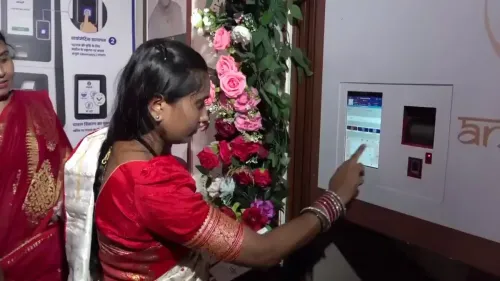
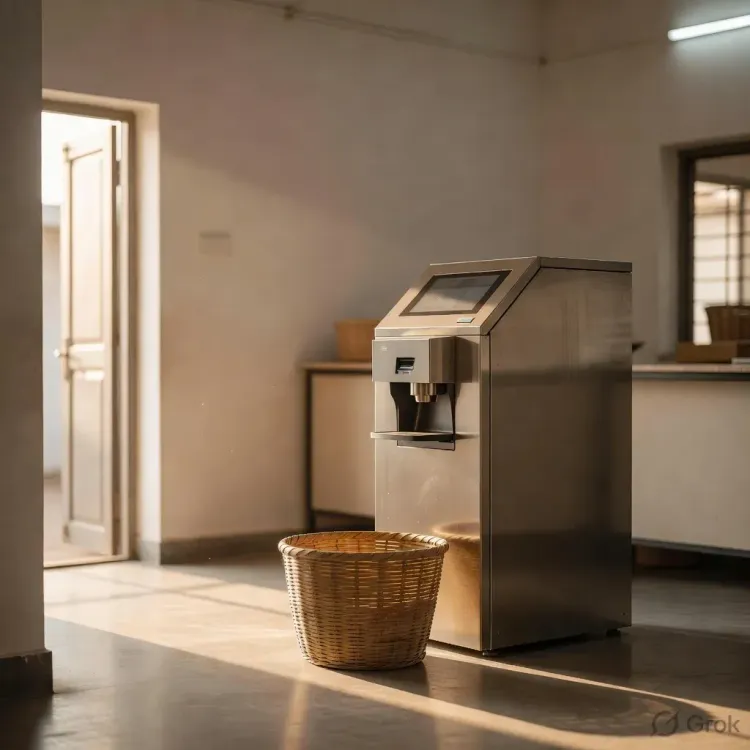
Union Minister G. Kishan Reddy has highlighted a 24x7 automated Rice ATM in Raipur's Birgaon locality — capable of storing up to 2,500 kg of grain and run by the Jyoti Self Help Group — as a ground-level expression of the Modi government's One Nation One Ration Card scheme.
Key Takeaways
Kishan Reddy highlighted a 24x7 Rice ATM in Birgaon, Raipur as a model of modernised ration delivery under the One Nation One Ration Card scheme.
The machine can store up to 2,500 kg of rice and dispenses grain automatically, eliminating the need for intermediaries.
Beneficiaries previously spent 4–5 hours in queues at fair price shops; the ATM allows access on the beneficiary's own schedule.
The facility is operated by the Jyoti Self Help Group , a local women's collective, embedding community accountability in the system.
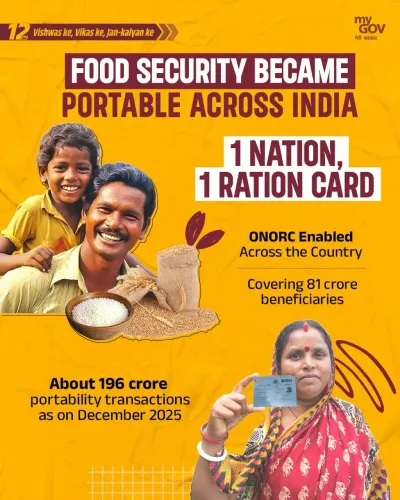
The ONORC scheme was launched in 2019 to provide inter-state portability of food grain entitlements under the National Food Security Act.
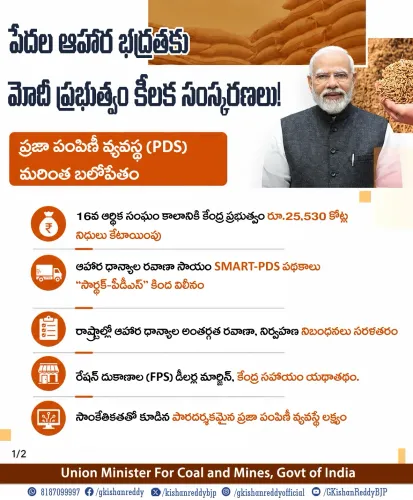
The Birgaon pilot is part of broader efforts to digitise and automate India's Public Distribution System to reduce leakages and improve last-mile access.
A rice dispenser that runs around the clock, holds up to 2,500 kg of grain, and cuts out the middleman entirely — that is what the One Nation One Ration Card scheme looks like on the ground in Birgaon, Raipur. Union Coal and Mines Minister G. Kishan Reddy on Tuesday, August 11, 2026, spotlighted the facility as a model of how India's public food distribution is being quietly, decisively overhauled.
What the Birgaon Rice ATM actually does
The machine operates 24 hours a day, seven days a week, dispensing rice automatically — no queue, no clerk, no scope for diversion. Reddy noted that beneficiaries who once spent four to five hours in line at fair price shops can now collect their entitlement on their own schedule. The unit is run by a local women's collective, the Jyoti Self Help Group, embedding community ownership directly into the infrastructure.
One Nation One Ration Card: the scheme behind the machine
The One Nation One Ration Card (ONORC) scheme, launched in 2019 under Prime Minister Narendra Modi, gave National Food Security Act beneficiaries the right to draw subsidised grain from any fair price shop across India — not just the one in their home district. That portability matters most to migrant workers who previously lost their entitlements the moment they crossed a state border. The Birgaon Rice ATM extends that logic one step further: not just portability, but round-the-clock automated access.
Automation as the anti-leakage tool
India's Public Distribution System has historically struggled with leakages — grain diverted before it reaches the intended beneficiary. Automated dispensers address that structurally: the machine logs every transaction, requires biometric or card authentication, and removes the human intermediary who was once the weakest link. Pairing the technology with a self-help group adds local accountability without recreating the old gatekeeper problem.
If the Birgaon pilot scales, it signals that the next phase of PDS modernisation will not just be about who can access grain where, but about how and when — turning a welfare entitlement into something that works on the beneficiary's terms, not the system's.
Point of View
Timed to reinforce the BJP's narrative that digital infrastructure is reaching the last mile of governance. By naming a specific locality, a specific machine capacity, and a women's self-help group as the operator, Reddy grounds a national scheme in a tangible, verifiable story — harder to dismiss than aggregate statistics. The Rice ATM model, if replicated, could become a political and administrative template for states ahead of the next electoral cycle, where welfare delivery credibility will be a key contest. It also signals that the Centre is watching state-level PDS pilots closely, with an eye to standardising the most successful ones.
NationPress
11 Aug 2026
Frequently Asked Questions
What is the One Nation One Ration Card scheme?
The One Nation One Ration Card (ONORC) scheme, launched in 2019, allows National Food Security Act beneficiaries to access subsidised food grains from any fair price shop across India, giving portability to ration entitlements regardless of the beneficiary's home state.
What is a Rice ATM and how does it work?
A Rice ATM is an automated grain-dispensing machine that operates around the clock. Beneficiaries authenticate themselves — typically via ration card or biometrics — and the machine dispenses their entitled quantity of rice without requiring a human operator or intermediary.
Where is the Birgaon Rice ATM located?
The Rice ATM highlighted by Minister G. Kishan Reddy is located in the Birgaon area of Raipur, Chhattisgarh.
Who operates the Birgaon Rice ATM?
The Birgaon Rice ATM is operated by the Jyoti Self Help Group, a local women's collective, combining community ownership with automated technology.
How does the Rice ATM reduce corruption in ration distribution?
By automating dispensing and logging every transaction, the machine removes the human intermediary who was historically the main point of diversion in India's Public Distribution System, making leakages structurally harder.