Kishan Reddy highlights PM-JANMAN tribal welfare push
Synopsis
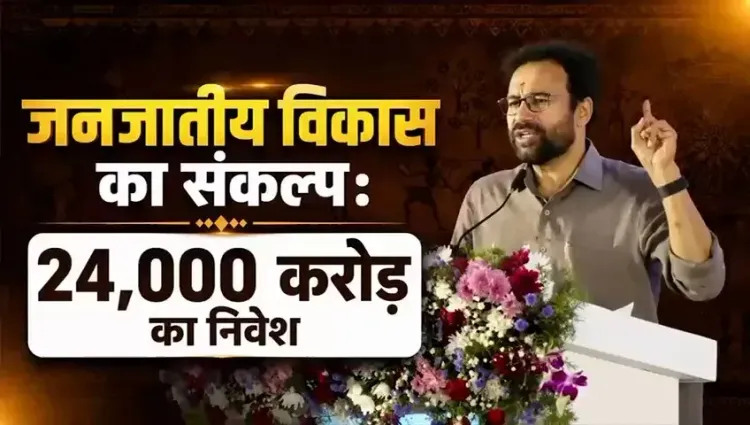
Union Minister G. Kishan Reddy on 19 July 2026 underlined the Modi government's ₹24,000 crore PM-JANMAN scheme for 75 Particularly Vulnerable Tribal Groups, emphasising respect and accountability over charity, and citing the Sickle Cell Elimination Mission as part of a holistic tribal welfare push.
Key Takeaways
Kishan Reddy posted on 19 July 2026 reaffirming the government's tribal welfare philosophy of 'respect, sensitivity and responsibility' over charity.
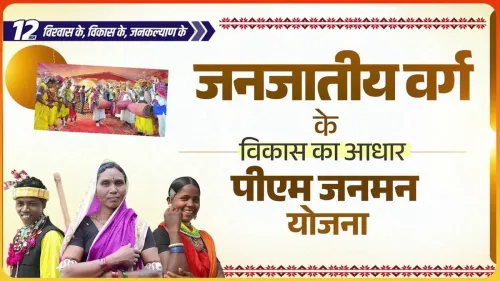
The PM-JANMAN scheme , with an outlay of ₹24,000 crore , targets infrastructure, education, health and livelihoods in villages of 75 PVTGs across India.
The scheme was announced in the Union Budget 2023-24 and operates on a convergence model drawing on multiple central ministries.
The National Sickle Cell Anaemia Elimination Mission , launched in July 2023 , aims to eradicate the disease by 2047 , with tribal districts as a priority focus.
Road connectivity, schools, health centres and new livelihood opportunities are among the core deliverables being extended to PVTG habitations.
Progress reports under PM-JANMAN are expected to be tabled at the next parliamentary session or tribal welfare review.
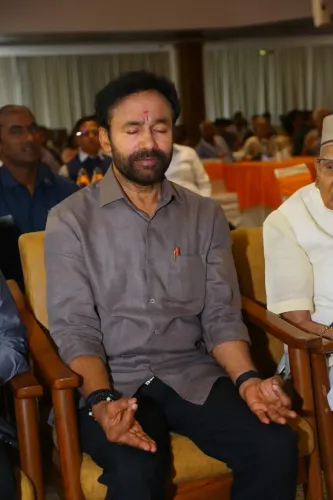
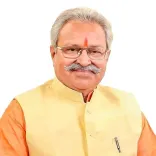
Union Coal and Mines Minister G. Kishan Reddy on Sunday, 19 July 2026 reaffirmed the central government's commitment to tribal welfare, stating that the Narendra Modi-led administration works not out of charity but with 'respect, sensitivity and accountability' towards tribal communities. The minister highlighted the ₹24,000 crore PM-JANMAN scheme as the flagship vehicle for delivering basic services to the country's most vulnerable tribal groups.
Context
Posting in Hindi on X, Kishan Reddy wrote that the government is working with 'सम्मान, संवेदनशीलता और उत्तरदायित्व' ('respect, sensitivity and responsibility') — not with a sense of charity or pity — towards tribal society. He specifically cited the PM-JANMAN (Pradhan Mantri Janjati Adivasi Nyaya Maha Abhiyan) scheme as the primary instrument for accelerating infrastructure development in villages of 75 Particularly Vulnerable Tribal Groups (PVTGs) across India.
The minister listed a range of interventions being delivered under the scheme: establishment of schools and health centres, road connectivity, new livelihood opportunities, and targeted health campaigns including the National Sickle Cell Anaemia Elimination Mission — all aimed at reaching tribal families at the 'last mile'.
Policy Backdrop
The PM-JANMAN scheme was announced in the Union Budget 2023-24 with a total outlay of ₹24,000 crore. It specifically targets 75 PVTGs — communities identified as the most socially and economically marginalised among Scheduled Tribes — with a convergence model that draws on multiple central ministries to plug gaps in housing, roads, drinking water, education and healthcare.
The National Sickle Cell Anaemia Elimination Mission, launched in July 2023, runs in parallel with a stated goal of eradicating the disease by 2047. Tribal districts carry a disproportionately high burden of sickle cell disease, making the mission directly relevant to PVTG welfare. Together, these two initiatives represent a significant expansion of the Centre's dedicated tribal development architecture since 2014, building on earlier frameworks such as the Vanbandhu Kalyan Yojana.
Stakeholders and Impact
PVTG communities, spread across states including Jharkhand, Odisha, Madhya Pradesh, Chhattisgarh, Andhra Pradesh and others, are the direct beneficiaries of PM-JANMAN. These groups have historically been excluded from mainstream development on account of geographic isolation, small population sizes and distinct socio-cultural practices.
The scheme's convergence design means that departments handling roads, schools, health and livelihoods are expected to coordinate delivery to identified PVTG habitations. Civil society organisations working on tribal rights have broadly welcomed the dedicated outlay, while also calling for transparent, village-level progress tracking to ensure funds translate into on-ground outcomes.
What's Next
State-wise physical and financial progress reports under PM-JANMAN, along with coverage data from the Sickle Cell Elimination Mission, are expected to be presented at the next parliamentary session or during a tribal welfare ministry review. Kishan Reddy's statement signals that the BJP intends to keep tribal welfare — particularly the government's shift from a patronage model to a rights-and-dignity framework — as a central political and policy narrative ahead of forthcoming state elections in tribal-heavy constituencies. The effectiveness of last-mile delivery will ultimately determine whether the scheme's ambitious outlay translates into measurable improvement in PVTG living standards.
Point of View
The party seeks to counter long-standing criticism that welfare schemes for Scheduled Tribes are driven by vote-bank calculus rather than structural inclusion. The simultaneous mention of the Sickle Cell Elimination Mission ties health equity to the broader tribal development arc, reinforcing an inter-ministerial coordination pitch. With tribal-heavy states remaining electorally significant, this kind of high-frequency ministerial communication is as much about political positioning as policy update.
NationPress
20 Jul 2026
Frequently Asked Questions
What is the PM-JANMAN scheme?
PM-JANMAN (Pradhan Mantri Janjati Adivasi Nyaya Maha Abhiyan) is a ₹24,000 crore central government scheme announced in Budget 2023-24 to deliver infrastructure, education, health and livelihood support to villages of 75 Particularly Vulnerable Tribal Groups (PVTGs) across India.
Who are Particularly Vulnerable Tribal Groups (PVTGs)?
PVTGs are 75 tribal communities identified by the Indian government as the most socially and economically marginalised among Scheduled Tribes, characterised by small and declining populations, geographic isolation and pre-agricultural economies.
What is the National Sickle Cell Anaemia Elimination Mission?
It is a national health initiative launched in July 2023 with the goal of eradicating sickle cell disease in India by 2047, with a special focus on tribal districts where the disease burden is disproportionately high.
What did G. Kishan Reddy say about tribal welfare?
On 19 July 2026, Kishan Reddy stated that the Modi government works towards tribal communities with 'respect, sensitivity and responsibility' — not charity — and highlighted PM-JANMAN and the Sickle Cell Elimination Mission as key instruments of this approach.
What benefits are being extended to tribal villages under PM-JANMAN?
Under PM-JANMAN, PVTG villages are receiving schools, health centres, road connectivity, new livelihood opportunities and coverage under health missions such as the National Sickle Cell Anaemia Elimination Mission.