Kishan Reddy: India now world's largest rice producer
Synopsis
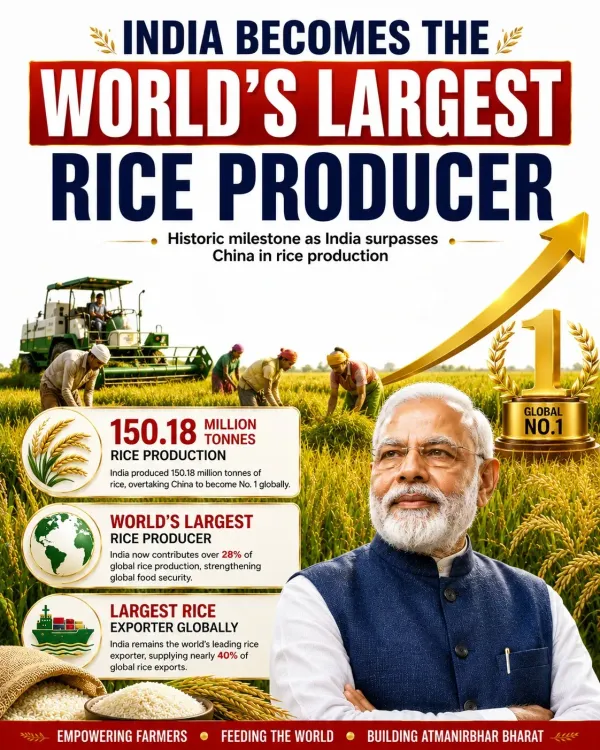
Union Minister G. Kishan Reddy has declared India the world's largest rice producer with over 28% of global output, attributing the milestone to PM Modi's agricultural policies including PM-KISAN and crop insurance schemes aimed at farmer welfare and food security.
Key Takeaways
Kishan Reddy posted on June 5, 2026 that India is the world's largest rice producer.
India is claimed to contribute over 28% of global rice output, per the minister's post.
The achievement is attributed to PM Narendra Modi 's agricultural policies and commitment to Annadatas .
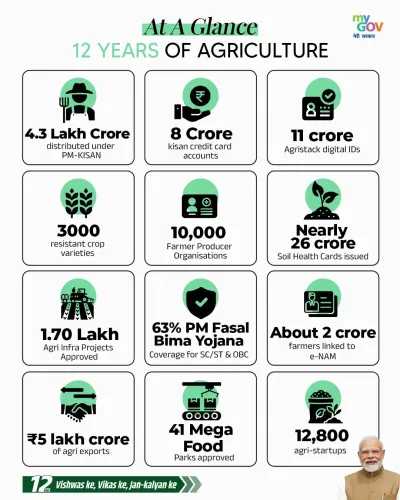
Key government schemes underpinning farm welfare include PM-KISAN (Rs 6,000 annual support) and Pradhan Mantri Fasal Bima Yojana crop insurance.
The post connects rice output to the broader Atmanirbhar Bharat (self-reliant India) policy framework.
Upcoming MSP revisions and foodgrain production estimates will be key indicators to watch.
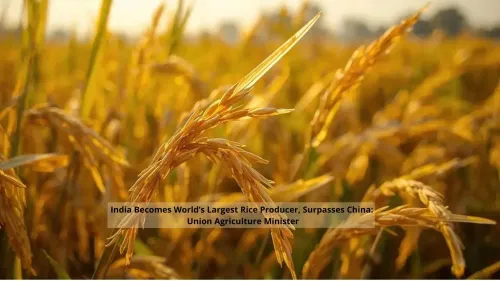
Union Coal and Mines Minister G. Kishan Reddy on Friday, June 5, 2026, credited Prime Minister Narendra Modi's agricultural policies for India's position as the world's largest rice producer, claiming the country now contributes over 28% of global rice output. The minister made the assertion via a post on X, framing the achievement as a product of 'visionary' policy and a step toward a self-reliant India.
Context
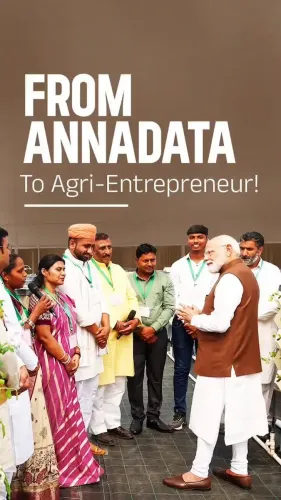
Kishan Reddy's post states that India 'stands as the world's largest rice producer, contributing over 28% of global rice output,' attributing this to PM Modi's 'unwavering commitment' to Annadatas (farmers). The minister linked the milestone to goals of food security, farmer empowerment, and Atmanirbhar Bharat (self-reliant India). The post was accompanied by an image and was published on the eve of World Environment Day, though the message itself is squarely focused on agricultural output.
Policy Backdrop
India's rice production story has deep roots in the Green Revolution of the 1960s, which introduced high-yielding varieties, expanded irrigation, and established procurement systems that successive governments have built upon. Under the Modi administration, schemes such as PM-KISAN — launched in 2019 — have provided annual direct income support of Rs 6,000 to eligible farmer families, while the Pradhan Mantri Fasal Bima Yojana, introduced in 2016, extended crop insurance coverage to reduce agricultural risk. The government had also announced a target to double farmers' income by 2022 during the 2016-17 Union Budget.
The broader Atmanirbhar Bharat framework has added layers of export promotion and direct benefit transfers alongside traditional production-side interventions such as minimum support prices and technology missions for rice cultivation.
Stakeholders and Impact
India's rice sector directly affects hundreds of millions of smallholder and marginal farmers, particularly in states such as West Bengal, Uttar Pradesh, Punjab, Andhra Pradesh, and Telangana — the last being the home state of Minister Kishan Reddy, who also serves as BJP Telangana state president. A dominant share of global rice output carries implications not just for domestic food security but also for India's position in international grain markets. Rice export policy revisions and minimum support price announcements remain closely watched by farming communities and commodity traders alike.
Consumer groups and nutrition advocates also have a stake: a robust rice supply underpins the National Food Security Act, which guarantees subsidised grain to a large share of the population.
What's Next
The Ministry of Agriculture's next quarterly or annual foodgrain production estimates will be closely scrutinised to validate the production figures cited by the minister. Any revisions to rice export policy or the announcement of revised MSP (Minimum Support Price) for the upcoming kharif season will signal the government's next steps in the agricultural policy space. Kishan Reddy's post, coming from a minister whose primary portfolio is Coal and Mines rather than Agriculture, also underscores the BJP's party-wide effort to amplify the Modi government's rural and farmer-welfare narrative ahead of electoral cycles in key states.
Point of View
Even from ministers whose portfolios sit outside agriculture. The 28% global share claim is a striking number that, if borne out by official data, would represent a significant consolidation of India's position in global grain markets — but the figure warrants scrutiny until corroborated by the Ministry of Agriculture's official estimates. The framing around Annadatas and Atmanirbhar Bharat places this squarely within a long-running political arc that the ruling party has cultivated since 2014, tying rural prosperity to Modi's personal leadership. With state elections on the horizon in several agrarian belts, such messaging is likely to intensify.
NationPress
20 Sept 2026
Frequently Asked Questions
Is India really the world's largest rice producer?
Union Minister G. Kishan Reddy has claimed that India is the world's largest rice producer contributing over 28% of global output, but this figure is yet to be officially corroborated by the Ministry of Agriculture's latest production estimates.
What is PM-KISAN and how does it help farmers?
PM-KISAN is a central government scheme launched in 2019 that provides eligible landholding farmer families with annual direct income support of Rs 6,000, transferred in instalments directly to their bank accounts.
What is Pradhan Mantri Fasal Bima Yojana?
Pradhan Mantri Fasal Bima Yojana is a crop insurance scheme launched in 2016 designed to expand insurance coverage for farmers and reduce their financial risk from crop failure due to natural calamities or pests.
Who is G. Kishan Reddy?
G. Kishan Reddy is the Union Minister of Coal and Mines in the Modi government and also serves as the BJP's Telangana state president; he has held multiple ministerial roles across successive Modi-led governments.
What is Atmanirbhar Bharat and its link to agriculture?
Atmanirbhar Bharat, or 'self-reliant India,' is a policy framework promoted by the Modi government that in the agricultural context encompasses export promotion, direct benefit transfers, and boosting domestic food production to reduce import dependence.