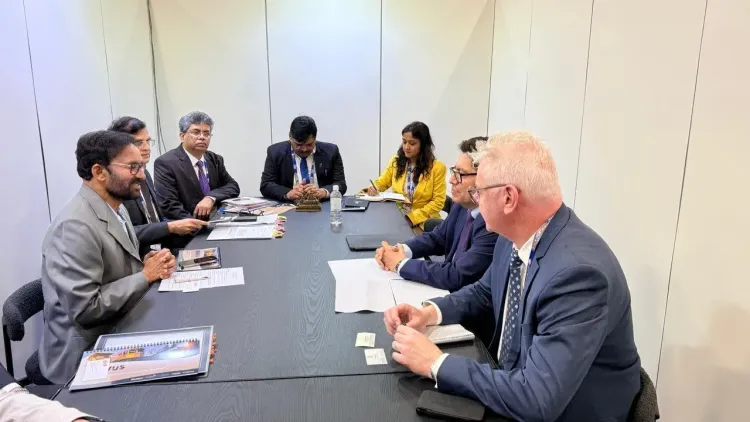
Kishan Reddy meets BHP at IMARC 2026, discusses Australia mining ops
Synopsis
Union Coal and Mines Minister G. Kishan Reddy met BHP Group Limited at IMARC 2026 in Australia, receiving a briefing on its mining operations as India deepens its critical minerals diplomacy with Canberra under the 2022 ECTA framework.
Key Takeaways
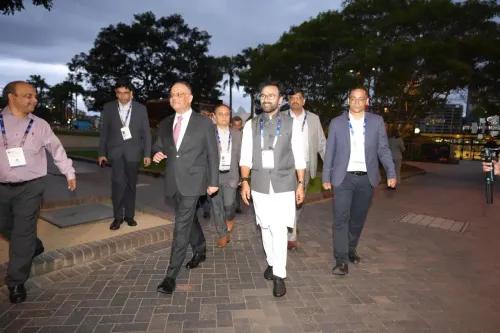
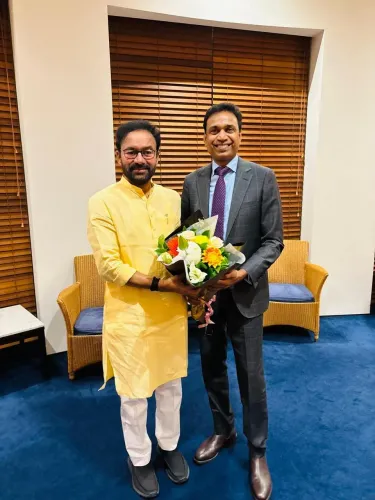
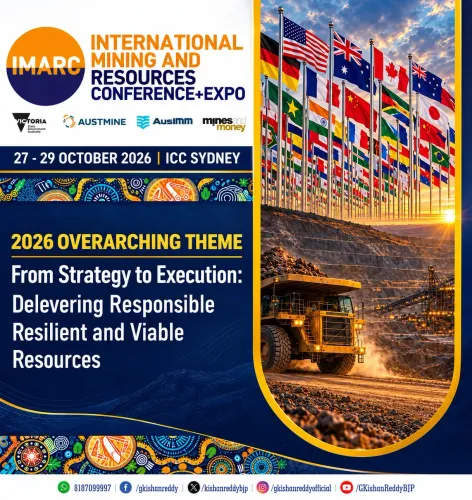
Kishan Reddy met the BHP Group Limited team on the sidelines of IMARC 2026 in Australia on 27 October 2026 .
BHP is one of Australia's largest mining multinationals, with assets in iron ore, copper, coal and potash relevant to India's import needs.
The meeting aligns with the India-Australia ECTA (April 2022) , which includes provisions for resources and mining cooperation.
India's National Mineral Policy 2019 opened mining exploration to foreign direct investment, a key plank in attracting firms like BHP.
India has prioritised Australia as a partner for critical minerals — lithium, cobalt, rare earths — essential for its clean energy and defence manufacturing goals.
MEA India, the Consulate General of India in Sydney, and the High Commission in Canberra were all tagged, signalling coordinated diplomatic backing for the engagement.
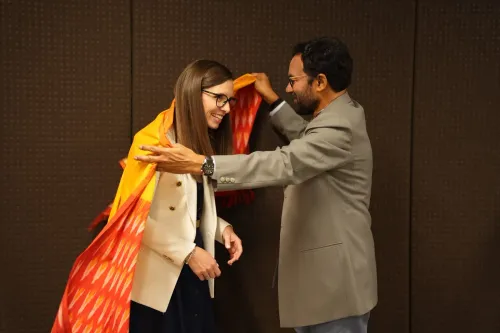
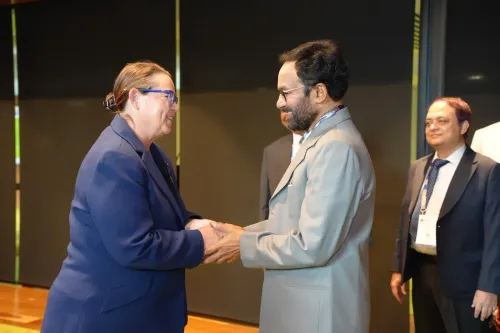
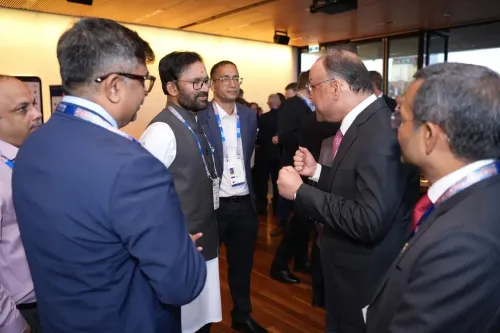
On the sidelines of the International Mining and Resources Conference (IMARC) 2026, Union Coal and Mines Minister G. Kishan Reddy held a meeting with the leadership team of BHP Group Limited, one of the world's largest mining multinationals, getting a detailed briefing on the company's operations across Australia and its broader footprint in the global mining and resources sector.
BHP at the table — and why it matters for India's minerals push
BHP Group Limited is an Australian multinational with major producing assets in iron ore, copper, coal and potash — several of which sit squarely in India's critical minerals import basket. The meeting at IMARC 2026 follows a well-established pattern: India's Mines Ministry has increasingly used global industry forums to engage directly with resource majors, shortcutting the slow pace of formal diplomatic channels when it needs to move fast on supply security.
The engagement also carries a clear bilateral signal. India and Australia signed their Economic Cooperation and Trade Agreement (ECTA) in April 2022, with dedicated provisions for resources and mining sector cooperation. That framework has since served as the legal scaffolding for deeper ties — and meetings like this one are how those provisions get turned into real commercial conversations.
India's critical minerals hunt — and Australia's starring role
India has been systematically building alternative supply chains for lithium, cobalt and rare earth elements — materials essential for electric vehicles, defence electronics and clean energy infrastructure. Australia, which holds some of the world's largest reserves of these minerals, has emerged as a preferred partner, partly because of shared Quad membership and partly because of the ECTA's competitive tariff structure.
India's National Mineral Policy 2019 opened the door to foreign direct investment in exploration and mining of critical minerals, a reform that Australian companies — including BHP — have tracked closely. Reddy's ministry has since pushed further legislative amendments to accelerate exploration licensing, making the diplomatic groundwork at events like IMARC directly convertible into investment pipelines.
IMARC as India's mining diplomacy runway
IMARC, held annually in Australia, draws together government ministers, mining executives and investors from across the globe. For India's Mines Ministry, it has become a key venue for sideline diplomacy — a chance to meet multiple global majors in a compressed window without the formality of state visits. Reddy's engagement with BHP joins a wider set of conversations the ministry is running at the conference, with tags to MEA India, the Consulate General of India in Sydney, and the High Commission of India in Canberra signalling coordinated diplomatic cover for the meeting.
The question now is whether the briefing translates into a formal investment commitment or an MoU — the kind of deliverable that turns a sideline conversation into a headline back home.
Point of View
Sydney consulate and Canberra high commission — signals this was not an impromptu hallway conversation but a coordinated engagement. With India's critical minerals legislation still evolving and EV supply chains under construction, the Mines Ministry is essentially on a global roadshow, and Australia — armed with the ECTA and Quad solidarity — is its most willing partner. The pressure on Reddy now is to convert these face-to-face meetings into concrete investment or exploration agreements before the window of political momentum closes.
NationPress
27 Oct 2026
Frequently Asked Questions
What is IMARC 2026 and where is it held?
IMARC stands for the International Mining and Resources Conference, an annual global industry event held in Australia that brings together mining executives, investors and government ministers from around the world.
What does BHP Group Limited do in Australia?
BHP Group Limited is one of the world's largest mining multinationals, with major operations in iron ore, copper, coal and potash across Australia, all of which are relevant to India's critical minerals needs.
Why is India engaging with Australian mining companies?
India is building diversified supply chains for critical minerals like lithium, cobalt and rare earths needed for electric vehicles and clean energy. Australia is a leading producer of these minerals and a key partner under the 2022 India-Australia ECTA.
What is the India-Australia ECTA and how does it affect mining?
The Economic Cooperation and Trade Agreement signed in April 2022 between India and Australia includes provisions for resources and mining sector cooperation, offering a legal and tariff framework to deepen commercial ties between the two countries in this space.
What could follow from G. Kishan Reddy's meeting with BHP?
Possible outcomes include a memorandum of understanding on exploration or investment, a joint project framework, or formal commitments to supply critical minerals to India — though no specific outcome has been confirmed as of the meeting.