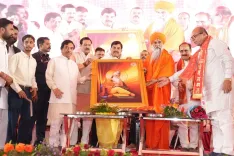
Kishan Reddy marks World Day Against Child Labour
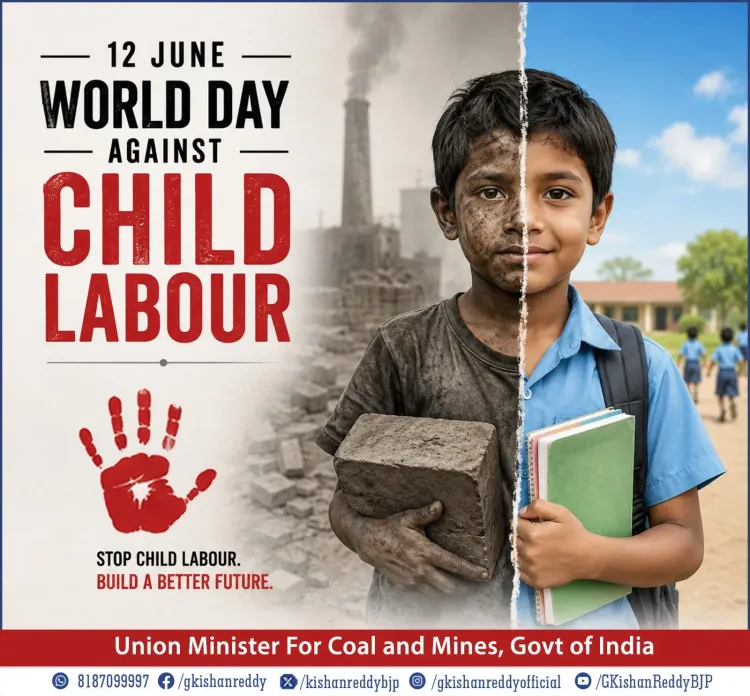
Synopsis
Union Coal and Mines Minister G. Kishan Reddy marked World Day Against Child Labour on June 12, 2026, urging renewed commitment to child rights and highlighting India's legislative and welfare efforts to ensure every child can learn and grow with dignity.
Key Takeaways
Union Coal and Mines Minister G.
Kishan Reddy posted on June 12, 2026 to mark the World Day Against Child Labour .
He called childhood a time for 'learning, dreaming, and growing — not labour,' urging renewal of resolve to protect children's rights.
The Child Labour (Prohibition and Regulation) Amendment Act, 2016 bans employment of children below 14 years in all occupations.
India ratified ILO Convention No.
182 on the Worst Forms of Child Labour in 2017 .
The National Child Labour Project remains the government's primary rehabilitation scheme for child workers.
Updated child labour incidence data from the Periodic Labour Force Survey is among the key indicators to watch.
Union Coal and Mines Minister G. Kishan Reddy on Friday, June 12, 2026 marked the World Day Against Child Labour by calling on citizens to renew their resolve to protect every child's rights and build an India where opportunity reaches every household.
Context
Posting on the occasion of the annual ILO-established observance, Reddy wrote: 'Childhood is meant for learning, dreaming, and growing — not labour.' He stressed that sustained efforts in education, welfare, and social empowerment must continue so that every child can 'thrive with dignity and hope.'
The World Day Against Child Labour, observed every June 12, was established by the International Labour Organization to focus global attention on the scale of child labour and the action needed to eliminate it. This year's observance comes as governments worldwide assess progress against targets under the UN Sustainable Development Goals.
Policy Backdrop
India has built a layered legislative framework to tackle child labour. The Child Labour (Prohibition and Regulation) Amendment Act, 2016 banned the employment of children below 14 years in all occupations and prohibited adolescents from working in hazardous industries.
A year later, in 2017, India ratified ILO Convention No. 182 on the Worst Forms of Child Labour, signalling its commitment to international standards. The Right of Children to Free and Compulsory Education Act, 2009 had earlier mandated free schooling for children aged 6 to 14, directly addressing one of the root causes that pushes children into the workforce.
On the rehabilitation side, the National Child Labour Project has functioned as the central government's primary scheme to identify, withdraw, and mainstream child labourers into formal education. Enforcement of these provisions is a concurrent responsibility shared between central ministries and state labour departments.
Stakeholders and Impact
Child workers in India's informal economy — including agriculture, domestic work, and small-scale manufacturing — remain the most directly affected group. Mining communities, given the minister's portfolio, are among the sectors where vulnerability to exploitative labour practices has historically drawn regulatory attention.
Civil society organisations working on child rights have long argued that legislative intent must be matched by on-ground enforcement and robust social safety nets for families that depend on supplementary income. Ministerial statements on international observance days are typically read as signals of policy continuity and official commitment to existing frameworks.
What's Next
Attention will now turn to the release of the next Periodic Labour Force Survey estimates, which will offer updated data on child labour incidence across states. Advocates and policymakers will also watch for any fresh state-level action plans under the National Child Labour Project that may be announced in the weeks following the observance. Progress on reducing child labour in the informal sector will be a key benchmark as India works toward its broader social development commitments.
Point of View
Not just a labour department matter. The emphasis on 'education, welfare, and social empowerment' tracks closely with the government's framing of child labour as a socio-economic problem requiring supply-side solutions rather than enforcement alone. Analysts will note that the statement's forward-looking language keeps political space open for future scheme announcements ahead of the next labour force survey cycle.
NationPress
26 Oct 2026
Frequently Asked Questions
What is the World Day Against Child Labour?
The World Day Against Child Labour is an annual observance on June 12 established by the International Labour Organization to raise global awareness about child labour and mobilise action to eliminate it.
What did Kishan Reddy say on World Day Against Child Labour 2026?
G. Kishan Reddy said 'Childhood is meant for learning, dreaming, and growing — not labour,' and called for renewed resolve to protect every child's rights through education, welfare, and social empowerment.
What is India's law against child labour?
The Child Labour (Prohibition and Regulation) Amendment Act, 2016 bans employment of children below 14 years in all occupations and prohibits adolescents from working in hazardous industries.
Has India ratified ILO conventions on child labour?
Yes. India ratified ILO Convention No. 182 on the Worst Forms of Child Labour in 2017 , committing to international standards for protecting children from exploitative work.
What is the National Child Labour Project in India?
The National Child Labour Project is a central government scheme that identifies, withdraws, and mainstreams child labourers into formal education, serving as India's primary rehabilitation mechanism for affected children.