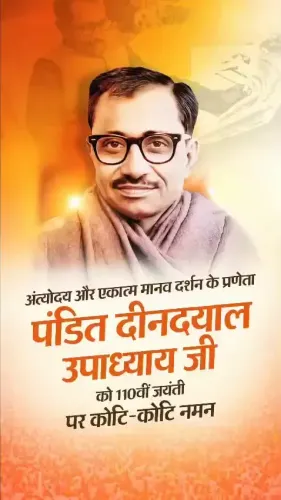
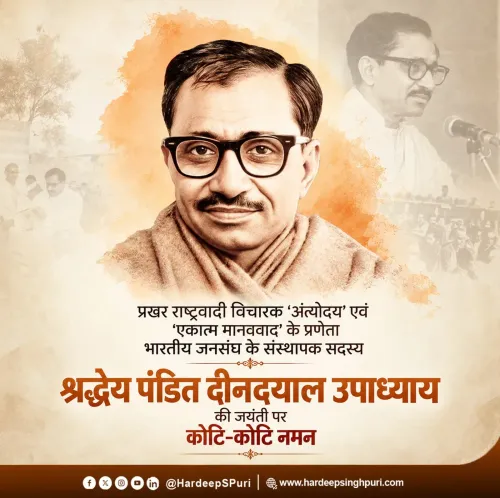
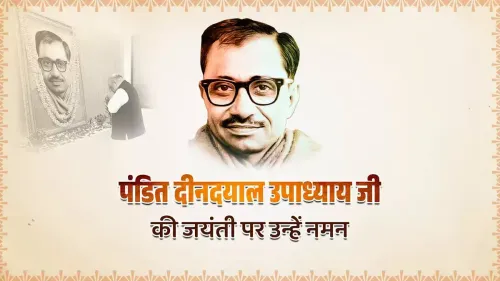
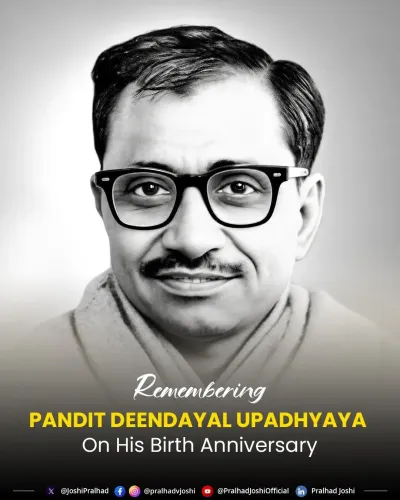
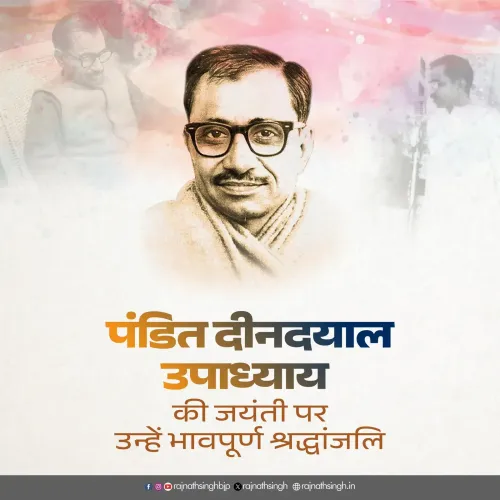
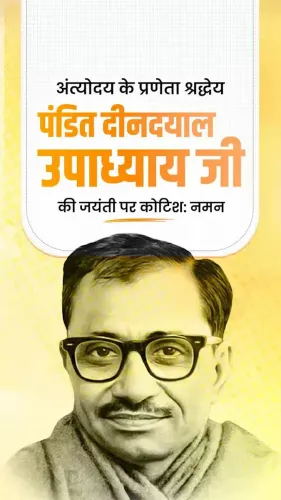
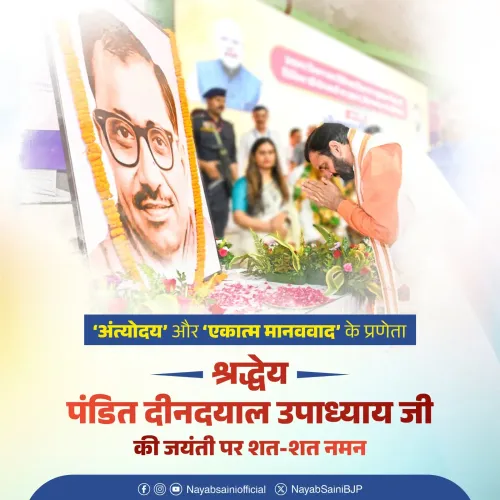
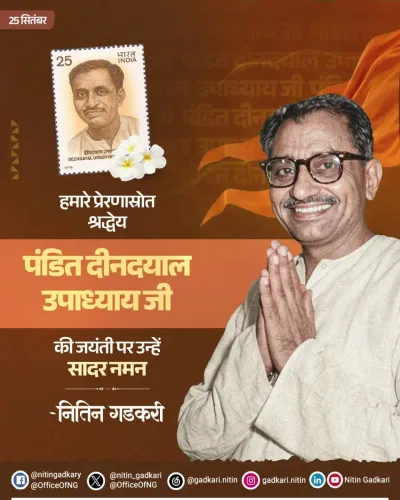
Kishan Reddy pays tribute to Deendayal Upadhyaya on Janm Jayanti
Synopsis
Union Coal and Mines Minister G. Kishan Reddy marked Pandit Deendayal Upadhyaya's Janm Jayanti on 25 September 2026, reaffirming the BJP's ideological commitment to Integral Humanism and the Antyodaya principle that continues to shape India's welfare governance.
Key Takeaways
Kishan Reddy paid tribute to Pandit Deendayal Upadhyaya on his birth anniversary, 25 September 2026 .
Upadhyaya articulated Integral Humanism (Ekatma Manav Darshan) as an alternative to both capitalism and socialism, adopted by the Bharatiya Jana Sangh in 1965 .
The Antyodaya principle — prioritising the upliftment of the poorest — inspired the Antyodaya Anna Yojana launched in 2000 .
The BJP traces its ideological lineage directly to the Bharatiya Jana Sangh , founded in 1951 .
BJP leaders nationwide observe the Janm Jayanti as an annual reaffirmation of the party's philosophical foundations and welfare governance narrative.
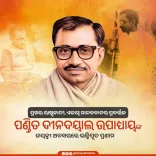
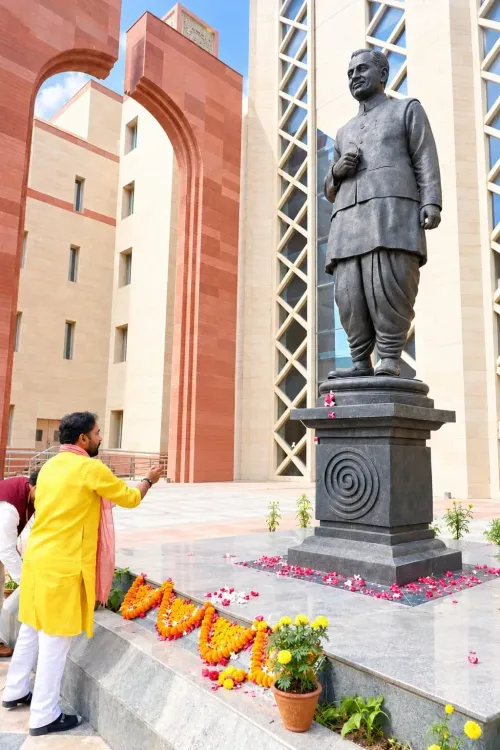
On the birth anniversary of one of India's most consequential political thinkers, Union Coal and Mines Minister G. Kishan Reddy offered homage to Pandit Deendayal Upadhyaya on Friday, 25 September 2026, reaffirming the BJP's deep ideological roots in the Jana Sangh tradition.
The philosopher who shaped a party's soul
Deendayal Upadhyaya was no ordinary ideologue. As the president and principal organiser of the Bharatiya Jana Sangh — the political party founded in 1951 that would eventually become the BJP — he articulated a third path that refused to bow to either capitalism or socialism. He called it Ekatma Manav Darshan, or Integral Humanism: a framework centred on the harmonious development of the body, mind, intellect, and soul of every individual, rooted in Indian civilisational values.
The Bharatiya Jana Sangh formally adopted Integral Humanism as its official doctrine at its landmark 1965 session. Six decades on, the philosophy remains the BJP's stated ideological north star — invoked at anniversaries, quoted in policy speeches, and used to frame welfare programmes as expressions of cultural duty rather than political calculation.
Antyodaya: from philosophy to food on the table
Kishan Reddy's tribute specifically highlighted Upadhyaya's ideal of Antyodaya — literally, 'the rise of the last person'. The concept demands that progress be measured not by the fortunes of the privileged, but by the dignity gained by society's most marginalised. That idea did not stay in the realm of philosophy. In 2000, the Antyodaya Anna Yojana was launched to deliver subsidised foodgrains to the poorest households in India, drawing its name and moral logic directly from Upadhyaya's principle.
For BJP leaders, invoking Antyodaya on this anniversary is a deliberate act of lineage-marking — connecting a philosophical inheritance to the lived reality of crores of beneficiary families today.
Why BJP marks this day year after year
Reddy's post is part of a broader, choreographed ritual. Across the country, BJP workers and leaders mark Deendayal Upadhyaya's Janm Jayanti with commemorations, outreach drives, and restatements of party doctrine. The anniversary serves a dual purpose: it reminds the cadre of the party's pre-independence ideological DNA, and it signals to voters that present-day welfare governance is not transactional — it is philosophical. That is a powerful political narrative, delivered with discipline every year on this date.
Whether fresh welfare scheme announcements emerge framed around Antyodaya in the coming weeks will be worth watching — but on this morning, the message from the minister was one of reverence, continuity, and resolve.
Point of View
Linking a 1965 doctrine to 21st-century welfare delivery. By specifically naming both Integral Humanism and Antyodaya, Kishan Reddy signals that the party views its governance philosophy not as a departure from its Jana Sangh roots but as their fulfilment. The ritual also serves a cadre-mobilisation function, reinforcing organisational identity at the grassroots. For a party governing at the national level, grounding policy in moral philosophy rather than electoral calculus is a durable and deliberate political posture.
NationPress
25 Sept 2026
Frequently Asked Questions
Who was Pandit Deendayal Upadhyaya?
Pandit Deendayal Upadhyaya was a philosopher, organiser and president of the Bharatiya Jana Sangh — the ideological predecessor to the BJP — who articulated Integral Humanism as an alternative political philosophy to both capitalism and socialism.
What is Integral Humanism or Ekatma Manav Darshan?
Integral Humanism, also known as Ekatma Manav Darshan, is a political philosophy developed by Deendayal Upadhyaya that advocates the harmonious development of every individual — body, mind, intellect, and soul — rooted in Indian civilisational values. It was formally adopted by the Bharatiya Jana Sangh in 1965.
What is the Antyodaya principle and how is it used in Indian policy?
Antyodaya is a concept championed by Deendayal Upadhyaya that means 'rise of the last person', demanding that progress be measured by the upliftment of society's most marginalised. It directly inspired the Antyodaya Anna Yojana, launched in 2000 to deliver subsidised foodgrains to the poorest households.
When is Deendayal Upadhyaya's Janm Jayanti celebrated?
Deendayal Upadhyaya's Janm Jayanti — his birth anniversary — is observed on 25 September each year, and is widely marked by BJP leaders and party workers across India.
What is G. Kishan Reddy's role in the BJP?
G. Kishan Reddy serves as India's Union Minister of Coal and Mines and is also the BJP's Telangana state president, making him one of the party's senior figures in both central government and southern regional politics.