Kishan Reddy Marks Emergency Anniversary, Slams Congress
Synopsis
Union Coal and Mines Minister G. Kishan Reddy marked the 51st anniversary of the 1975 Emergency on 25 June 2026, condemning Congress for trampling constitutional values and imprisoning lakhs of citizens, and pledging that India would never permit such authoritarianism again.
Key Takeaways
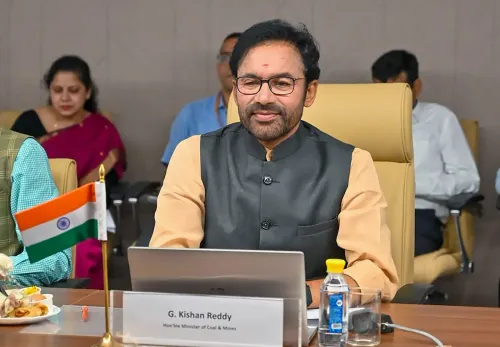
Kishan Reddy , Union Coal and Mines Minister and BJP Telangana president, posted a Telugu-language condemnation of the 1975 Emergency on 25 June 2026 .
He described the Emergency as a 'dark chapter' imposed to serve one family's selfish interest , resulting in the imprisonment and torture of lakhs of citizens .
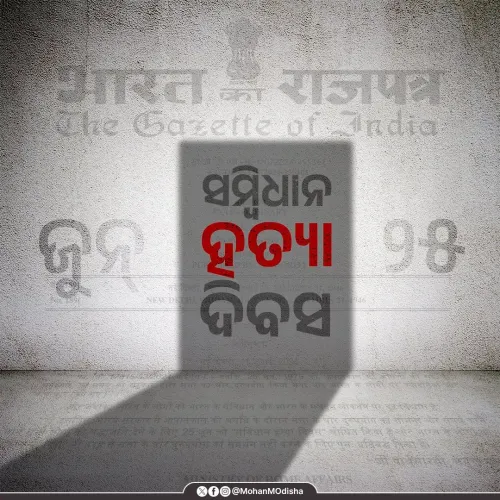
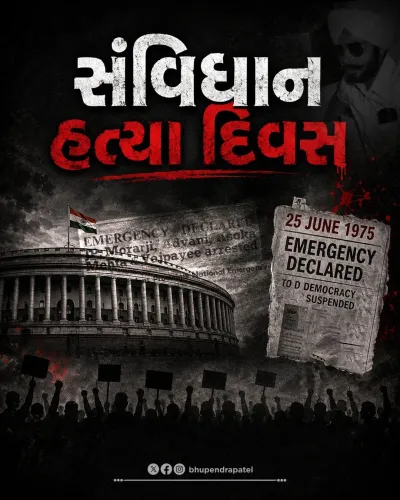
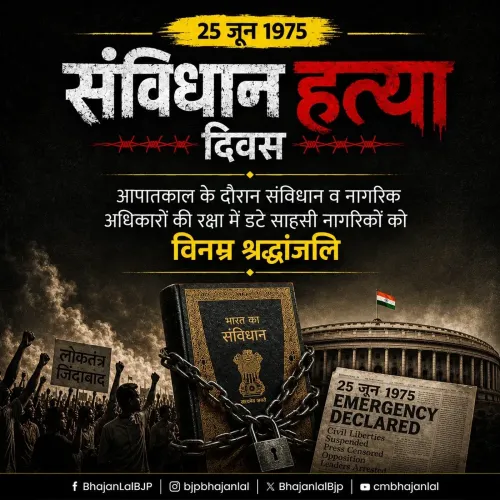
Reddy used the hashtag #SamvidhanHatyaDiwas — the BJP's designated name for the 25 June anniversary, meaning 'Constitution Murder Day'.
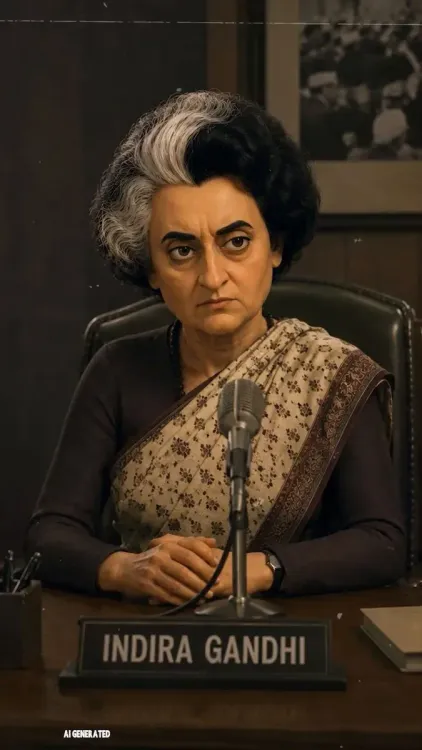
The 1975 Emergency was proclaimed by President Fakhruddin Ali Ahmed on PM Indira Gandhi 's advice and lasted until March 1977 .
Reddy asserted that 'no one is above the Constitution' and that the Indian people will never again permit such authoritarian tendencies.
The post is consistent with BJP's annual pattern of coordinated commemorative messaging targeting Congress on this date.
Union Coal and Mines Minister G. Kishan Reddy on Thursday, 25 June 2026 invoked the 51st anniversary of the 1975 Emergency to condemn the Congress party, calling it the darkest chapter in Indian democratic history and warning that such authoritarianism must never be repeated. Posting in Telugu on X, the BJP Telangana state president used the occasion — marked by the party as Samvidhan Hatya Diwas (Constitution Murder Day) — to draw a sharp contrast between constitutional values and what he described as dynastic self-interest.
Context
Reddy's post, written in Telugu, translates as: 'The Emergency imposed by Congress on 25 June 1975, driven by a lust for power, is a dark chapter in the history of Indian democracy. Constitutional values were trampled for the ambition of one person; lakhs of people were imprisoned and tortured. Democracy was murdered by silencing the opposition and the voice of the media. This country will never forget, never forgive the dictatorship that turned the nation into a prison for the selfish interest of one family. No one is above the Constitution. The people of India will never again allow such anarchic tendencies.' He tagged the post #SamvidhanHatyaDiwas.
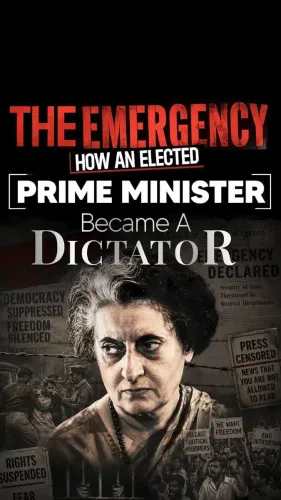
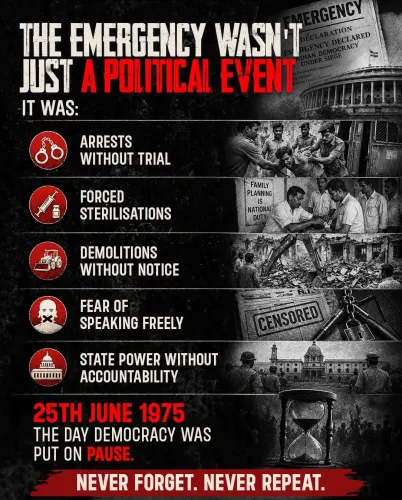
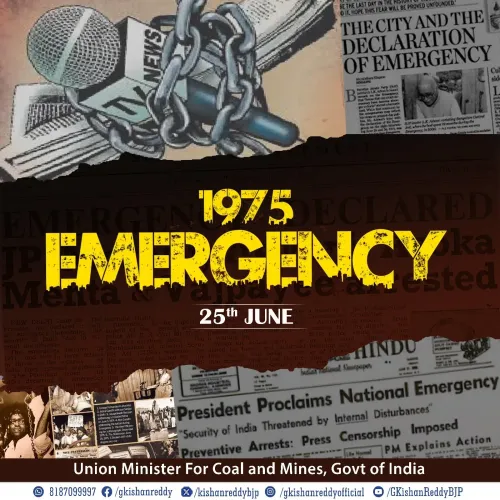
The national Emergency was proclaimed on 25 June 1975 by President Fakhruddin Ali Ahmed on the advice of Prime Minister Indira Gandhi, citing internal disturbance. It remained in force until March 1977, a period during which civil liberties were suspended, opposition leaders detained, and press censorship enforced.
Policy Backdrop
The BJP has formally designated 25 June as Samvidhan Hatya Diwas — Constitution Murder Day — to institutionalise annual commemoration of the Emergency as an assault on constitutional governance. The framing positions the ruling party as a custodian of democratic norms against what it characterises as Congress-era authoritarianism.
Reddy's message echoes a consistent BJP narrative that the Emergency was driven not by national security concerns but by the political survival of a single family — a reference to the Gandhi-Nehru dynasty. The post's emphasis that 'no one is above the Constitution' is a recurring rhetorical anchor in this discourse, directed at the Indian National Congress's current leadership as much as its 1975-era decisions.
Stakeholders and Impact
The Emergency's direct victims included opposition leaders, journalists, civil society activists, and ordinary citizens, tens of thousands of whom were detained under the Maintenance of Internal Security Act (MISA) and other preventive detention laws. Press censorship during the period remains a reference point in debates over media freedom in India.
For the Congress party, the annual BJP commemoration presents a recurring reputational challenge, particularly as the party attempts to rebuild its electoral base in states like Telangana, where Reddy serves as state BJP president. His dual role — as a Union minister and a state party chief — amplifies the political weight of the messaging in a state the BJP is actively contesting.
What's Next
Similar commemorative posts from BJP ministers and senior leaders are expected throughout 25 June 2026, consistent with the party's pattern of coordinated messaging on this anniversary. Parliamentary sessions and debates on constitutional amendments or opposition conduct have in the past seen the Emergency invoked as a precedent, and that pattern is likely to continue. The Congress is expected to push back, contesting the BJP's characterisation of the period and its political motivations for keeping the memory alive.
Point of View
Where the BJP is in active competition. By framing the Emergency as a 'family's' crime rather than a party's policy failure, the messaging personalises the attack on Congress's current dynastic leadership without naming them, keeping the critique evergreen. The annual repetition risks diminishing returns, but the absence of a compelling Congress counter-narrative keeps the wound politically productive for the BJP.
NationPress
24 Sept 2026
Frequently Asked Questions
What is Samvidhan Hatya Diwas?
Samvidhan Hatya Diwas, meaning 'Constitution Murder Day', is a commemoration observed by the BJP on 25 June each year to mark the anniversary of the 1975 Emergency as an assault on India's constitutional values.
What did G. Kishan Reddy say about the 1975 Emergency?
G. Kishan Reddy called the Emergency a dark chapter in Indian democratic history, saying Congress trampled constitutional values for one person's ambition, imprisoned and tortured lakhs of people, and silenced the media and opposition.
When was the 1975 Emergency imposed and by whom?
The national Emergency was proclaimed on 25 June 1975 by President Fakhruddin Ali Ahmed on the advice of Prime Minister Indira Gandhi and remained in force until March 1977 .
Why does BJP mark 25 June every year?
The BJP marks 25 June annually as Samvidhan Hatya Diwas to highlight what it calls Congress's authoritarian suppression of democracy during the Emergency, contrasting it with the party's emphasis on constitutional supremacy.
Who is G. Kishan Reddy?
G. Kishan Reddy is India's Union Minister of Coal and Mines and the BJP's Telangana state president , a senior party leader representing the party's interests in southern India.