Kishan Reddy: States Earned ₹7 Lakh Crore from Mining Since 2015
Synopsis
Union Coal and Mines Minister G. Kishan Reddy has shared data showing states received over ₹7 lakh crore in mining revenue since 2015, with a 354% decade-long growth in state mineral earnings, attributing the gains to post-MMDR 2015 e-auction reforms and signalling possible fresh legislative action under #MMDR2026.
Key Takeaways
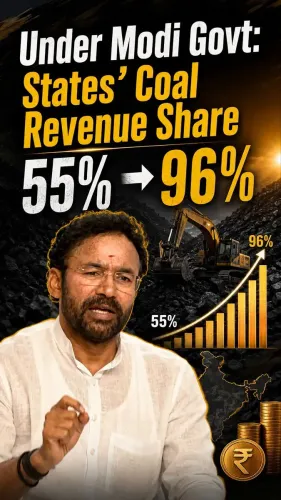
96% of all mining-sector revenue in India accrues directly to state governments, not the Centre.
States have collectively received over ₹7 lakh crore in mining revenue, including coal, since 2015 .
State mineral revenue has grown 354% over the last decade, according to Minister G.
State mineral revenue for FY 2025–26 stood at ₹82,366 crore as per figures cited by the Minister.
The MMDR Amendment Act 2015 replaced first-come-first-served allocations with e-auctions, directing higher royalties and premiums to state governments.
The #MMDR2026 tag in the post signals potential new amendments or major auction rounds in the pipeline.
Ninety-six paise of every rupee generated by India's mining sector flows directly to the states — and Union Coal and Mines Minister G. Kishan Reddy wants that number to sink in. On Wednesday, 19 August 2026, the Minister posted a striking set of figures on X, framing India's decade-long mining reform story not as a central-government achievement but as a windfall for state treasuries.
A ₹7 Lakh Crore Transfer — and the Reform That Made It Possible
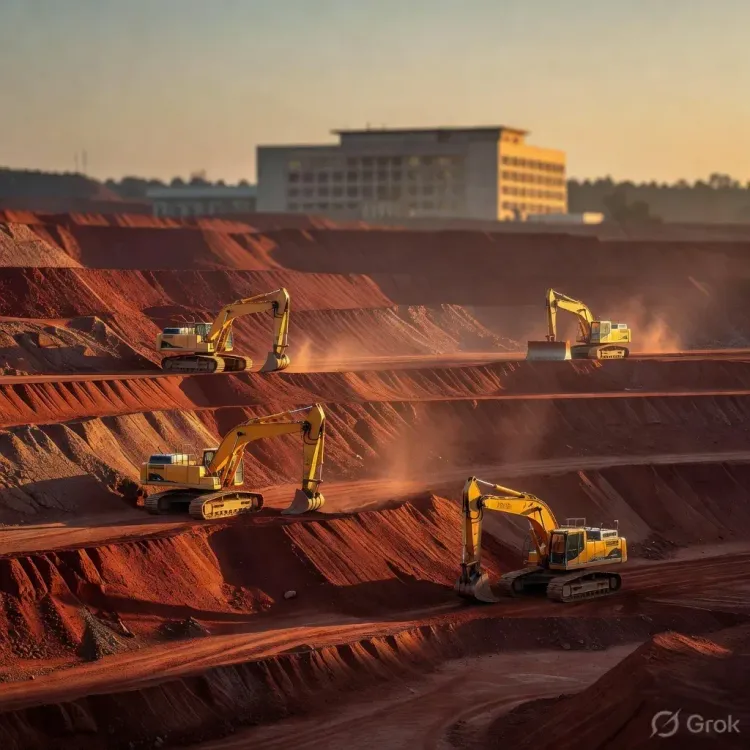
The numbers Reddy cited trace directly back to a structural overhaul: the Mines and Minerals (Development and Regulation) Amendment Act of 2015, which scrapped the old first-come-first-served allocation system and replaced it with transparent e-auctions. The shift was surgical — auction premiums and royalties now flow as state revenue, not central receipts. The result, according to the Minister, is that states have collectively received over ₹7 lakh crore in mining-related revenue, including coal, since that pivot.
The headline growth figure — 354% rise in state mineral revenue over the last decade — is the kind of compounding that rewrites budgets. For mineral-rich states, that is not a statistic; it is schools, roads, and fiscal headroom. Reddy put the FY 2025–26 state mineral revenue at ₹82,366 crore, tagging the post with #MMDR2026, a signal that fresh legislative or auction activity may be on the horizon.
Cooperative Federalism as the Governing Logic
The framing is deliberate. By leading with state gains rather than central policy, the Ministry of Mines is making a federalism argument: that mining reform is not extraction from the ground up to Delhi, but a revenue engine running in the opposite direction. The Ministry of Mines has consistently positioned post-2015 auction rounds as a cooperative federalism instrument, and Reddy's post reinforces that narrative ahead of what the #MMDR2026 tag implies — a possible new amendment round or major auction cycle.
States sitting on mineral belts — think Odisha, Jharkhand, Chhattisgarh, Rajasthan — have the most at stake in how any revised MMDR framework distributes royalty rates and auction premiums. How those states deploy their mineral windfalls in their own budgets is the next chapter of this story.
India's mining boom is no longer just a resource story. It is a fiscal federalism story — and the states are the ones cashing the cheques.
Point of View
Which is politically useful at a time when Centre-state fiscal tensions run high. The #MMDR2026 tag is unlikely to be incidental; it telegraphs that a new amendment or auction round is being prepared, and anchoring it in state-benefit optics pre-empts opposition from mineral-rich state governments. The 354% growth claim, if independently verified, would represent one of the more consequential fiscal transfers enabled by a single sectoral reform in recent Indian economic history. Analysts will watch whether the next MMDR iteration adjusts royalty-sharing formulas or introduces new mineral categories — both of which could alter the state-revenue arithmetic significantly.
NationPress
19 Aug 2026
Frequently Asked Questions
How much mining revenue have Indian states received since 2015?
According to Union Minister G. Kishan Reddy, states have received over ₹7 lakh crore in mining-related revenue, including coal, since 2015 when the MMDR Amendment Act introduced e-auctions.
What is the MMDR Act and how does it benefit states?
The Mines and Minerals (Development and Regulation) Act, last substantially amended in 2015, replaced first-come-first-served mine allocations with transparent e-auctions. Auction premiums and royalties flow directly to state governments, making states the primary financial beneficiaries of mining activity.
What does #MMDR2026 mean?
#MMDR2026 is a hashtag used by the Ministry of Mines suggesting that a new round of amendments to the Mines and Minerals (Development and Regulation) Act, or significant new auction activity, may be planned for 2026.
Which states benefit most from India's mining revenue?
Mineral-rich states such as Odisha, Jharkhand, Chhattisgarh, and Rajasthan are among the largest beneficiaries, as royalties and auction premiums from mines operating on their territory flow into their state budgets.
What was India's state mineral revenue in FY 2025–26?
Union Minister G. Kishan Reddy cited state mineral revenue of ₹82,366 crore for FY 2025–26, part of a broader 354% growth in state mineral earnings over the last decade.