L-G Sinha at SKUAST Jammu: Build local solutions, not foreign copies
Synopsis
L-G Manoj Sinha didn't just open new buildings at SKUAST Jammu — he issued a strategic challenge: stop copying the Netherlands or Israel and start solving Jammu and Kashmir's own agricultural problems. With 56 startups already supported and a new AI-in-agriculture centre launched, the university is being repositioned as the region's primary bridge between farm-level problems and scalable solutions.
Key Takeaways
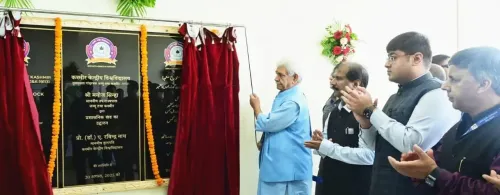
L-G Manoj Sinha inaugurated five new facilities at SKUAST-Jammu on 21 August , including a Centre for AI and ML in Agriculture and a Centre for Mushroom Research and Innovation .
The Startup Outreach Programme under JKCIP was launched to reach farmers and youth in villages with no prior exposure to incubation or venture capital.
SKUAST-Jammu has selected more than 150 students for idea incubation and supported 56 startups to date.
L-G Sinha urged J&K youth to build locally tailored agri-solutions rather than replicate models from the Netherlands , Israel , New Zealand , or Brazil .
He called for enterprises led by women and greater access for Self-Help Groups and Farmer Producer Organisations to finance, technology, and markets.
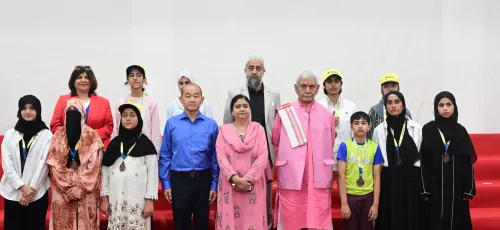
Eight startups, FPOs, and cooperative enterprises were felicitated; four publications on agriculture and innovation were released.
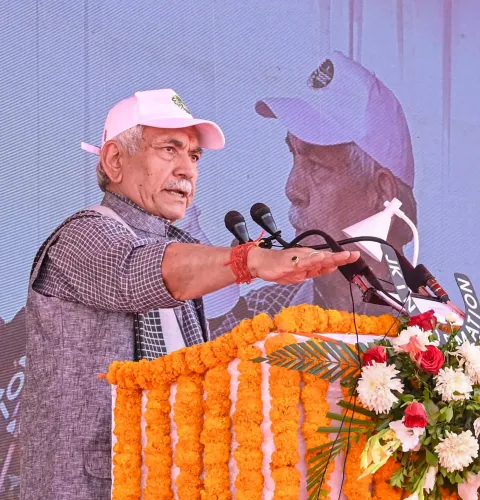
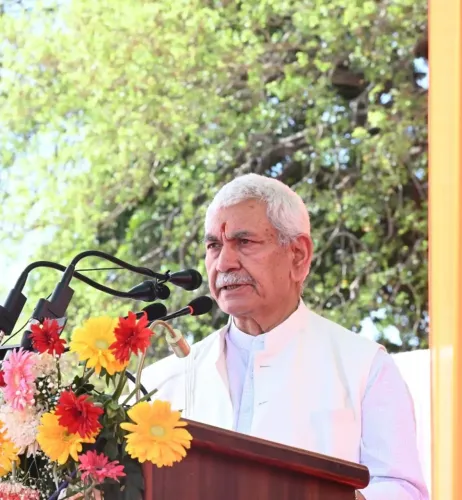
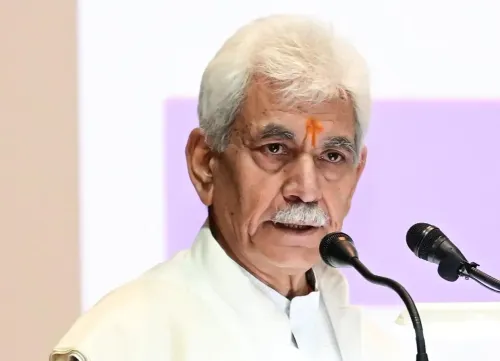
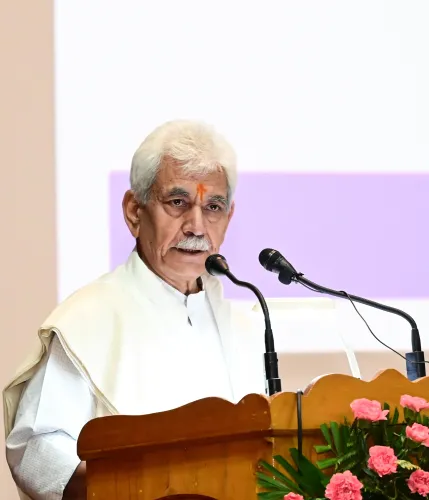
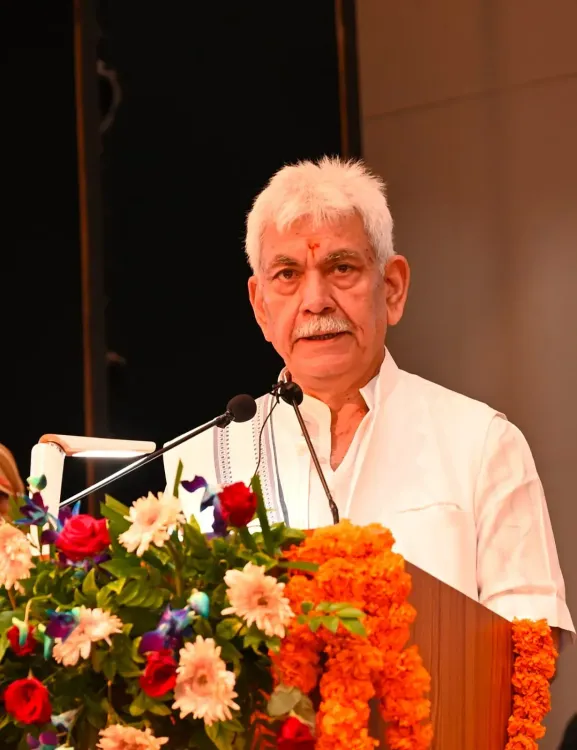
Jammu and Kashmir Lieutenant Governor Manoj Sinha on Friday, 21 August called on the youth of the region to develop agriculture solutions tailored to local conditions rather than importing foreign models wholesale, speaking at the inauguration of a cluster of new facilities at Sher-e-Kashmir University of Agricultural Sciences and Technology (SKUAST), Jammu. The event also marked the launch of the Startup Outreach Programme under the Jammu and Kashmir Competitiveness Improvement Programme (JKCIP), drawing together researchers, innovators, young entrepreneurs and farmers from across the Jammu division.
New Infrastructure Commissioned
The facilities inaugurated by L-G Sinha include the Unnati Girls Hostel, the Centre for AI and ML in Agriculture, the Centre for Mushroom Research and Innovation, the Advanced Sericulture Laboratory, and the Centre for Digital Media and Publication. The Lieutenant Governor described these additions as more than physical infrastructure, calling them a commitment to the region's innovators, entrepreneurs, researchers, and farming families.
Global Benchmarks, Local Imperatives
Drawing on international examples, L-G Sinha cited a dairy innovation hub in the Netherlands integrating AI-based nutrition and animal health solutions, Israel's data-driven agriculture management, New Zealand's digital push in animal husbandry, and a Brazilian irrigation startup that scaled a farmer's everyday problem into a commercial solution. He used these cases to underline that agriculture and allied sectors represent the next major frontier for global innovation.
However, he cautioned against blind replication. 'Today, there are startups worldwide continuously exploring new possibilities in agriculture and allied sectors. The biggest message from these startups and innovations is that agriculture and allied sectors themselves are the next big frontier for innovation. You must understand your own fields, farmers, climate, and local problems to prepare your next solution, and customise those models in your own way wherever appropriate. I believe that different countries have innovated for their own problems, and now it is time for Jammu and Kashmir to innovate for its own questions and challenges,' he said.
Entrepreneurship and Women's Leadership
The Lieutenant Governor observed that youth in Jammu and Kashmir are increasingly aspiring to create employment rather than seek it — a shift he said is central to the vision of a Self-Reliant Jammu and Kashmir. He urged students to treat their degrees not as destinations but as runways, with curiosity, courage, and consistent effort converting ideas into enterprises that eventually employ others.
He placed particular emphasis on women's participation, saying no entrepreneurship revolution can be complete without equal and active involvement of women. 'I do not just want to see women present in enterprises; I want to see enterprises led by women,' he said, calling on students to support Self-Help Groups and Farmer Producer Organisations that gain equal access to finance, technology, and markets.
SKUAST's Startup Record and Road Ahead
SKUAST-Jammu has so far selected more than 150 students for idea incubation and supported 56 startups, extending outreach to remote parts of the Jammu region. The Lieutenant Governor called this a commendable beginning but urged the university to scale these numbers and become a genuine bridge between laboratories and markets, scientists and farmers, and technology and ground-level needs.
He also encouraged young farmers to diversify beyond traditional cultivation into cold chains, grading and packaging units, regional branding, and digital marketplaces capable of connecting Jammu and Kashmir's produce with consumers in Delhi, Dubai, and beyond. Eight startups, Farmer Producer Organisations, and cooperative and rural enterprises were felicitated at the event. Four publications were released, including a policy document on medicinal and aromatic plants in Jammu and Kashmir.
Senior officials present included Shailendra Kumar, Additional Chief Secretary, Finance Department; Prof. B.N. Tripathi, Vice Chancellor, SKUAST-Jammu; Dr Amrish Vaid, Director Extension; and Dr Anil Kumar, Registrar, along with faculty, scientists, entrepreneurs, and representatives of startups, FPOs, and cooperatives. As the Startup Outreach Programme takes root in Jammu's villages, the coming months will test whether SKUAST-Jammu can convert its early incubation pipeline into enterprises that measurably improve farming livelihoods.
Point of View
But the gap between inauguration and impact at agricultural universities in India has historically been wide. SKUAST-Jammu's figure of 56 supported startups is a start, not a milestone — the more telling metric will be how many of those enterprises are commercially viable three years from now. The emphasis on women-led enterprises is welcome, but without ring-fenced funding and mentorship pipelines specifically for women in Jammu and Kashmir's agri-sector, it risks remaining an aspiration. The Startup Outreach Programme's reach into villages is the most genuinely differentiated element here: if it succeeds in surfacing farmer-born solutions rather than top-down technology transfers, it could become a replicable model for other agricultural universities.
NationPress
5 Oct 2026
Frequently Asked Questions
What new facilities were inaugurated at SKUAST-Jammu on 21 August?
Five facilities were inaugurated: the Unnati Girls Hostel, the Centre for AI and ML in Agriculture, the Centre for Mushroom Research and Innovation, the Advanced Sericulture Laboratory, and the Centre for Digital Media and Publication. L-G Manoj Sinha described them as a commitment to the region's innovators, researchers, and farming families.
What is the Startup Outreach Programme launched at SKUAST-Jammu?
It is a programme under the Jammu and Kashmir Competitiveness Improvement Programme (JKCIP) aimed at reaching farmers and youth in villages who have had no prior exposure to incubation, mentoring, or venture capital. The initiative is designed to surface solutions from those who have lived agricultural problems firsthand.
How many startups has SKUAST-Jammu supported so far?
SKUAST-Jammu has selected more than 150 students for idea incubation and supported 56 startups, extending outreach to remote parts of the Jammu region. L-G Sinha called this a commendable beginning and urged the university to scale these numbers significantly.
Why did L-G Sinha caution against copying foreign agricultural models?
While citing global examples from the Netherlands, Israel, New Zealand, and Brazil as inspiration, L-G Sinha said those countries innovated for their own specific problems. He urged J&K youth to study their own fields, climate, and local challenges and build solutions suited to the region's distinct needs rather than transplanting external models unchanged.
What role did L-G Sinha envision for women in J&K's entrepreneurship ecosystem?
L-G Sinha said women's participation should be the key priority, explicitly calling for enterprises led by women rather than merely women present in enterprises. He urged students to support Self-Help Groups and Farmer Producer Organisations in gaining equal access to finance, technology, and markets.