Ladakh gets 100 hill council constituencies under LAHDC Amendment 2026
Synopsis
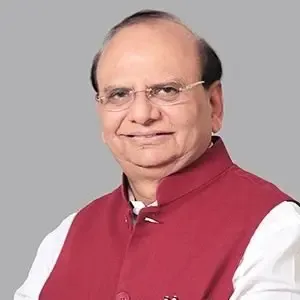
In a sweeping restructuring of local governance, L-G V.K. Saxena has notified 100 constituencies across eight Ladakh Autonomous Hill Development Councils — nearly doubling elected seats from 52 — and extended full council powers to six newly created districts for the first time. It is the most significant grassroots governance expansion in Ladakh since it became a Union Territory in 2019.
Key Takeaways
Saxena notified 100 constituencies for eight Ladakh Autonomous Hill Development Councils on 21 October 2026 .
The move nearly doubles total elected seats from 52 to 100 under the LAHDC (Amendment) Regulation, 2026 .
For the first time, full council powers are extended to six newly created districts: Sham, Nubra, Changthang, Zanskar, Drass , and Sankoo .
Constituencies were demarcated using panchayat halqas and municipal wards to balance population and geographical area.
Each council will hold powers over land allocation, local taxes, council funds , and district-cadre recruitment .
The regulation mandates four additional nominated members per council to represent women and under-represented communities.
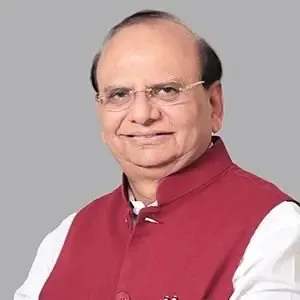
Lt Governor V.K. Saxena on Wednesday, 21 October 2026, formally notified 100 constituencies for the eight Ladakh Autonomous Hill Development Councils, nearly doubling elected representation across the Union Territory from the existing 52 seats. The move, enacted under the LAHDC (Amendment) Regulation, 2026, is the most significant expansion of grassroots governance in Ladakh since the region was carved out as a Union Territory in 2019.
Key Developments
The eight councils and their notified seat counts are: Leh: 22, Kargil: 21, Sankoo: 13, Changthang: 10, Nubra: 9, Sham: 9, Zanskar: 9, and Drass: 7. This restructuring follows Ladakh's district re-organisation in 2026, which created six new districts — Sham, Nubra, Changthang, Zanskar, Drass, and Sankoo — beyond the earlier two of Leh and Kargil.
Notably, previously only Leh and Kargil had elected hill councils. The amended regulation officially extends full council powers to all six newly created districts, dramatically widening the footprint of local self-governance.
How Constituencies Were Drawn
According to the Ladakh Administration, the new constituencies have been demarcated using panchayat halqas and municipal wards as foundational units. This dual-parameter method gives proportional weight to both elector population and geographical area — a critical consideration in a sprawling, sparsely populated terrain like Ladakh. The approach aims to prevent over-representation of dense urban pockets at the expense of remote pastoral communities.
Powers and Mandate of the Councils
Each of the eight councils will exercise comprehensive district-level authority. Their mandate includes land allocation, management of dedicated council funds, levying local taxes, and regulating district-cadre employment — functions that directly affect daily governance across Ladakh's vast geography. The regulation also incorporates targeted nominations for four additional members per council to represent women and previously under-represented communities, injecting a structural inclusivity clause into the framework.
What the L-G Said
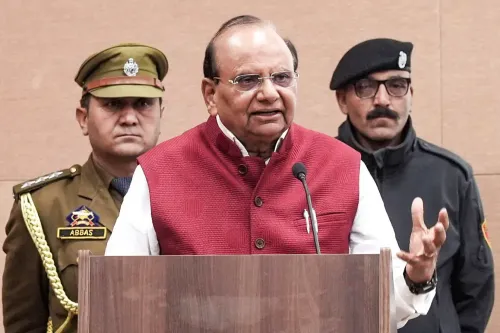
Announcing the notification in a post on X, Lt Governor Saxena described it as 'a historic milestone for grassroots democracy in Ladakh.' He stated that the apportionment is 'rational and fair' and expressed confidence that 'the increased number of seats will significantly enhance local representation, strengthen grassroots democracy, and promote inclusive governance across every corner of Ladakh.'
What This Means for Ladakh
This comes amid sustained political demand from Ladakhi civil society groups for greater autonomy and representation, a debate that has intensified since the Union Territory's creation. The expansion does not grant statehood — a longstanding demand — but it meaningfully strengthens the institutional architecture of local self-rule. With elections to these councils expected to follow the notification, Ladakh is entering a period of heightened political activity at the grassroots level.
Point of View
But the more structural change is the extension of council authority to six newly created districts — areas that previously had no elected local body with real administrative powers. That said, Ladakh's core political demand remains statehood and a legislature, neither of which this notification addresses. The nominated-member clause for women and marginalised communities is a welcome provision, but four nominations across councils spanning thousands of square kilometres is a modest hedge. The real test will come when these councils are elected and must negotiate resource allocation with the Union Territory administration — a relationship that has historically been unequal.
NationPress
22 Oct 2026
Frequently Asked Questions
What is the LAHDC Amendment Regulation 2026?
The LAHDC (Amendment) Regulation, 2026 is a central regulation that restructures the Ladakh Autonomous Hill Development Councils by nearly doubling elected seats from 52 to 100 and extending council powers to six newly created districts. It also mandates additional nominated members to represent women and previously under-represented communities.
How many seats does each Ladakh hill council get under the new notification?
Under the 21 October 2026 notification, the seat distribution is: Leh 22, Kargil 21, Sankoo 13, Changthang 10, Nubra 9, Sham 9, Zanskar 9, and Drass 7, totalling 100 elected seats across eight councils.
Why is this expansion significant for Ladakh?
Previously, only Leh and Kargil had elected hill councils. The 2026 amendment extends full council authority to six newly created districts for the first time, dramatically widening local democratic representation across Ladakh's vast and sparsely populated terrain.
What powers will the new hill councils have?
Each of the eight councils will exercise district-level authority over land allocation, management of council funds, levying local taxes, and regulating recruitment for district-cadre employment — functions that directly affect day-to-day governance in their respective areas.
How were the new constituency boundaries drawn?
The Ladakh Administration demarcated constituencies using panchayat halqas and municipal wards as baseline units, ensuring that both electoral population and geographical area were given due weight — a critical balance in a large, thinly populated region like Ladakh.